
BuddhistCatholicContemplativeEvangelicalGeneral ChristianHinduJewishLatter-day SaintMuslimNew VisionsProgressive Christian
Beliefs
- Buddhist
- Catholic
- Contemplative
- Evangelical
- General Christian
- Hindu
- Jewish
- Latter-day Saint
- More Voices
- Muslim
- New Visions
- Pagan
- Progressive Christian
Topics
- Religion News
- Food and Religion
- Sports and Religion
- Religious Art
- Religious Music and Entertainment
- Religious Events
- History and Religion
- Style and Religion
- Politics and Religion
- Women in Religion
- Recreation Outdoors and Religion
- Business Finance and Religion
- Careers Workplace and Religion
- Education and Religion
- Family Parenting and Religion
- Health Fitness and Religion
- Home and Religion
- Relationships and Religion
- Technology and Religion
- Travel and Religion
Columnists
- Buddhist Columnists
- Business Finance and Religion Columnists
- Careers Workplace and Religion Columnists
- Catholic Columnists
- Contemplative Columnists
- Education and Religion Columnists
- Evangelists Columnists
- Family Parenting and Religion Columnists
- General Christian Columnists
- Health Fitness and Religion Columnists
- Hindu Columnists
- History and Religion Columnists
- Home and Religion Columnists
- Jewish Columnists
- More Voices Columnists
- Latter Day Columnists
- Muslim Columnists
- New Visions Columnists
- Nonreligious Columnists
- Pagan Columnists
- Politics and Religion Columnists
- Progressive Columnists
- Recreation Outdoors and Religion Columnists
- Relationships and Religion Columnists
- Religion News Columnists
- Religious Art Columnists
- Religious Events Columnists
- Religious Music and Entertainment Columnists
- Sports and Religion Columnists
- Style and Religion Columnists
- Technology and Religion Columnists
- Travel and Religion Columnists
- Women in Religion Columnists
Resource Library
- 2026 Calendar
- Library of World Religions
- The 100 Most Holy Places on Earth
- Patheos Answers
- Podcasts
- Videos
- Faith Leaders Database
- Anglican Episcopalian
- Bahai
- Baptist
- Buddhism
- Christianity
- Confucianism
- Eastern Orthodoxy
- Hinduism
- Holiness and Pentecostal
- ISKCON
- Islam
- Judaism
- Lutheran
- Methodist
- The Church of Jesus Christ of Latter-day Saints
- New Age
- Paganism
- Presbytarian and Reformed
- Protestantism
- Religion Behind the Scenes
- Roman Catholic
- Scientology
- Shia Islam
- Sikhism
- Sufism
- Sunni Islam
- Taoism
- Zen
- See all religions
Research Tools
 Ad-Free & Subscriber Log-In Subscription Support
Ad-Free & Subscriber Log-In Subscription Support
Follow Patheos 

- Trending:
- Forgiveness
- |
- Marriage
- |
- Consciousness
- |
- Death Penalty
- |
- Election
- |
- Halloween
Public Square
Fantasy and Myth: Undeceiving Us
March 09, 2016 by Colin Duriez
Editors' Note: This article is part of the Patheos Public Square on Myth, Imagination, Fairy Tales, and Fantasy. And Faith. Read other perspectives here.
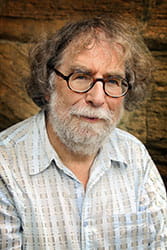 © Lancia E. Smith
In fantasy and myth, deepest thought goes together with imagination that reaches beyond the stars. The poet and the thinker join hands. The mystic and the visionary is found in close company with someone facing inescapable grief and destitution. The ordinary is revealed and celebrated by the extraordinary. The human journey from life to death presages resurrection. Without poetry and metaphor, words about truth have no meaning.
Consider one of the leading makers of myth and fantasy of recent times, who was both storyteller and scholar, and reasoned like this about thought and imagination. In his The Chronicles of Narnia, C. S. Lewis imagines wonder as the truth about things.
At the centre of the events in Narnia, a world inhabited by talking beasts, is the lion, Aslan. Millions in this world know of course that Aslan of Narnia is not a tame lion. He is tough, and leads as if that world belongs to him, but also he is extraordinarily gentle.
Aslan's wildness draws upon the wildness that Lewis portrays in nature and in God himself, in a book of popular theology written just three years before The Lion, the Witch and the Wardrobe (the first Narnian story he created). In Lewis's Miracles, God is none other than the theist's Maker of Heaven and Earth, found in Judeo-Christianity and in Islam. God is also definite, as Lewis discovered when he moved from the view that reality is only matter and dust to theism and then Christian faith.
In sometimes poetic prose, Lewis portrayed God as making demands of human beings (as if he owned the universe); he is the fact behind every fact; he is tangible, definite, infinitely articulated, and articulate to the very limits of human language. He is to be found at the very beginning, the first nano-second, with the Word. He is a Person of wisdom, imagination, and intelligence. Just like in myth and fantasy, holding together deepest thought and wildest imagination, he is the oneness that our human nature craves. His incarnation as a human being (or as a talking beast, in the case of the Narnian world) is the ultimate enchantment and foremost history-making disclosure of who he is.
Lewis was doing many things in creating The Chronicles of Narnia. What is clear from his life, and what he said about Narnia, is that he was telling a story for the love of it, creating a secondary world (inspired by his friend J. R. R. Tolkien's sub-creation of Middle-earth) and embodying virtues and values he had himself found to be desirable and indeed essential for our very humanity, whether child or adult.
But he was also doing something that he — along with close friends like Tolkien, and authors he loved like George MacDonald and G. K. Chesterton — had discovered about the nature of stories. Stories are subversive; they tiptoe past (in his words) the "watchful dragons" that would keep us in the dark and staleness of prison. They can change us to the core, undeceiving us and moulding our perceptions and very consciousness. In telling Narnia, Lewis is concerned to present his vision as fact, not theory, full of resonances and connections with the world of reality.
What Lewis succeeded in doing was brought home to me some years ago. Near where I lived in an English county that was often fairly flat was a favourite place to walk, a high hill, one side of which runs down into a particularly wooded area. One day, walking there I saw a mother with a boy of about five or six. I was behind the pair as they climbed a granite outcrop that gave an excellent view of the wooded slopes and the countryside for miles around. "Look mummy," the boy exclaimed in a voice of wonder, "it's Narnia."
What happened, of course, was that the boy was looking at what he saw through a storybook. Though that book was children's fiction, a wider principle applies here. This is that we are meant to perceive reality through the word — and also through not just books but other art like paintings, or musical pieces. For instance, if you are fortunate, you may walk the fells and follow the shores in the English Lakeland seeing them through the poetry of Wordsworth or the paintings of William Turner.
Lewis, in the breadth of his thought, recognized our human dependence upon what might be called a symbolic perception of reality. The symbolic world of Narnia, even though fictional, in some sense points to the solidly real. It takes us back to the ordinary world which is an inevitable part of our human living and experience; it deepens both the wonders and the terrors of our world.
What Lewis is hinting at is that our perception is shaped by the feeling imagination; perception also has a moral and spiritual dimension by being shaped by human (and divine) principles, mental not solely material and mechanical ones.
In one of the Narnia books, the storyteller comments: "What you see and hear depends a good deal on where you are standing: it also depends on the sort of person you are."
3/9/2016 5:00:00 AM
Public Square
Culture
C.S. Lewis
Evangelicalism
Fiction
Fantasy
Fairy Tales
History
Imagination
J.R.R. Tolkien
literature
Myth
Mythology
Progressive Christianity
Worldview
Christianity
more at patheos
1
Reach, Throw, Row, Go (revisited)
2

Called to Work Created to Rest
3
Hypocrisy In The Hierarchy: When Bishops Fail Their Flock
4
Evangelicalism and Interstices: A 19th Century Intervention
About
Patheos Explore the world's faith through different perspectives on religion and spirituality! Patheos has the views of the prevalent religions and spiritualities of the world.
Ad-Free & Subscriber Log-In Subscription Support
- About Us
- 2026 Calendar
- Videos
- Podcasts
- Library of World Religions
- Faith In Media Tracker
- Advertise With Us
- Write for Us
- Privacy Policy
- Terms of Service
- Do Not Sell My Data
- Contact Us
- Radiant Digital
- Manage Newsletter Subscriptions
- Unsubscribe From Notifications
- Sitemap
Copyright 2008-2026, Patheos. All rights reserved.
Subscription Support Ad-Free & Subscriber Log-In
Follow Patheos