
BuddhistCatholicContemplativeEvangelicalGeneral ChristianHinduJewishLatter-day SaintMuslimNew VisionsProgressive Christian
Beliefs
- Buddhist
- Catholic
- Contemplative
- Evangelical
- General Christian
- Hindu
- Jewish
- Latter-day Saint
- More Voices
- Muslim
- New Visions
- Pagan
- Progressive Christian
Topics
- Religion News
- Food and Religion
- Sports and Religion
- Religious Art
- Religious Music and Entertainment
- Religious Events
- History and Religion
- Style and Religion
- Politics and Religion
- Women in Religion
- Recreation Outdoors and Religion
- Business Finance and Religion
- Careers Workplace and Religion
- Education and Religion
- Family Parenting and Religion
- Health Fitness and Religion
- Home and Religion
- Relationships and Religion
- Technology and Religion
- Travel and Religion
Columnists
- Buddhist Columnists
- Business Finance and Religion Columnists
- Careers Workplace and Religion Columnists
- Catholic Columnists
- Contemplative Columnists
- Education and Religion Columnists
- Evangelists Columnists
- Family Parenting and Religion Columnists
- General Christian Columnists
- Health Fitness and Religion Columnists
- Hindu Columnists
- History and Religion Columnists
- Home and Religion Columnists
- Jewish Columnists
- More Voices Columnists
- Latter Day Columnists
- Muslim Columnists
- New Visions Columnists
- Nonreligious Columnists
- Pagan Columnists
- Politics and Religion Columnists
- Progressive Columnists
- Recreation Outdoors and Religion Columnists
- Relationships and Religion Columnists
- Religion News Columnists
- Religious Art Columnists
- Religious Events Columnists
- Religious Music and Entertainment Columnists
- Sports and Religion Columnists
- Style and Religion Columnists
- Technology and Religion Columnists
- Travel and Religion Columnists
- Women in Religion Columnists
Resource Library
- 2026 Calendar
- Library of World Religions
- The 100 Most Holy Places on Earth
- Patheos Answers
- Podcasts
- Videos
- Faith Leaders Database
- Anglican Episcopalian
- Bahai
- Baptist
- Buddhism
- Christianity
- Confucianism
- Eastern Orthodoxy
- Hinduism
- Holiness and Pentecostal
- ISKCON
- Islam
- Judaism
- Lutheran
- Methodist
- The Church of Jesus Christ of Latter-day Saints
- New Age
- Paganism
- Presbytarian and Reformed
- Protestantism
- Religion Behind the Scenes
- Roman Catholic
- Scientology
- Shia Islam
- Sikhism
- Sufism
- Sunni Islam
- Taoism
- Zen
- See all religions
Research Tools
 Ad-Free & Subscriber Log-In Subscription Support
Ad-Free & Subscriber Log-In Subscription Support
Follow Patheos 

- Trending:
- Forgiveness
- |
- Marriage
- |
- Consciousness
- |
- Death Penalty
- |
- Election
- |
- Halloween
patheos presents

The 100 Most Holy Places On Earth
number
8
Sistine Chapel
The Vatican 


By Alonzo Gaskill | Updated: March 19, 2026 | Published: March 23, 2023
Associated Faiths:
It also draws in a very high percentage of Christians from other denominations as well. While many non-Christian visitors enter each year, this is mostly for non-religious reasons, and they do not hold the edifice as a “sacred space” in their tradition.
Accessibility:
Open to visitors.
Annual visitors: 6,000,000
History
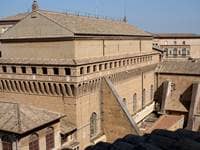
The Sistine Chapel is located in the Apostolic Palace of Vatican City. It is the chapel associated with the pope’s official residence and was constructed (from 1473 through 1481) under the direction of Pope Sixtus IV. The Latin name of the Sistine Chapel is “Sacellum Sixtinum.” Thus, the chapel takes its name from Pope Sixtus, who commissioned it.
On the site of the current Sistine Chapel once rested a different edifice. That predecessor church was known as the Chapel of Pope Nicholas V—which was built some time prior to 1368. In a state of disrepair, with walls about to collapse, Pope Sixtus IV had the dangerous and dilapidated former chapel demolished (in the 3rd quarter of the 15th century). Thus, what would eventually be known as the Sistine Chapel was built on the lot.
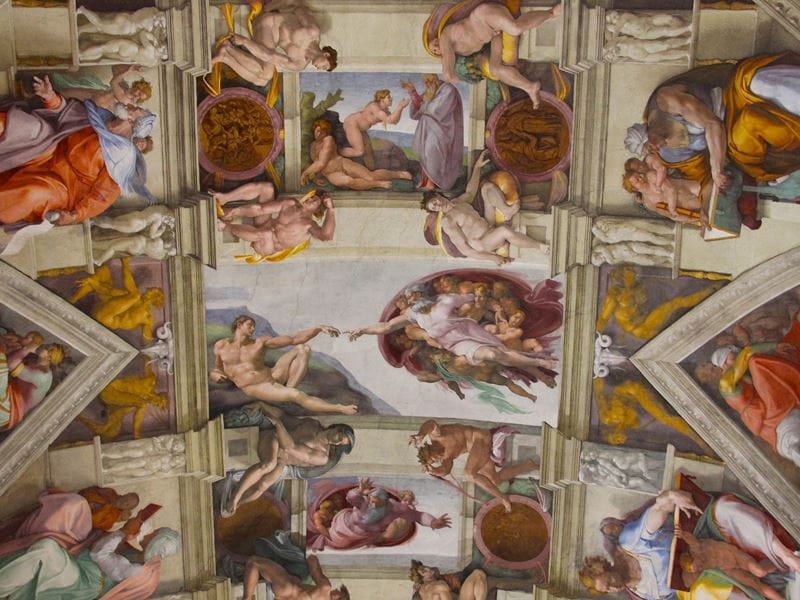
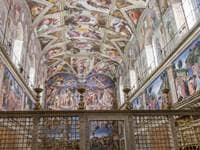
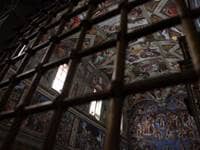
While five High Renaissance painters created some late-15th century frescos, depicting scenes from the life of Moses and the life of Christ, the most popular 343 murals of the Sistine Chapel were painted in the 16th century by Michelangelo. His various murals depict scenes from the Hebrew Bible, particularly the book of Genesis. The famed depiction of God touching the finger of Adam, giving him life, is located in the Sistine Chapel—as is the fear-provoking depiction of the Last Judgment (which is located behind the altar). The latter of these was the last to be completed, finished in 1541, some 33 years after Michelangelo first started creating his murals for the celebrated chapel.
The chapel’s primary purpose has centered around a couple of important activities, central to the governance of the Church. First, it is the formal location of the Cappella Pontifica (or what used to be called the “Papal Court”). Comprised of approximately 200 people, the Papal Calendar stipulates that the Cappella Pontifica should meet fifty times a year, bringing together clergy, Vatican officials, and certain eminent lay members of the Church—to assist the pope in carrying out various religious and civil ceremonies. The second primary purpose of the Sistine Chapel is its use as the place of papal conclaves—wherein the College of Cardinals gather (when a pope has died) in order to elect a new pope. The first papal conclave to be held in the Sistine Chapel was in 1492. While, since that time, conclaves have been held outside of the Chapel, it has become the primary place where these sacred meetings are convened.
Religious Significance
While a “sacred space” is deemed holy for a number of reasons, when a place is deemed as such, there is often an effort to beautify the sacred, so that it feels set apart. This is certainly the case with the Sistine Chapel. While several High Renaissance painters have contributed to frescos in the Chapel, the most important, and those which have the greatest draw and aesthetic appeal, are those painted by Michelangelo (in the first half of the 16th century). The 343 murals which he painted, most notably on the Chapel’s ceiling and behind the altar, create an air of holiness and awe appropriate of a sacral space such as this.
Another reason that the Sistine Chapel is holy, beyond how one might perceive a simple Catholic Church, has to do with its officiants. The priest who eventually becomes the pope no longer has the time or opportunity to officiate (with any frequency) in the seven sacraments of the Church. However, it is in the Sistine Chapel that the pope himself celebrates the Christmas Day and Easter masses. Thus, the most holy of men (in traditional Roman Catholic thought) engages in the most holy of acts in this “sacred space,” making the celebration of the Mass therein, and on those special occasions, just that much more elevated in its sacral nature.
For approximately 550 years, Roman Catholic popes have been elected in the Sistine Chapel. No, not all have been voted upon therein—but it has been the designated and traditional site for papal conclaves since the end of the 15th century. Think of it. For the largest of Christian denominations, and for more than one billion people, in this “sacred site” God reveals His will to the cardinals of the Church, pointing out to them who it is that He would have run His Church. As successor to Peter, the Chief Apostle of Jesus, the Bishop of Rome has long held a sacred place is Catholic ecclesiology. Thus, the fact that the Sistine Chapel is the appointed place where this revelatory process is to happen, makes it a site holy like few others.
Related to this previous point, whether you are Catholic or not, popes and the Catholic Church have wielded significant power and influence in our world. For at least 1,400 years, the Bishop of Rome has been “first among equals,” directing the Church, but also greatly influencing politics—particularly in years past. Even today, his voice on morals, ethics, the environment, etc., have dramatic influence on Catholics, but also for the world, whose trends popes have influenced and, at times, swatted down. Thus, the Sistine Chapel—the chapel associated with the residence of the pope, the Apostolic Palace—stands as a symbol for the pope, his influence, his authority, his sacred calling, and his position as God’s representative upon the earth. There us much sacred symbolism attached to this building, who it represents, and what happens therein.
Related
How Tradition Points Away From The Death Penalty
The Incarnation And The Christian Use Of Images
Three More Anti-Catholic Lies About Catholicism (#6-4)
7: Church of the Holy Sepulchre
The Debate Over Removing Illegal Immigrants From Welfare
On the Attempted Execution of Christa Pike

Three More Anti-Catholic Lies About Catholicism (#6-4)

Why Can't Anyone Say Evil? On the Execution of Christa Pike

Top Ten Anti-Catholic Lies (#10-7)

The Gospel of Matthew: Christ and Antichrist
Patheos Explore the world's faith through different perspectives on religion and spirituality! Patheos has the views of the prevalent religions and spiritualities of the world.
Ad-Free & Subscriber Log-In Subscription Support
- About Us
- 2026 Calendar
- Videos
- Podcasts
- Library of World Religions
- Faith In Media Tracker
- Advertise With Us
- Write for Us
- Privacy Policy
- Terms of Service
- Do Not Sell My Data
- Contact Us
- Radiant Digital
- Manage Newsletter Subscriptions
- Unsubscribe From Notifications
- Sitemap
Copyright 2008-2026, Patheos. All rights reserved.
Subscription Support Ad-Free & Subscriber Log-In
Follow Patheos