
BuddhistCatholicContemplativeEvangelicalGeneral ChristianHinduJewishLatter-day SaintMuslimNew VisionsProgressive Christian
Beliefs
- Buddhist
- Catholic
- Contemplative
- Evangelical
- General Christian
- Hindu
- Jewish
- Latter-day Saint
- More Voices
- Muslim
- New Visions
- Pagan
- Progressive Christian
Topics
- Religion News
- Food and Religion
- Sports and Religion
- Religious Art
- Religious Music and Entertainment
- Religious Events
- History and Religion
- Style and Religion
- Politics and Religion
- Women in Religion
- Recreation Outdoors and Religion
- Business Finance and Religion
- Careers Workplace and Religion
- Education and Religion
- Family Parenting and Religion
- Health Fitness and Religion
- Home and Religion
- Relationships and Religion
- Technology and Religion
- Travel and Religion
Columnists
- Buddhist Columnists
- Business Finance and Religion Columnists
- Careers Workplace and Religion Columnists
- Catholic Columnists
- Contemplative Columnists
- Education and Religion Columnists
- Evangelists Columnists
- Family Parenting and Religion Columnists
- General Christian Columnists
- Health Fitness and Religion Columnists
- Hindu Columnists
- History and Religion Columnists
- Home and Religion Columnists
- Jewish Columnists
- More Voices Columnists
- Latter Day Columnists
- Muslim Columnists
- New Visions Columnists
- Nonreligious Columnists
- Pagan Columnists
- Politics and Religion Columnists
- Progressive Columnists
- Recreation Outdoors and Religion Columnists
- Relationships and Religion Columnists
- Religion News Columnists
- Religious Art Columnists
- Religious Events Columnists
- Religious Music and Entertainment Columnists
- Sports and Religion Columnists
- Style and Religion Columnists
- Technology and Religion Columnists
- Travel and Religion Columnists
- Women in Religion Columnists
Resource Library
- 2026 Calendar
- Library of World Religions
- The 100 Most Holy Places on Earth
- Patheos Answers
- Podcasts
- Videos
- Faith Leaders Database
- Anglican Episcopalian
- Bahai
- Baptist
- Buddhism
- Christianity
- Confucianism
- Eastern Orthodoxy
- Hinduism
- Holiness and Pentecostal
- ISKCON
- Islam
- Judaism
- Lutheran
- Methodist
- The Church of Jesus Christ of Latter-day Saints
- New Age
- Paganism
- Presbytarian and Reformed
- Protestantism
- Religion Behind the Scenes
- Roman Catholic
- Scientology
- Shia Islam
- Sikhism
- Sufism
- Sunni Islam
- Taoism
- Zen
- See all religions
Research Tools
 Ad-Free & Subscriber Log-In Subscription Support
Ad-Free & Subscriber Log-In Subscription Support
Follow Patheos 

- Trending:
- Forgiveness
- |
- Marriage
- |
- Consciousness
- |
- Death Penalty
- |
- Election
- |
- Halloween
patheos presents

The 100 Most Holy Places On Earth
number
82
Shrine of Padre Pio
San Giovanni Rotondo, Italy 


By Alonzo Gaskill | Updated: March 19, 2026 | Published: March 23, 2023

Associated Faiths:
Also ocassionally visited by Christians of other High and Low-Church traditions.
Accessibility:
Open to visitors.
Annual Visitors: 7,000,000
History
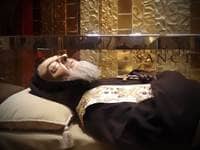
The Shrine of Padre Pio is a Roman Catholic Church and pilgrimage center, dedicated (in 2004) by Pope John Paul II, to commemorate the life and legacy of Francesco Forgione, a Capuchin friar better known as “Padre Pio.” Saint Pio was born in Pietrelcina, about 80 miles from the current shrine. Initially buried in the crypt beneath the Church (or Sanctuary) of Santa Maria delle Grazie (i.e., “Saint Mary, our Lady of Grace”), his body was exhumed in 2008 and moved to its current location in the Padre Pio Pilgrimage Church, where it is on display in a glass coffin.
Pio suffered a lifetime of sickness, starting no later than when he was six years of age. Gastroenteritis, migraines, tuberculosis, and other ailments followed him throughout his life. Some perceived his never-ending battles with poor health as evidence that the “devil hated him” and wanted to destroy Pio’s sacred mission and holy life. By the time he was 31, he experienced stigmata, which remained with him until his death (at the age of 81). The Catholic Church was initially bothered by the claims that he manifest the stigmata—and spent years investigating the claims before finally embracing them. Thus, Pio went from being perceived as a rebellious and publicity seeking friar to becoming Saint Pius of Pietrelcina.
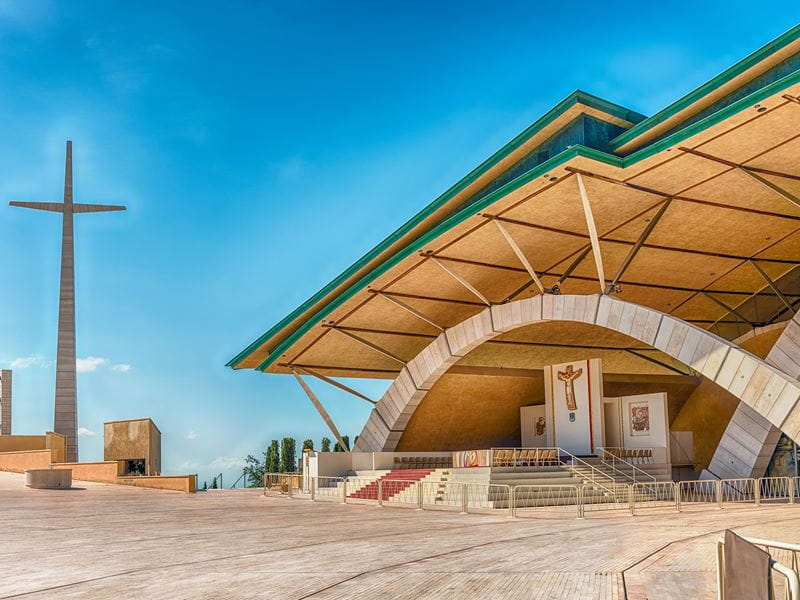
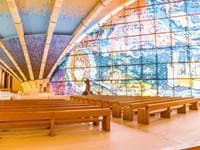
The Sanctuary of Saint Pio of Pietrelcina—not to be confused with shrines with similar names in the Philippines and the U.S.—is a 21st century edifice that houses the remains of the Sainted son of Pietrelcina. The shrine is built in San Giovanni Rotondo because Pio spent the bulk of his life there, serving the community as a priest and confessor. Designed to seat between 6,000-6,500, up to 30,000 additional pilgrims can be accommodated outside of the edifice.
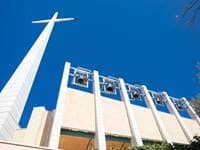
Much like Pio, who seemed to go against the grain, this shrine (dedicated to his memory and his life of miracles) almost doesn’t fit in with the little town in which it was built. San Giovanni Rotondo, if it can be called “modern,” is only such because Pio’s life has brought the world there. The Shine is large, ultra-modern, and almost architecturally too progressive for the community in which it was built. It does not strike the visitor as a traditional place of pilgrimage for the devotee to Saint Pio of Pietrelcina, largely because of its ultra-modern appearance. Nonetheless, it attracts many million visitors each year—who remember the 20th century Saint in this 21st century edifice.
Religious Significance
The Saint Padre Pio Shrine is “sacred space” for traditional Roman Catholics, who have a love for hagiography, miracles, the cult of the saints, a belief in the intervention of the saints, and the power inherent in the miracle called stigmata. At this shrine, believers are reminded that saints are not just holy people of the past, but moderns who have sought to live faithfully—and who (amid great opposition) have overcome the world, as any good Catholic hopes to. Thus, there is a personal holiness that is sought at the Padre Pio Pilgrimage Church; and that constitutes a very real “sacred space.”
Though, from his childhood, Padre Pio experienced visions and ecstatic states of consciousness, Saint Pio is perhaps most famous for the fact that he manifest stigmata—or the bleeding wounds of Christ in his hands, feet, and side. This miraculous phenomenon—rare, but not unheard of—was his blessing and trial from the time he was 31-years of age until his death at 81. Within only a couple of years of his first experience of stigmata, the Church was unhappy about the publicity this was bringing him and so they placed him under a number of restrictions—including not allowing him to publicly celebrate the Mass. As a priest, during his period of sanctions, he was not allowed to give blessings, respond to correspondence, allow others to see his stigmata, or communicate with his spiritual director. And yet, within a period of approximately 87 years, Pio went from an object of suspicion to being declared a Saint. The story of the extreme opposition against Pio, his stigmata, and his holiness, is a story of redemption. For some, the devil sought to use the Church against Saint Pio. However, the heavens eventually spoke, the priestly Pio was vindicated, and his long-awaited sainthood finally acknowledged in 2002.
In the doctrine of Transubstantiation, the blessed bread and wine become the literal body and blood of Jesus. The crucified Christ is literally present in the consecrated elements. Those present during the Mass are now in the very presence of God.
And yet, for the priest who manifests the stigmata—as Pio so often did (while celebrating the Mass)—it is as if two acts of transubstantiation were taking place; that of the Eucharist, and that of the priest (Pio) who stands in for Christ. Thus, Padre Pio’s 50-plus years of stigmata made his work as a priest that much the more sacred. While he was always a surrogate for Jesus (as all priests are), Saint Pio was symbolically that much more so. The ground on which he walked, the elements of the Eucharist which he blessed, and the confessions which he heard, all make the city of San Giovanni Rotondo (where he spent the majority of his life), and the crypt where his partially preserved body rests, hallowed ground indeed.
When one makes a pilgrimage to the Saint Padre Pio Shrine, contemplates the life, healings, visions, and various miracles of this holy man, and looks upon his crypt, one is left with an undeniable sense of the hallowed nature of the space. One so chosen of God—chosen by heaven to bear the marks of the stigmata—lays before the penitent pilgrim. And all of the truths espoused by the Church seem confirmed, in ways unexplainable, and yet explicable.
Related
How Tall Was Goliath? The Truth Revealed!
Christians Are Called To Resist Authoritarianism In America
The Demonization of the Catholic Church
Pope Leo Denounces "Christian Nationalism"
Palestinians in Gaza Are Uprising Against Hamas
God’s Answer to, “Why Don’t You Do Something About Evil?”
Why Christ’s Ascension is Greater Than the Resurrection
Christian Comic Reviewed: Analyzing Themes, Art, and Impact
What’s the Christian Response to the Current Culture?
Dear America: Do You Like What We've Become?

In 2022, Pro-Life Is Too Progressive for America
The Church At Home: Celebrating the Liturgy of Domestic Church Life
Rachael Popcak and Dr. Gregory Popcak

10 Essential Books Every Catholic Should Own

Don't Lose Your Soul In The Culture War

Is Cancel Culture The New Inquisition?

Kathleen Mulhern, PH.D.
Patheos Explore the world's faith through different perspectives on religion and spirituality! Patheos has the views of the prevalent religions and spiritualities of the world.
Ad-Free & Subscriber Log-In Subscription Support
- About Us
- 2026 Calendar
- Videos
- Podcasts
- Library of World Religions
- Faith In Media Tracker
- Advertise With Us
- Write for Us
- Privacy Policy
- Terms of Service
- Do Not Sell My Data
- Contact Us
- Radiant Digital
- Manage Newsletter Subscriptions
- Unsubscribe From Notifications
- Sitemap
Copyright 2008-2026, Patheos. All rights reserved.
Subscription Support Ad-Free & Subscriber Log-In
Follow Patheos