
BuddhistCatholicContemplativeEvangelicalGeneral ChristianHinduJewishLatter-day SaintMuslimNew VisionsProgressive Christian
Beliefs
- Buddhist
- Catholic
- Contemplative
- Evangelical
- General Christian
- Hindu
- Jewish
- Latter-day Saint
- More Voices
- Muslim
- New Visions
- Pagan
- Progressive Christian
Topics
- Religion News
- Food and Religion
- Sports and Religion
- Religious Art
- Religious Music and Entertainment
- Religious Events
- History and Religion
- Style and Religion
- Politics and Religion
- Women in Religion
- Recreation Outdoors and Religion
- Business Finance and Religion
- Careers Workplace and Religion
- Education and Religion
- Family Parenting and Religion
- Health Fitness and Religion
- Home and Religion
- Relationships and Religion
- Technology and Religion
- Travel and Religion
Columnists
- Buddhist Columnists
- Business Finance and Religion Columnists
- Careers Workplace and Religion Columnists
- Catholic Columnists
- Contemplative Columnists
- Education and Religion Columnists
- Evangelists Columnists
- Family Parenting and Religion Columnists
- General Christian Columnists
- Health Fitness and Religion Columnists
- Hindu Columnists
- History and Religion Columnists
- Home and Religion Columnists
- Jewish Columnists
- More Voices Columnists
- Latter Day Columnists
- Muslim Columnists
- New Visions Columnists
- Nonreligious Columnists
- Pagan Columnists
- Politics and Religion Columnists
- Progressive Columnists
- Recreation Outdoors and Religion Columnists
- Relationships and Religion Columnists
- Religion News Columnists
- Religious Art Columnists
- Religious Events Columnists
- Religious Music and Entertainment Columnists
- Sports and Religion Columnists
- Style and Religion Columnists
- Technology and Religion Columnists
- Travel and Religion Columnists
- Women in Religion Columnists
Resource Library
- 2026 Calendar
- Library of World Religions
- The 100 Most Holy Places on Earth
- Patheos Answers
- Podcasts
- Videos
- Faith Leaders Database
- Anglican Episcopalian
- Bahai
- Baptist
- Buddhism
- Christianity
- Confucianism
- Eastern Orthodoxy
- Hinduism
- Holiness and Pentecostal
- ISKCON
- Islam
- Judaism
- Lutheran
- Methodist
- The Church of Jesus Christ of Latter-day Saints
- New Age
- Paganism
- Presbytarian and Reformed
- Protestantism
- Religion Behind the Scenes
- Roman Catholic
- Scientology
- Shia Islam
- Sikhism
- Sufism
- Sunni Islam
- Taoism
- Zen
- See all religions
Research Tools
 Ad-Free & Subscriber Log-In Subscription Support
Ad-Free & Subscriber Log-In Subscription Support
Follow Patheos 

- Trending:
- Forgiveness
- |
- Marriage
- |
- Consciousness
- |
- Death Penalty
- |
- Election
- |
- Halloween
patheos presents

The 100 Most Holy Places On Earth
number
92
Shri Amarnath Cave Temple
Anantnag District of Jammu and Kashmir, India 


By Alonzo Gaskill | Updated: March 19, 2026 | Published: March 23, 2023

Associated Faiths:
Accessibility:
Open to visitors, contingent upon health and weather. Must be no less than 13 years of age. Must register for a permit to participate in the annual pilgrimage. Only open to visitors during the Hindu month of Shravan (Aug/Sept).
Annual Visitors - 350,000
History
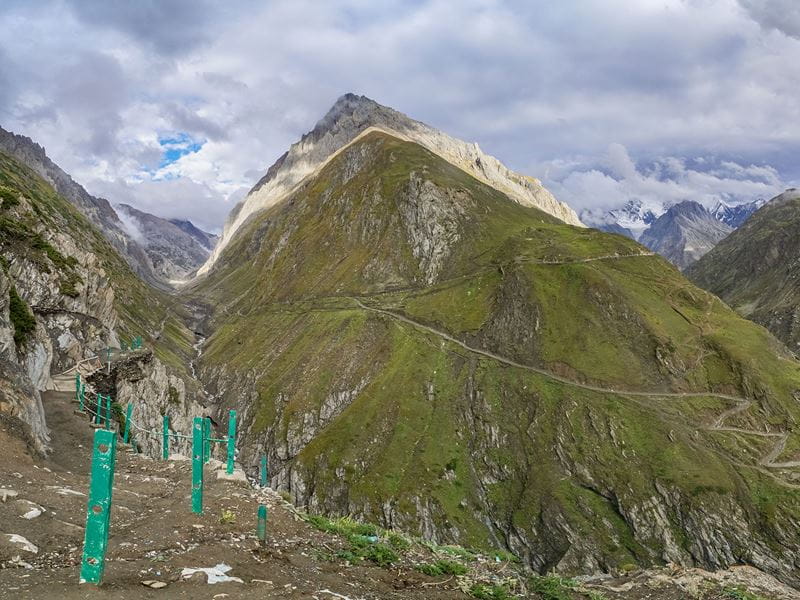
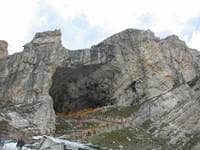
The Amarnath Temple is a cave that functions as a Hindu shrine, and which is located in the Anantnag District of Jammu and Kashmir. The cave is situated in a snowy and glacier-filled location which is inaccessible to humans—except for 1-2 months out of the year. Remote, yet sacred, a significant number of Hindus make their way to this site every year.
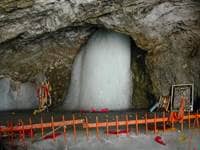
The cave is a place of numerous stalagmites which are reverenced as manifestations of the Hindu deities, Shiva, Parvati, and Ganesh. The age of the cave and the stalagmites therein are unknown. However, we do know that at least as early as the 12th century CE a text-based tradition existed which claimed offerings were made (in the 11th century) at the Amarnath Temple by an East Indian queen. Thus, the perception of the cave as sacred has existed for no less than a millennium.
During the months of May through August, the snow above the cave melts, seeping into the cave—partially melting the stalagmites. That, along with changes in weather and the body heat of pilgrims visiting the cave, cause the size of the lingam (or stalagmite which represents Shiva) to fluctuate throughout the year, and from year-to-year. Hindu patrons of the Amarnath Temple see supernatural influences as the cause of the lingam’s changes in size, holding that its changes are consistent with the phases of the moon.
Fairly consistent threats, targeting the Amarnath pilgrims, began in the early 1990s and, since the year 2000, there have been no less than four attacks on pilgrims making their way to the cave. Some 55 people associated with the annual pilgrimage have lost their life at the hands of terrorists. In addition, nearly 1,000 pilgrims have died over the years as a result of disease, exposure, exhaustion, and various accidents heading up to or back down from the cave.
Religious Significance
The Amarnath cave houses the pīṭhā (or “seat”) of the goddess Mahāmāyā, who creates and destroys maya (or “illusion” & false belief). There are 51 Shakti pīṭhās on the Indian Subcontinent—each of which mark a spot where, according to Hindu tradition, a part of the body Sati—Shiva’s wife—fell to the earth after she lost her life through jumping into the fire of Homa or Havan. Thus, each of these spots are in some measure sacred because of their association with Sati and, by default, Lord Shiva.
The 51 Hindu pīṭhās are found in various locations which believers visit in an attempt to communicate with the deity. Combined, these 51 “seats” symbolize the body of the goddess. For Hindus, much like those of the Abrahamic traditions, sites associated with the divine, or saintly figures in the tradition, are commonly revered. Because each of these 51 locations are directly associated with Sati, visiting them is perceived by many as walking on sacred ground. And Amarnath has connections to the goddess as well as her consort, Shiva, making it even more holy.
Located in the Amarnath cave is not only a pīṭhā of the associated goddess, but also a lingam—an abstract representation of the god Shiva—which exists in the form of a natural stalagmite. The stalagmite was formed by drops of water falling from the ceiling of the cave onto the floor, freezing, and creating an upward vertical stalagmite which is believed to be a physical manifestation of Shiva. Two other stalagmites, smaller in stature than the lingam, represent the goddess Parvati and the god Ganesha—two of Hinduism’s most important deities.
Worshipers make the arduous trek to the Amarnath Temple because they believe that, in doing so, they can gain the blessings of Lord Shiva—one of the most important, powerful, and widely worshiped of all of the Hindu deities. Pilgrims often ask Shiva for things like a prosperous or healthy life, personal holiness (so as to achieve Nirvana sooner), or purification for sins they have committed and karma they have accrued. There is a sense of power and presence in the Amarnath Temple. Worshipers see the lingam of Shiva and believe in his presence there in the cave. Darshan (literally “viewing”—as in “viewing” the god) is one of the ultimate acts of worship in Hinduism and, at the remote Amarnath Temple, one has the opportunity to engage in darshan of Lord Shiva, his wife, Parvati, and of Ganesh (the god who removes all obstacles). Thus, this cave-temple provides a triple blessing to faithful pilgrims who make the dangerous and annual pilgrimage to Amarnath.
Related
4 Yoga Practices to Boost Immunity


What are the Main Hindu Holidays?
What Are the Four Main Beliefs of Hinduism?
Kathleen Mulhern, PH.D.
What is the Hindu Festival of Navaratri and How do Hindus Celebrate It?
Alonzo L. Gaskill
Alonzo L. Gaskill, PH.D.
Patheos Explore the world's faith through different perspectives on religion and spirituality! Patheos has the views of the prevalent religions and spiritualities of the world.
Ad-Free & Subscriber Log-In Subscription Support
- About Us
- 2026 Calendar
- Videos
- Podcasts
- Library of World Religions
- Faith In Media Tracker
- Advertise With Us
- Write for Us
- Privacy Policy
- Terms of Service
- Do Not Sell My Data
- Contact Us
- Radiant Digital
- Manage Newsletter Subscriptions
- Unsubscribe From Notifications
- Sitemap
Copyright 2008-2026, Patheos. All rights reserved.
Subscription Support Ad-Free & Subscriber Log-In
Follow Patheos