
BuddhistCatholicContemplativeEvangelicalGeneral ChristianHinduJewishLatter-day SaintMuslimNew VisionsProgressive Christian
Beliefs
- Buddhist
- Catholic
- Contemplative
- Evangelical
- General Christian
- Hindu
- Jewish
- Latter-day Saint
- More Voices
- Muslim
- New Visions
- Pagan
- Progressive Christian
Topics
- Religion News
- Food and Religion
- Sports and Religion
- Religious Art
- Religious Music and Entertainment
- Religious Events
- History and Religion
- Style and Religion
- Politics and Religion
- Women in Religion
- Recreation Outdoors and Religion
- Business Finance and Religion
- Careers Workplace and Religion
- Education and Religion
- Family Parenting and Religion
- Health Fitness and Religion
- Home and Religion
- Relationships and Religion
- Technology and Religion
- Travel and Religion
Columnists
- Buddhist Columnists
- Business Finance and Religion Columnists
- Careers Workplace and Religion Columnists
- Catholic Columnists
- Contemplative Columnists
- Education and Religion Columnists
- Evangelists Columnists
- Family Parenting and Religion Columnists
- General Christian Columnists
- Health Fitness and Religion Columnists
- Hindu Columnists
- History and Religion Columnists
- Home and Religion Columnists
- Jewish Columnists
- More Voices Columnists
- Latter Day Columnists
- Muslim Columnists
- New Visions Columnists
- Nonreligious Columnists
- Pagan Columnists
- Politics and Religion Columnists
- Progressive Columnists
- Recreation Outdoors and Religion Columnists
- Relationships and Religion Columnists
- Religion News Columnists
- Religious Art Columnists
- Religious Events Columnists
- Religious Music and Entertainment Columnists
- Sports and Religion Columnists
- Style and Religion Columnists
- Technology and Religion Columnists
- Travel and Religion Columnists
- Women in Religion Columnists
Resource Library
- 2026 Calendar
- Library of World Religions
- The 100 Most Holy Places on Earth
- Patheos Answers
- Podcasts
- Videos
- Faith Leaders Database
- Anglican Episcopalian
- Bahai
- Baptist
- Buddhism
- Christianity
- Confucianism
- Eastern Orthodoxy
- Hinduism
- Holiness and Pentecostal
- ISKCON
- Islam
- Judaism
- Lutheran
- Methodist
- The Church of Jesus Christ of Latter-day Saints
- New Age
- Paganism
- Presbytarian and Reformed
- Protestantism
- Religion Behind the Scenes
- Roman Catholic
- Scientology
- Shia Islam
- Sikhism
- Sufism
- Sunni Islam
- Taoism
- Zen
- See all religions
Research Tools
 Ad-Free & Subscriber Log-In Subscription Support
Ad-Free & Subscriber Log-In Subscription Support
Follow Patheos 

- Trending:
- Forgiveness
- |
- Marriage
- |
- Consciousness
- |
- Death Penalty
- |
- Election
- |
- Halloween
patheos presents

The 100 Most Holy Places On Earth
number
98
Paro Taktsang
Paro, Bhutan 


By Alonzo Gaskill | Updated: March 19, 2026 | Published: March 23, 2023
Also Known As:
Taktsang Palphug Monastery, Tiger’s Nest Monastery, Tiger’s Lair Monastery, Pora-tat-sanga Monastery
Associated Faiths:
Also frequented by Buddhists from other denominations as well
Accessibility:
Open to visitors, though very remoted and difficult to access. Guru Rinpoche’s cave is only open to the public once a year.
Approximately 200,000 visitors a year.
History
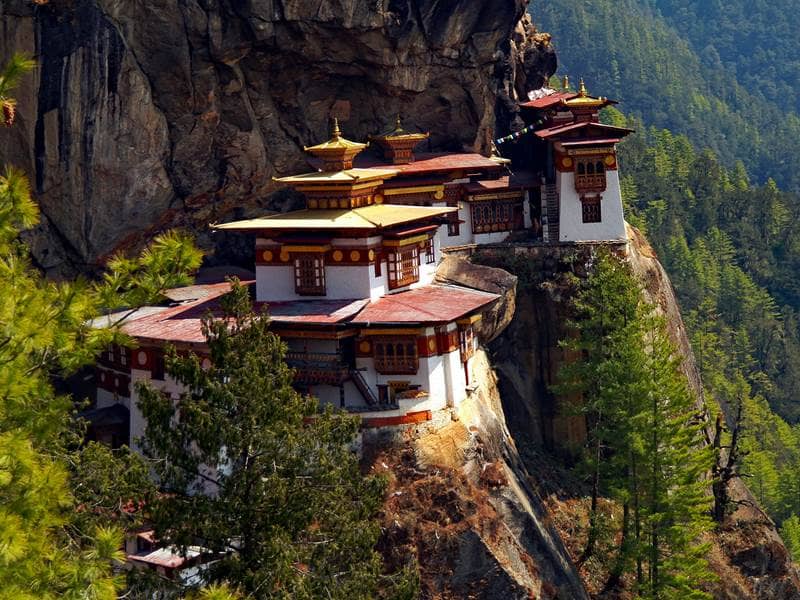
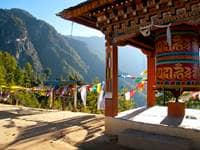
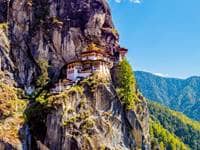
Tucked in the cliffs of the tiny Himalayan kingdom of Bhutan, the Paro Taktsang monastery is one of the most remote hermitages in the entire world. Difficult to access, one has to traverse pine trees and plants, flags and prayer wheels, and even the stalls of those peddling their wares, in order to reach the monastery—perched on a ledge some 2,625 feet in the air. So high is the “Tiger’s Nest” or “Tiger’s Lair Monastery,” as it is often called, one source said that (once you reach it) you “seem closer to the heavens than you are to the earth.”
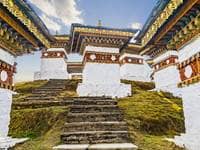
Scattered along the trail to the monastery are small temples, and clay stupa-shaped erns containing the cremated remains of various Buddhists. The monastery’s complex includes four main temples and some residential housing—all of which are interconnected. There are also eight caves, four of which are reasonably accessible and filled with various images of Buddhist Bodhisattvas and deities. There are other structures as well within the complex, but the aforementioned are the most important ones.
The site of the monastery commemorates the 8th century CE arrival of Buddhism in Bhutan—at the hands of Padmasambhava (also known as Guru Rinpoche). The monastery was constructed around a cave where the Guru supposedly meditated (after arriving from Tibet). Because of his establishment of Buddhism in Bhutan, Padmasambhava is a revered figure in the country, and is seen as the “protector saint” of the nation. In April of 1998, the main building of the monastery caught fire, killing a monk and damaging valuable artifacts, statues, and other forms of art housed therein. The resulting restoration work done on Taktsang cost an estimated 1.6 million dollars. Completed in 2005, the monastery is once again open to visitors who are willing to make the arduous trek to the remote location.
Religious Significance
According to tradition, sometime in the 8th century CE, Padmasambhava (also known as Guru Rinpoche) flew to the location of this monastery on the back of a female tiger. (In some versions of the legend, the tiger was actually a disciple of Rinpoche and a former wife of the emperor, who transformed herself into a tigress in order to help Padmasambhava achieve his appointed spiritual mission). After a prolonged period of meditation (in a cave on the cliff), he overcame demons who sought to obstruct his work, and then entered the valley to convert the people to Buddhism. As a consequence, this site—which marks the introduction of Buddhism into the country—is said to be the “holiest site in all of Bhutan.”
Just as Guru Rinpoche made a trek there to overcome the maya or illusions of demons, and to gain the status of enlightenment, today, monks, yogis, and would-be saints similarly make their way to the nearly inaccessible Tiger’s Lair, to seek enlightenment. Some staying for as long as seven years—in the hopes of achieving “awakened” status. The imprint of Guru Rinpoche’s body is said to exist on the wall of a cave near Kurje Lhakhang, so not at the actual site of the monastery. However, his footprint on a “sacred rock” are on display at the actual site of Paro Taktsang. These “relics” make the site and its surrounding locations attractive to Vajrayana and Mahayana Buddhists alike.
More importantly, Rinpoche died in Nepal, rather than at the Taktsang monastery. However, tradition says that (after his death) his body miraculously returned to the holy site, where it is believed to be sealed in a stupa (or chorten) in the monastery. Thus, with his elevated status as the nation’s “protector saint,” a pilgrimage to his grave is not all that uncommon for those who are part of his sect of devotees. Another attraction at the site of the monastery is the “lucky rock.” According to the lore, if you close your eyes and then place your thumb in the hole (that has been bored into its center), your wish will be granted. While the rock has nothing to do with Buddhism, and is more of an attraction to tourists than it is to practitioners, it is nevertheless part of the charm of the site. There is a great deal of lore surrounding the figure of Padmasambhava—tradition which then sacralizes the Palphug Monastery.
The folklore has him coming to earth at eight different times and in eight different forms or identities. Some Buddhists in Bhutan reverence him as an enlightened being, some as a bodhisattva, and some as the equivalent of a god. As a consequence, contingent upon one’s perception, the monastery will have different draws to different people. At the very least, it is a consistent place of pilgrimage for those seeking to achieve buddha status.
Related
How Are Buddhist Monastic Robes Made and Used
What Is the Oldest Religion in the World?
What Religions Believe in Hell?
How Are Hinduism and Buddhism Similar?


Which Is the True Qian? A Koan About Our Undivided Nature
Movie on Neem Karoli Baba’s life is a miraculous success
Girl In A Box: A Conversation With Paldrom Catharine Collins


Patheos Explore the world's faith through different perspectives on religion and spirituality! Patheos has the views of the prevalent religions and spiritualities of the world.
Ad-Free & Subscriber Log-In Subscription Support
- About Us
- 2026 Calendar
- Videos
- Podcasts
- Library of World Religions
- Faith In Media Tracker
- Advertise With Us
- Write for Us
- Privacy Policy
- Terms of Service
- Do Not Sell My Data
- Contact Us
- Radiant Digital
- Manage Newsletter Subscriptions
- Unsubscribe From Notifications
- Sitemap
Copyright 2008-2026, Patheos. All rights reserved.
Subscription Support Ad-Free & Subscriber Log-In
Follow Patheos