
BuddhistCatholicContemplativeEvangelicalGeneral ChristianHinduJewishLatter-day SaintMuslimNew VisionsProgressive Christian
Beliefs
- Buddhist
- Catholic
- Contemplative
- Evangelical
- General Christian
- Hindu
- Jewish
- Latter-day Saint
- More Voices
- Muslim
- New Visions
- Pagan
- Progressive Christian
Topics
- Religion News
- Food and Religion
- Sports and Religion
- Religious Art
- Religious Music and Entertainment
- Religious Events
- History and Religion
- Style and Religion
- Politics and Religion
- Women in Religion
- Recreation Outdoors and Religion
- Business Finance and Religion
- Careers Workplace and Religion
- Education and Religion
- Family Parenting and Religion
- Health Fitness and Religion
- Home and Religion
- Relationships and Religion
- Technology and Religion
- Travel and Religion
Columnists
- Buddhist Columnists
- Business Finance and Religion Columnists
- Careers Workplace and Religion Columnists
- Catholic Columnists
- Contemplative Columnists
- Education and Religion Columnists
- Evangelists Columnists
- Family Parenting and Religion Columnists
- General Christian Columnists
- Health Fitness and Religion Columnists
- Hindu Columnists
- History and Religion Columnists
- Home and Religion Columnists
- Jewish Columnists
- More Voices Columnists
- Latter Day Columnists
- Muslim Columnists
- New Visions Columnists
- Nonreligious Columnists
- Pagan Columnists
- Politics and Religion Columnists
- Progressive Columnists
- Recreation Outdoors and Religion Columnists
- Relationships and Religion Columnists
- Religion News Columnists
- Religious Art Columnists
- Religious Events Columnists
- Religious Music and Entertainment Columnists
- Sports and Religion Columnists
- Style and Religion Columnists
- Technology and Religion Columnists
- Travel and Religion Columnists
- Women in Religion Columnists
Resource Library
- 2026 Calendar
- Library of World Religions
- The 100 Most Holy Places on Earth
- Patheos Answers
- Podcasts
- Videos
- Faith Leaders Database
- Anglican Episcopalian
- Bahai
- Baptist
- Buddhism
- Christianity
- Confucianism
- Eastern Orthodoxy
- Hinduism
- Holiness and Pentecostal
- ISKCON
- Islam
- Judaism
- Lutheran
- Methodist
- The Church of Jesus Christ of Latter-day Saints
- New Age
- Paganism
- Presbytarian and Reformed
- Protestantism
- Religion Behind the Scenes
- Roman Catholic
- Scientology
- Shia Islam
- Sikhism
- Sufism
- Sunni Islam
- Taoism
- Zen
- See all religions
Research Tools
 Ad-Free & Subscriber Log-In Subscription Support
Follow Patheos 

- Trending:
- Advent
- |
- Forgiveness
- |
- Thanksgiving
- |
- Election
- |
- Seasonal Holidays
- |
- Marriage
patheos presents

The 100 Most Holy Places On Earth
number
93
Mariazell Basilica
Mariazell, Austria 


By Alonzo Gaskill | Updated: March 19, 2026 | Published: March 23, 2023

Associated Faiths:
Also ocassionally visited by Christians of other High and Low-Church traditions.
Accessibility:
Open to visitors. The Mariazell Basilica sees around 1,000,000 visitors a year.
History
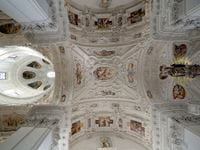
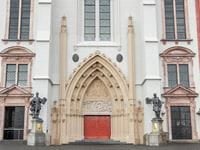
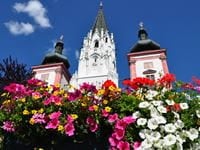
The Mariazell Basilica is not the first church or even the first structure built on this site. In the 12th century, the “cell” or dwelling place of a Benedictine monk named Magnus is said to have been built on this site. That “cell” contained a shrine to the Virgin Mary and was associated with a miraculous occurrence marking the spot as sacred. Eventually, a small church was built at the sight of Magnus’ “cell.” That church was known as “Maria in der Zette.” Over time, it too was replaced with a much larger church, built on the same site—a 14th century building, gothic in its architecture, and sporting a nearly 300-foot spire. Destroyed by fire, its replacement—a Baroque style edifice—is the one which stands on the spot today. The Mariazell Basilica (or Basilica of the Birth of the Virgin Mary) has a total of twelve chapels, each containing its own altar. But, more importantly, the Basilica houses the “Magna Mater Austria” (“Great Mother of Austria”)—a nearly 19-inch wooden statue of the Virgin Mary which dates from the Romanesque era (circa AD 1,100). This statue is often referred to as “miraculous” because of the lore associated with it.
By the late 12th century, the Magnus’ “cell” and Marian shrine (on the site) had already become a common destination for pilgrims. Part of the early popularity of the site is attributed to the “miraculous” image of the Virgin Mary. However, part of the motivation for pilgrimage to the site, at least in the 14th century, was the fact that a court imposed what was known as a “Zell Journey” (Zellfahrt, in German) for criminals where, as an attempt at reforming them, they had to make a long pilgrimage to the site of the Marian shrine.
The site is not without its controversy. Following the Roman Catholic Counter-Reformation, the “House of Austria” (one of that nation’s most important dynasties) declared the Basilica Mariä Geburt a “national sanctuary.” Yet, only about 200 years later, Emperor Joseph II banned any pilgrimages to the site. (Joseph was a Catholic, but only tolerated much associated with the Church, including perceived pressures from the Pope to control the Emperor and the people of Austria.) Thankfully, the emperor’s ban was short-lived.
The current edifice is one of the most visited Roman Catholic shrines in Europe and the most visited religious site in Austria. Buit over a 39-year period (in the 17th century), the current building was originally just a parish church, but it was elevated to the status of basilica (in 1907) by Pope Pius X. The combination of its beauty and the stories of its associated miracles, have made it a place of pilgrimage (particularly for Roman Catholics) for many years.
Religious Significance
The Mariazell Basilica is famous for its lore, both in association with the building, but also as it relates to the statue of the Virgin Mary enshrined therein. While there are many stories, there are a couple which are said to provoke pilgrimage to the site. Among them are the following.
In the mid-12th century, a Benedictine monk (from St. Lambrecht) was sent to the area of Mariazell by his abbot to pastor the people living in that area. As Magus, the monk, was traveling the tradition says he came across a large bolder which blocked the path. With him was a statue of the Virgin Mary, which he carried with great reverence. In an effort to assess his situation, he set his possessions upon the ground—including his statue of the Virgin. The very instant the statue touched the earth, the rock broke apart, clearing the way for Magnus to continue his journey. Near the site of the Mariazell Basilica is a path which leads to the location where the miracle of the rock is said to have happened. The remains of the rock are known as the “Rock of Magnus.”
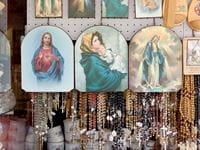
Other legends suggest that the statue has healing power. Thus, it—even more than the basilica—is why this site is perceived as holy by so many Christians. Indeed, the “Maria in der Zette” church which once stood on this sacred site was commissioned by a couple who received a healing which they attributed to the Virgin Mary. As a consequence of the miracles associated with the “Magna Mater Austria” statue, an interesting tradition has arisen. The image of the Virgin receives a new dress each year—traditionally a very elaborate, handmade garment. This practice has been going on for more than a century. Consequently, there are on display more than 150 dresses with which the statue has been clothed over the years. People will make these as supplicatory offerings, and (if their dress is chosen) it is considered a great honor to see the virgin dressed in something you have made.
In addition to these aforementioned miracles, some have suggested that the Marian statue has helped Austria protect itself from its enemies. Others have suggested that if the statue wears a dress donated by a given family, that will bring the specific family blessings or miracles. Stories like these abound. However, as with any Marian shrine, the Basilica Mariä Geburt is a site sacred to all who embrace the Mariology of the Church, who love the Virgin, and who believe that the Jesus’ mother plays an important role in the prayer life and salvation of Roman Catholics..
Related
Do Christians Believe in Evolution?

Evidence for Hebrews / Semites in Egypt: 2000-1200 B.C.
Walking the Journey of Abraham
Gospel Reflection: Why I Love Doubting Thomas
Kathleen Mulhern, PH.D.
Do Catholics Believe in Salvation By Works?
Kathleen Mulhern, Ph.D.
Patheos Explore the world's faith through different perspectives on religion and spirituality! Patheos has the views of the prevalent religions and spiritualities of the world.
Ad-Free & Subscriber Log-In Subscription Support
- About Us
- 2026 Calendar
- Videos
- Podcasts
- Library of World Religions
- Faith In Media Tracker
- Advertise With Us
- Write for Us
- Privacy Policy
- Terms of Service
- Do Not Sell My Data
- Contact Us
- Radiant Digital
- Manage Newsletter Subscriptions
- Unsubscribe From Notifications
- Sitemap
Copyright 2008-2026, Patheos, part of the Radiant Digital network of media brands. All rights reserved.
Subscription Support Ad-Free & Subscriber Log-In
Follow Patheos