
BuddhistCatholicContemplativeEvangelicalGeneral ChristianHinduJewishLatter-day SaintMuslimNew VisionsProgressive Christian
Beliefs
- Buddhist
- Catholic
- Contemplative
- Evangelical
- General Christian
- Hindu
- Jewish
- Latter-day Saint
- More Voices
- Muslim
- New Visions
- Pagan
- Progressive Christian
Topics
- Religion News
- Food and Religion
- Sports and Religion
- Religious Art
- Religious Music and Entertainment
- Religious Events
- History and Religion
- Style and Religion
- Politics and Religion
- Women in Religion
- Recreation Outdoors and Religion
- Business Finance and Religion
- Careers Workplace and Religion
- Education and Religion
- Family Parenting and Religion
- Health Fitness and Religion
- Home and Religion
- Relationships and Religion
- Technology and Religion
- Travel and Religion
Columnists
- Buddhist Columnists
- Business Finance and Religion Columnists
- Careers Workplace and Religion Columnists
- Catholic Columnists
- Contemplative Columnists
- Education and Religion Columnists
- Evangelists Columnists
- Family Parenting and Religion Columnists
- General Christian Columnists
- Health Fitness and Religion Columnists
- Hindu Columnists
- History and Religion Columnists
- Home and Religion Columnists
- Jewish Columnists
- More Voices Columnists
- Latter Day Columnists
- Muslim Columnists
- New Visions Columnists
- Nonreligious Columnists
- Pagan Columnists
- Politics and Religion Columnists
- Progressive Columnists
- Recreation Outdoors and Religion Columnists
- Relationships and Religion Columnists
- Religion News Columnists
- Religious Art Columnists
- Religious Events Columnists
- Religious Music and Entertainment Columnists
- Sports and Religion Columnists
- Style and Religion Columnists
- Technology and Religion Columnists
- Travel and Religion Columnists
- Women in Religion Columnists
Resource Library
- 2026 Calendar
- Library of World Religions
- The 100 Most Holy Places on Earth
- Patheos Answers
- Podcasts
- Videos
- Faith Leaders Database
- Anglican Episcopalian
- Bahai
- Baptist
- Buddhism
- Christianity
- Confucianism
- Eastern Orthodoxy
- Hinduism
- Holiness and Pentecostal
- ISKCON
- Islam
- Judaism
- Lutheran
- Methodist
- The Church of Jesus Christ of Latter-day Saints
- New Age
- Paganism
- Presbytarian and Reformed
- Protestantism
- Religion Behind the Scenes
- Roman Catholic
- Scientology
- Shia Islam
- Sikhism
- Sufism
- Sunni Islam
- Taoism
- Zen
- See all religions
Research Tools
 Ad-Free & Subscriber Log-In Subscription Support
Ad-Free & Subscriber Log-In Subscription Support
Follow Patheos 

- Trending:
- Forgiveness
- |
- Marriage
- |
- Consciousness
- |
- Death Penalty
- |
- Election
- |
- Halloween
patheos presents

The 100 Most Holy Places On Earth
number
69
Mapang Yongcuo
Burang County, Tibet Autonomous Region, China 


By Alonzo Gaskill | Updated: March 19, 2026 | Published: March 23, 2023
Associated Faiths:
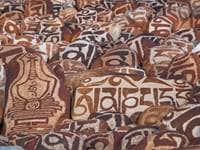
Hinduism, Bön, Buddhism, Jainism and Sikhism
Accessibility:
Open to visitors from May through October.
Annual Visitors: 20,000
History
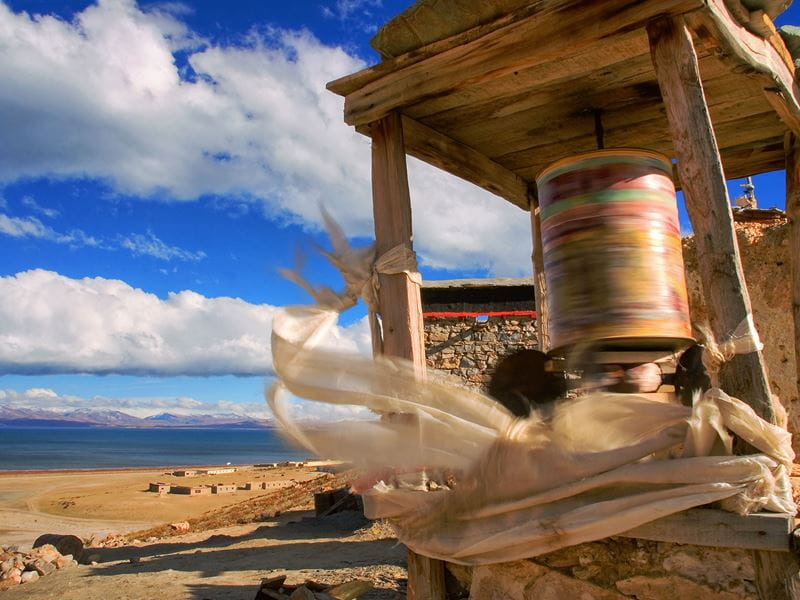
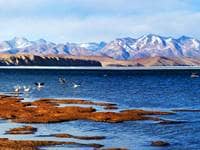
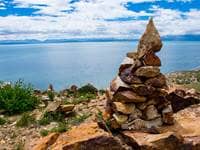
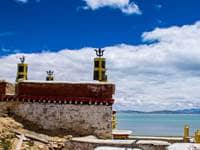
Lake Mansarovar, along with Mount Kailash (which lies just to the north), are sacred in several traditions, including Bön (a Tibetan tradition with many similarities to Vajrayana Buddhism), Mahayana Buddhism, Hinduism, Jainism and Sikhism. The lake’s name, “Mānsarovar,” means “mind lake.” Its name comes from the belief that the lake was the first body of water that the Hindu deity, Brahma, created in his mind. And, like the mind of all enlightened beings and all gods, it is “calm, strong, and tranquil.” The name of the associated mountain, “Kailash,” means “where there is only celebration.” Its name comes from the belief that it is the location where the gods reside and meditate and, where the gods are, there is only celebration.
While the date of the formation of the lake is unknown, what can be said with certainty is that it sits at the highest elevation of any freshwater lake in the world. Standing at nearly 15 thousand feet above sea level, it is also one of the highest lakes, generally speaking, as well. Lake Mānsarovar is the source of four major rivers in the region (i.e., the Brahmaputra, Ghagra, Sindhu, and Satluj rivers).
Hindus see the waters of Lake Mānsarovar as being karma-remitting. But they also believe that many of the herbs around the mountain and lake have healing properties as well. Locals and tourists alike are prone to gather freely from the banks and slopes the plants which grow naturally there.
While some places of pilgrimage that highlight miracles which have taken place there, Lake Mānsarovar is somewhat different. It and its associated mountain are said to offer miracles. Indeed, miracles of healing are ones strongly associated with this place. However, for whatever reason, such miracles are not typically chronicled. Thus, oral traditions are all which exist of this sacred site’s miraculous events.
Religious Significance
In Hindu teachings, Lake Mānsarovar was formed by Hinduism’s creator god, Brahma. He designed it to be a place for the carrying out of sacred rites. Tradition has it that it is the “bathing place” for the gods during Brahmamuhurtha (i.e., the pre-dawn 48-minute meditative period each day). Many Hindus also believe that those who bathe in the lake or drink the water of the lake have all of their karma (or sins) remitted.
In Bön, this lake and its associated mountain have sacred significance. Bõnpos hold that Tonapa Shernab (or Tonpa Sherab) founded their faith. It is said that on a trip to Tibet, he saw the lake for the first time and descended into it in order to take a ritual bath. So, it has ritual significance for practitioners of Bön, in addition to being part of their faith’s mythology.
In addition to Bõnpos, Buddhists perceive this site as sacred because Sidhartha Gautama (the historic Buddha) is said to have meditated upon Mount Kailash (which they call “Meru Parvat”). It is presumed by most that he also certainly drank from and bathed in Lake Mānsarovar. Consequently, like so many other sites where there is belief that the Buddha walked or taught, this one too has its sacred significance.
Jainism, like Buddhism, broke off of Hinduism circa 6th century BEC. Jains believe that there are 24 Tirthankaras (or divine teachers) who come to the earth at different stages of its existence to help those seeking unattachment and enlightenment to escape the “wheel” of transmigration. Though the 24th Tirthankara (Vardhamana Mahavira) is the most important to practicing Jains, they believe that Rishabh Deva (the first of the Tirthankaras) attained spiritual liberation at Lake Mānsarovar. Thus, it is sacred to that sect as well.
Finally, Sikhism is the youngest of the traditions to hold Lake Mānsarovar to be a sacred site. Sikhism claims that it was at this important site that their founder (Guru Nanak Dev Ji) learned how to meditate. That meditative encounter may well have led to his founding of Sikhism.
Mount Kailash is bordered by six other mountain ranges from various sides. In some of the aforementioned traditions, Mount Kailash (and, by association, Mānsarovar) is the central point on the earth. The collective mountain ranges and holy lake are the focus of the entire universe. Thus, they are sacred sites in many traditions.
Related
How Does One Become a Buddhist Monk?
Alonzo L. Gaskill, PH.D.
How Does Karma Work in Buddhism?
Kathleen Mulhern, PH.D.

Patheos Explore the world's faith through different perspectives on religion and spirituality! Patheos has the views of the prevalent religions and spiritualities of the world.
Ad-Free & Subscriber Log-In Subscription Support
- About Us
- 2026 Calendar
- Videos
- Podcasts
- Library of World Religions
- Faith In Media Tracker
- Advertise With Us
- Write for Us
- Privacy Policy
- Terms of Service
- Do Not Sell My Data
- Contact Us
- Radiant Digital
- Manage Newsletter Subscriptions
- Unsubscribe From Notifications
- Sitemap
Copyright 2008-2026, Patheos. All rights reserved.
Subscription Support Ad-Free & Subscriber Log-In
Follow Patheos