
BuddhistCatholicContemplativeEvangelicalGeneral ChristianHinduJewishLatter-day SaintMuslimNew VisionsProgressive Christian
Beliefs
- Buddhist
- Catholic
- Contemplative
- Evangelical
- General Christian
- Hindu
- Jewish
- Latter-day Saint
- More Voices
- Muslim
- New Visions
- Pagan
- Progressive Christian
Topics
- Religion News
- Food and Religion
- Sports and Religion
- Religious Art
- Religious Music and Entertainment
- Religious Events
- History and Religion
- Style and Religion
- Politics and Religion
- Women in Religion
- Recreation Outdoors and Religion
- Business Finance and Religion
- Careers Workplace and Religion
- Education and Religion
- Family Parenting and Religion
- Health Fitness and Religion
- Home and Religion
- Relationships and Religion
- Technology and Religion
- Travel and Religion
Columnists
- Buddhist Columnists
- Business Finance and Religion Columnists
- Careers Workplace and Religion Columnists
- Catholic Columnists
- Contemplative Columnists
- Education and Religion Columnists
- Evangelists Columnists
- Family Parenting and Religion Columnists
- General Christian Columnists
- Health Fitness and Religion Columnists
- Hindu Columnists
- History and Religion Columnists
- Home and Religion Columnists
- Jewish Columnists
- More Voices Columnists
- Latter Day Columnists
- Muslim Columnists
- New Visions Columnists
- Nonreligious Columnists
- Pagan Columnists
- Politics and Religion Columnists
- Progressive Columnists
- Recreation Outdoors and Religion Columnists
- Relationships and Religion Columnists
- Religion News Columnists
- Religious Art Columnists
- Religious Events Columnists
- Religious Music and Entertainment Columnists
- Sports and Religion Columnists
- Style and Religion Columnists
- Technology and Religion Columnists
- Travel and Religion Columnists
- Women in Religion Columnists
Resource Library
- 2026 Calendar
- Library of World Religions
- The 100 Most Holy Places on Earth
- Patheos Answers
- Podcasts
- Videos
- Faith Leaders Database
- Anglican Episcopalian
- Bahai
- Baptist
- Buddhism
- Christianity
- Confucianism
- Eastern Orthodoxy
- Hinduism
- Holiness and Pentecostal
- ISKCON
- Islam
- Judaism
- Lutheran
- Methodist
- The Church of Jesus Christ of Latter-day Saints
- New Age
- Paganism
- Presbytarian and Reformed
- Protestantism
- Religion Behind the Scenes
- Roman Catholic
- Scientology
- Shia Islam
- Sikhism
- Sufism
- Sunni Islam
- Taoism
- Zen
- See all religions
Research Tools
 Ad-Free & Subscriber Log-In Subscription Support
Ad-Free & Subscriber Log-In Subscription Support
Follow Patheos 

- Trending:
- Forgiveness
- |
- Marriage
- |
- Consciousness
- |
- Death Penalty
- |
- Election
- |
- Halloween
patheos presents

The 100 Most Holy Places On Earth
number
77
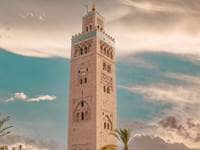
Koutoubia
Marrakesh, Morocco 


By Alonzo Gaskill | Updated: March 19, 2026 | Published: March 23, 2023
Associated Faiths:
Accessibility:
The actual mosque is not open to non-Muslims. While Muslims can visit the mosque during salah (or prayer) 5 times each day, outside of those times entrance into the mosque is limited.
Annual Visitors: 2,000,000
History
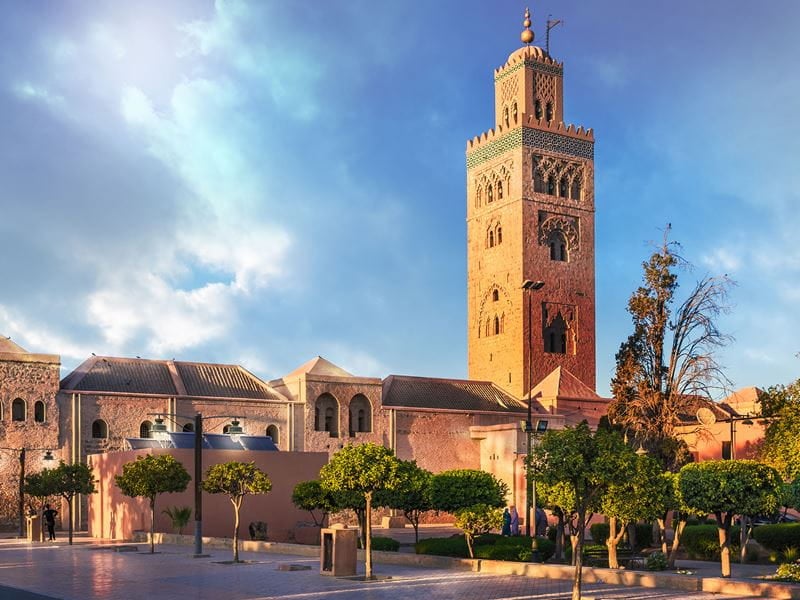
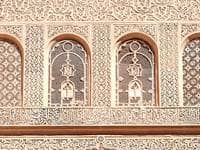
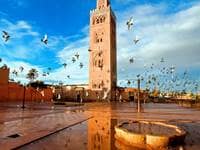
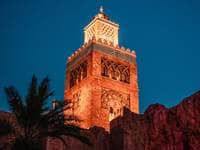
Marrakesh’s Koutoubia Mosque was founded by the Islamic caliph, Abd al-Mu’min, immediately after he conquered Marrakesh (in 1147 CE). Approximately a decade later, the same calif built a second version of the mosque—with its construction being completed circa 1195 CE. The mosque that stands on the site today is the latter of these two. (The ruins of the original mosque are still partially visible on the site.) This historic mosque is often pointed to as an example of classic Almohad architecture, and it is widely assumed that it influenced a number of the buildings in Marrakesh in the years following the Koutoubia Mosque’s construction.
The name of the mosque, Koutoubia (variously spelled), is taken from an Arabic word, which means “booksellers.” Hence, the mosque is sometimes simply referred to as the “Mosque of the Booksellers.” In the 19th century, the area around the sacred edifice was occupied by as many as 100 book venders—who worked the streets and small shops in the environ. This was considered an “honorable” trade, and the name “stuck” since most of those booksellers attended that very mosque.
When the Almohads conquered the Almoravids, it is said that they tore down all of their mosques—claiming that the Almoravids were heretics and perceiving them as their staunch enemies. The Almohads claimed that the Almoravids had oriented all of their mosques the wrong direction and, thus, they had to be destroyed. This was the justification to tear down the Almoravid mosque that stood where the Koutoubia mosque does now. Ironically, some scholars believe the reason Abd al-Mu’min built a mosque and then only 11 years later built a second one right next to the first one was that he himself had built his first one with an inaccurate orientation—the very thing he condemned the Almoravids for.
In the late 1990s, the mosque, including its minaret, underwent some significant restoration work. In 2016, the government—which pays to maintain the mosque—required that it be updated with solar panels, solar water heaters, and LED lighting. The reason behind these most recent updates was the cost to operate mosque, which was considered quite high owing to the fact that many of the mosque’s features (prior to the updates) were quite primitive.
Religious Significance
As with any mosque, the Koutoubia Mosque is a “sacred space,” in part because removing one’s shoes and washing, and then entering a mosque (to engage in prayer) is typically seen as a “spiritual ascent” into the presence of Allah. Thus, aside from the historic uniqueness of this rose-colored 12th century mosque, just the concept of a mosque—a “place of prostration”—implies holiness for some 2 billion of the earth’s inhabitants.
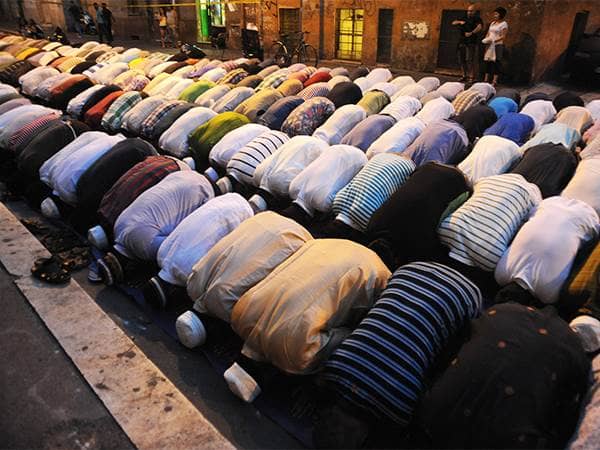
The Prophet Muhammed is said to have declared: “The prayer offered in a congregation is twenty-five times more superior (in reward) to the prayer offered alone in one’s house.” Thus, Muslims (where possible) prefer to pray with others, in a congregation or, at the very least, with friends of family. So spacious is the Koutoubia mosque that 25,000 people can worship in the building at the same time. Remarkably, really! Thus, not only is this space sacrosanct, but so are the prayers said therein—simply by virtue of how many people gather there five times each day to commune with God together.
While not all mosques throughout the world are closed to non-Muslims, many are—particularly in certain parts of the world. While non-Muslims might perceive that as non-inclusive and even arrogant, one must remember that the concept of “sacred space” has always included the notion that those who worshiped there were to protect that space—to keep it undefiled and holy. Thus, the fact that Muslims limit entrance to those of their own faith is, in many ways, a positive sign. It shows that they get the concept of “sacred space,” and it is instructive to non-Muslims, helping them contemplate the idea of sacred space; something a religious center open to all people cannot do.
Perhaps the most important reason why the Koutoubia mosque constitutes “sacred space” is because believers go there to “prostrate” themselves before God. (The word “mosque” means “place of prostration.”) To prostrate oneself before God is an act of submission. It symbolizes that one is giving oneself and one’s will over to the divine, preferring His will over one’s own. That is always a sacral act, and doing so will always hallow the ground on which such sincere submission takes place.
Related
Unbeaching Midwestern History With Muslim Stories
How One Ottoman Reconciled Islamic Teachings with Darwin's Theory of Evolution
How Muslim Prayer Rugs Are Made and Used
Tara Citinkaya
Muslim Funeral Rites and the Islamic Society that Performs Them
Dr. Salman Masud
What Religions Are Monotheistic?
by Alonzo L. Gaskill, PH.D.

Why Do Muslims Pray Five Times a Day?
Patheos Explore the world's faith through different perspectives on religion and spirituality! Patheos has the views of the prevalent religions and spiritualities of the world.
Ad-Free & Subscriber Log-In Subscription Support
- About Us
- 2026 Calendar
- Videos
- Podcasts
- Library of World Religions
- Faith In Media Tracker
- Advertise With Us
- Write for Us
- Privacy Policy
- Terms of Service
- Do Not Sell My Data
- Contact Us
- Radiant Digital
- Manage Newsletter Subscriptions
- Unsubscribe From Notifications
- Sitemap
Copyright 2008-2026, Patheos. All rights reserved.
Subscription Support Ad-Free & Subscriber Log-In
Follow Patheos