
BuddhistCatholicContemplativeEvangelicalGeneral ChristianHinduJewishLatter-day SaintMuslimNew VisionsProgressive Christian
Beliefs
- Buddhist
- Catholic
- Contemplative
- Evangelical
- General Christian
- Hindu
- Jewish
- Latter-day Saint
- More Voices
- Muslim
- New Visions
- Pagan
- Progressive Christian
Topics
- Religion News
- Food and Religion
- Sports and Religion
- Religious Art
- Religious Music and Entertainment
- Religious Events
- History and Religion
- Style and Religion
- Politics and Religion
- Women in Religion
- Recreation Outdoors and Religion
- Business Finance and Religion
- Careers Workplace and Religion
- Education and Religion
- Family Parenting and Religion
- Health Fitness and Religion
- Home and Religion
- Relationships and Religion
- Technology and Religion
- Travel and Religion
Columnists
- Buddhist Columnists
- Business Finance and Religion Columnists
- Careers Workplace and Religion Columnists
- Catholic Columnists
- Contemplative Columnists
- Education and Religion Columnists
- Evangelists Columnists
- Family Parenting and Religion Columnists
- General Christian Columnists
- Health Fitness and Religion Columnists
- Hindu Columnists
- History and Religion Columnists
- Home and Religion Columnists
- Jewish Columnists
- More Voices Columnists
- Latter Day Columnists
- Muslim Columnists
- New Visions Columnists
- Nonreligious Columnists
- Pagan Columnists
- Politics and Religion Columnists
- Progressive Columnists
- Recreation Outdoors and Religion Columnists
- Relationships and Religion Columnists
- Religion News Columnists
- Religious Art Columnists
- Religious Events Columnists
- Religious Music and Entertainment Columnists
- Sports and Religion Columnists
- Style and Religion Columnists
- Technology and Religion Columnists
- Travel and Religion Columnists
- Women in Religion Columnists
Resource Library
- 2026 Calendar
- Library of World Religions
- The 100 Most Holy Places on Earth
- Patheos Answers
- Podcasts
- Videos
- Faith Leaders Database
- Anglican Episcopalian
- Bahai
- Baptist
- Buddhism
- Christianity
- Confucianism
- Eastern Orthodoxy
- Hinduism
- Holiness and Pentecostal
- ISKCON
- Islam
- Judaism
- Lutheran
- Methodist
- The Church of Jesus Christ of Latter-day Saints
- New Age
- Paganism
- Presbytarian and Reformed
- Protestantism
- Religion Behind the Scenes
- Roman Catholic
- Scientology
- Shia Islam
- Sikhism
- Sufism
- Sunni Islam
- Taoism
- Zen
- See all religions
Research Tools
 Ad-Free & Subscriber Log-In Subscription Support
Ad-Free & Subscriber Log-In Subscription Support
Follow Patheos 

- Trending:
- Forgiveness
- |
- Marriage
- |
- Consciousness
- |
- Death Penalty
- |
- Election
- |
- Halloween
patheos presents

The 100 Most Holy Places On Earth
number
47
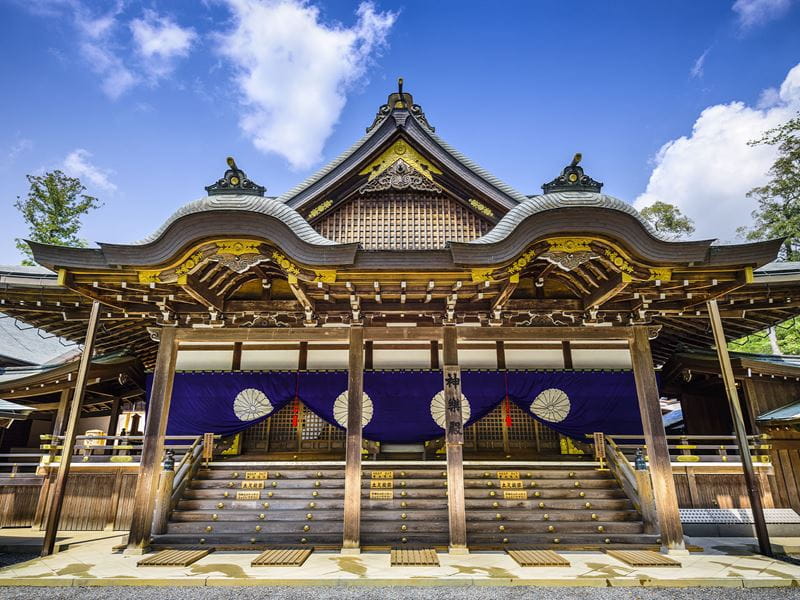
Ise Grand Shrine
Ise, Japan 


By Alonzo Gaskill | Updated: March 19, 2026 | Published: March 23, 2023


Also Known As:
Ise Grand Shrine Naiku (Kotai jingu)
Associated Faiths:
Also frequented by Buddhists, since (in Japan) it is often difficult to separate Buddhism and Shinto (many Japanese practicing both)
Accessibility:
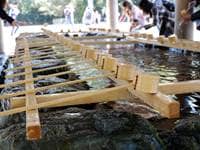
Portions are open to visitors. Ritual washing (at the temizuya or ablution pavilion) encouraged before entering. Visitors who are not Shinto priests or members of the Japanese royal family are not allowed to pass through the torii gate and into the main sanctuary..
Annual visitors: 10,000,000
History
The Ise Grand Shrine has been called “the most important Shinto site in Japan.” Often referred to as Jingū, it is specifically dedicated to the Shinto goddess, Amaterasu—who is the goddess of the sun and who, by all accounts, is the most important of Shinto deities. It is her image which appears on the Japanese flag.
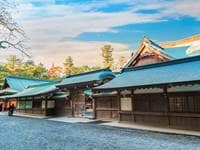
Because it is a form of nature worship (in addition to being intimately connected with Japanese patriotism), Shinto shrines are most often bult in heavily wooded areas, where nature, and the gods (or kami) it houses, can be at their peak. Shinto shrines are often built out of all natural supplies as well. Where nature is present, the spirits (or kami) are also present in abundance.
Because Shinto dates back to hundreds of years before the common era, one would expect that the Ise Grand Shrine would itself be quite ancient. However, such is not the case. For the last fourteen centuries, every 20 years the Ise Grand Shrine has been rebuilt. As a simple structure, every two decades—right next to the old shrine—a new one is built, as a reminder of the renewal of nature. This principle is called tokowaka, which means “renewing objects” for the sake of maintaining a sense of the divine presence (usually in the form of kami).
When the Shinto text, the Kojiki, was compiled (in 712 CE), pilgrimages were already being made to the Jingu shrine complex—which actually consists of many shrines. Some of the shrines which make up the complex are more important than others, and more visited than others. Nonetheless, this site has been understood to be “holy” ground for perhaps as much as two millennia.
Mirrors are common symbols for Amaterasu, the goddess of the sun. According to Shinto texts, the goddess had gotten upset at her brother, who was also her husband. Thus, she went into hiding and refused to out of the cave she had retreated to. A large mirror was placed at the mouth of the cave while various festivities took place. Curious about all the noise, Amaterasu peaked out and was grabbed by a deity—and, thus, sunlight returned to the universe. Mirrors are also used in other temples and at home shrines. They are said to be a portal or doorway through which kami enter our world and return to their own.
Religious Significance
In Shinto tradition, there are kami or spirits everywhere. Trees have kami, bodies of water have associated kami, rocks may have kami, as can human-made things, such as a possession, vehicle, statue, shrine, etcetera. While Shinto kami are not omnipotent or omnipresent, they are perceived as real, divine, and very powerful. Thus, they are revered, and genuine practitioners consistently do much to ensure that the kami are kept happy and appeased, so that the land and people of Japan will be blessed and fruitful, and so that individual requests (made to kami at Shinto shrines and home shrines, or kamidanas/Butsudans) will be heard and affirmatively answered.
While various Shinto shrines can be dedicated to a specific kami (spirit or god), one can worship and petition various kami at any given shrine or kamidana. That being said, the Ise Grand Shine is unique because it has been referred to as “the most important” of Japan’s more than 100 thousand Shinto shrines. It is specifically associated with the most important deity in the Shinto pantheon—Amaterasu, the goddess of the sun.
As noted, Shinto kami are not all-powerful or everywhere present beings. Thus, they are traditionally understood to be restricted or limited in their ability to curse or bless practitioners based on that given kami’s sphere or existence and influence. For example, a kami of the water can only punish people through water (e.g., floods, droughts, etc.) or bless them through water (e.g., ending a drought so that crops grow abundantly, or so that sufficient drinking water is available for worshipers). However, a kami of the water could not cause an earthquake, a fire, an electrical storm, etc. Thus, there are limitations. This is no different for Amaterasu and the plethora of shrines associated with her. Practitioners make pilgrimages to the Jingū shrine, not simply to encounter a piece of Japanese history, but also so that they can request the assistance of the kami, in their lives, studies, work or family life.
If one understands the ever-present nature of the kami—particularly at a Shinto shrine—one cannot help but recognize that this is “sacred” ground. For many of the older generation, the appeasement of the kami brings blessings and protection to practitioners who visit the holy houses. The sacral nature is not in the building (which is torn down every 20 years), in the Torii gate one must pass through, or even in the ritual obligations. No, the “sacred site” is found in the land and the kami who dwell on it. All of the buildings and their accoutrements are simply vehicles to help the pilgrim connect with the divine kami.
Related



How to Prepare a Zen Dharma Talk: Thirteen Points

Movie on Neem Karoli Baba’s life is a miraculous success

The History of Budai, the Laughing Buddha
Spiritual Long Beach: The Catholic Shrine to Mary Cared for by Buddhist Monks
Patheos Explore the world's faith through different perspectives on religion and spirituality! Patheos has the views of the prevalent religions and spiritualities of the world.
Ad-Free & Subscriber Log-In Subscription Support
- About Us
- 2026 Calendar
- Videos
- Podcasts
- Library of World Religions
- Faith In Media Tracker
- Advertise With Us
- Write for Us
- Privacy Policy
- Terms of Service
- Do Not Sell My Data
- Contact Us
- Radiant Digital
- Manage Newsletter Subscriptions
- Unsubscribe From Notifications
- Sitemap
Copyright 2008-2026, Patheos. All rights reserved.
Subscription Support Ad-Free & Subscriber Log-In
Follow Patheos