
BuddhistCatholicContemplativeEvangelicalGeneral ChristianHinduJewishLatter-day SaintMuslimNew VisionsProgressive Christian
Beliefs
- Buddhist
- Catholic
- Contemplative
- Evangelical
- General Christian
- Hindu
- Jewish
- Latter-day Saint
- More Voices
- Muslim
- New Visions
- Pagan
- Progressive Christian
Topics
- Religion News
- Food and Religion
- Sports and Religion
- Religious Art
- Religious Music and Entertainment
- Religious Events
- History and Religion
- Style and Religion
- Politics and Religion
- Women in Religion
- Recreation Outdoors and Religion
- Business Finance and Religion
- Careers Workplace and Religion
- Education and Religion
- Family Parenting and Religion
- Health Fitness and Religion
- Home and Religion
- Relationships and Religion
- Technology and Religion
- Travel and Religion
Columnists
- Buddhist Columnists
- Business Finance and Religion Columnists
- Careers Workplace and Religion Columnists
- Catholic Columnists
- Contemplative Columnists
- Education and Religion Columnists
- Evangelists Columnists
- Family Parenting and Religion Columnists
- General Christian Columnists
- Health Fitness and Religion Columnists
- Hindu Columnists
- History and Religion Columnists
- Home and Religion Columnists
- Jewish Columnists
- More Voices Columnists
- Latter Day Columnists
- Muslim Columnists
- New Visions Columnists
- Nonreligious Columnists
- Pagan Columnists
- Politics and Religion Columnists
- Progressive Columnists
- Recreation Outdoors and Religion Columnists
- Relationships and Religion Columnists
- Religion News Columnists
- Religious Art Columnists
- Religious Events Columnists
- Religious Music and Entertainment Columnists
- Sports and Religion Columnists
- Style and Religion Columnists
- Technology and Religion Columnists
- Travel and Religion Columnists
- Women in Religion Columnists
Resource Library
- 2026 Calendar
- Library of World Religions
- The 100 Most Holy Places on Earth
- Patheos Answers
- Podcasts
- Videos
- Faith Leaders Database
- Anglican Episcopalian
- Bahai
- Baptist
- Buddhism
- Christianity
- Confucianism
- Eastern Orthodoxy
- Hinduism
- Holiness and Pentecostal
- ISKCON
- Islam
- Judaism
- Lutheran
- Methodist
- The Church of Jesus Christ of Latter-day Saints
- New Age
- Paganism
- Presbytarian and Reformed
- Protestantism
- Religion Behind the Scenes
- Roman Catholic
- Scientology
- Shia Islam
- Sikhism
- Sufism
- Sunni Islam
- Taoism
- Zen
- See all religions
Research Tools
 Ad-Free & Subscriber Log-In Subscription Support
Ad-Free & Subscriber Log-In Subscription Support
Follow Patheos 

- Trending:
- Forgiveness
- |
- Marriage
- |
- Consciousness
- |
- Death Penalty
- |
- Election
- |
- Halloween
patheos presents

The 100 Most Holy Places On Earth
number
18
Church of Nativity
Bethlehem, Palestine 


By Alonzo Gaskill | Updated: March 19, 2026 | Published: March 23, 2023
Also Known As:
Basilica of the Nativity
Associated Faiths:
Greek Orthodox, Armenian Apostolic (Oriental Orthodox), Roman Catholic, Coptic Orthodox, and Syriac Orthodox
It also draws Christians of the Low-Church Protestant traditions, even though it is officially affiliated with High-Church denominations of Christianity
Accessibility:
Open to visitors.
Annual visitors: 4,200,000
History
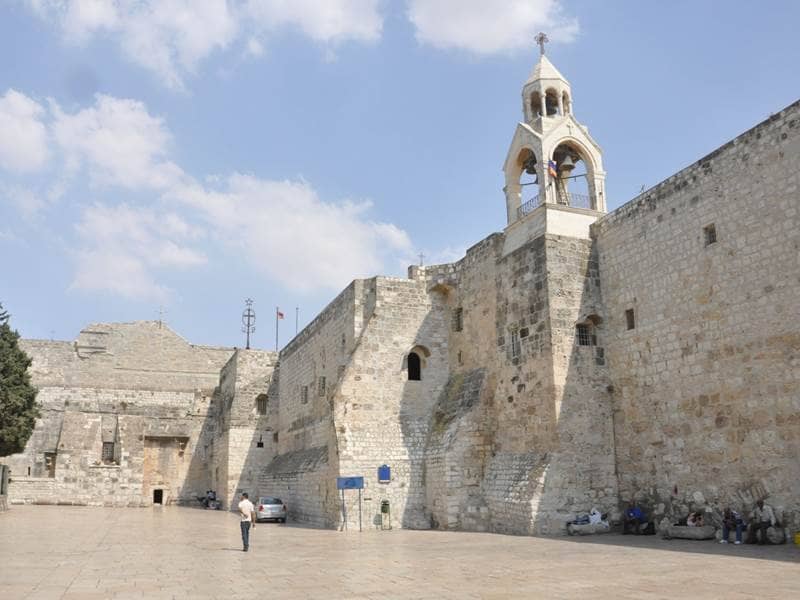
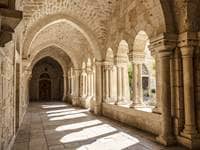
Like a few other contested sites in the Holy Land, the Church of the Nativity is not owned or operated by a singular denomination of Christianity. While most of the building, and most of its furnishings, are the property of the Greek Orthodox Church, the Armenian Apostolic Church (an Oriental Orthodox denomination) and the Roman Catholic Church own diminishing portions of the building. In addition, the Coptic and Syriac Orthodox Churches have rights to worship in the edifice, though those are greatly limited.
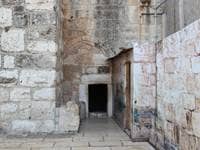
This is not the first house of worship to be built on the “sacred site” of Jesus’ birth. In AD 135, a small pagan temple and grove were established there, in an effort to wipe out any association with Jesus or Christianity. In the 4th century, Empress Helena (the mother of Constantine) and Bishop Makarios of Jerusalem identified the cave as the site of Jesus’ birth and, in AD 326-327, construction started on the first basilica to be constructed on the site. Unfortunately, by the mid-6th century, the church had been burned and largely destroyed. In that same century, it was rebuilt in its current form. During the Ottoman conquest, the church was abused and misused. The entrance was actually greatly reduced in size specifically to keep people from taking livestock into the church. The reduced size of the entrance became known as the “Door of Humility” since you had to bow to enter the Church (after the alteration of the doorway). The church suffered significant damage from early 19th century earthquakes. Major and much needed renovations to the church began in late 2013. However, there are ongoing issues with water damage and structural issues that have caused concern for the longevity of this holy site.
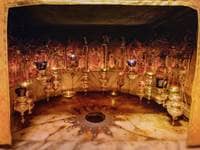
The crypt of the church is the location of the grotto, where Jesus is said to have been born. The spot is marked by a silver, fourteen-pointed star—symbolic of the “new star” seen around the time of Christ’s birth. Just to the left of the spot where legend has it that Jesus was born is the spot where His manger is said to have stood. Of course, as is the case with so much in the Holy Land, this sacred site (like others) has been so popularized that Mary and Joseph would hardly recognize it. What may have once been a dirt and straw floor, is now marble. Oil lamps and icons are hung everywhere. And the ornateness one comes to expect in an Eastern Orthodox Church is fully on display at the Grotto of the Nativity.
In addition to being the site at which Jesus was born, the Church of the Nativity is also the place where the body of Saint Jerome is buried. In the 5th century, he started a monastery in Bethlehem, and it was there (according to tradition) that Jerome did the bulk of translation for the Latin Vulgate Bible. Thus, Bethlehem is the birthplace of Jesus and the birthplace of what, for a time, was considered the common man’s Bible.
Religious Significance
Jesus famously declared, “I am the bread of life: he that cometh to me shall never hunger.” Of course, the Church of the Nativity is located in Bethlehem—and the name Bethlehem comes from the Hebrew, Beit Lechem, meaning the “House of Bread.
” Jesus, the “bread of life,” was born in the house of bread, so that He might spiritually feed the masses who were willing to eat of His offering. As the site of the Savior’s birth, there could be very few holier places on the face of the earth for Christian pilgrims. And while, for Jews, Bethlehem is holy because it is the place of the tomb of Rachel (Joseph’s mother), and for Muslims a site where Gabriel appeared to the Prophet Muhammed (extoling the virtues of Jesus), for Christians it is the location where the divine descended from heaven to take upon Himself a body. Consequently, the name Jesus literally means “God is salvation.”
Churches are generally considered “sacred space” in Christianity because they are the house in which the sacred sacraments of the Church are performed or received. Aside from the fact that it is shared space (between several denominations of Christianity), the Church of the Nativity is no different. It is the location in which the most holy rites of Christendom are performed. So, what sets this “sacred site” apart from the others—particularly when it is not a significantly beautiful edifice? Well, all sacraments find their authority, their meaning, and their symbolism in the life and death of the Lord Jesus Christ. He is the ultimate sacrament of the Church. And the Church of the Nativity rests on the very site where that Divine Sacrament entered mortality. It is the portal through which God condescended to come to earth to redeem humanity. The fourteen-pointed start on the floor right where Jesus was born stands as the proverbial “X” which “marks the spot”—in this case, the “spot” from which all holiness finds its origins, the spot of Christ’s incarnation.
Perhaps another reason why the Church of the Nativity constitutes sacred space is the frank reality that it is one of the few places upon the earth where Christians of various denominations have been able to set aside their doctrinal and ecclesiastical differences and get along—sharing a sacred space for a higher, sacred good. This holy place is a reminder to all who enter herein that being Christian cannot simply be about belief. Rather, to truly be Christian is to be like Jesus, who sought to love those who were different than Himself, and even those who perceived Him as their enemy. Here, in the Church of the Nativity, several denominations who have fought for control over this building, and who have fought for converts from each other, have finally set aside their differences, and taken up the one thing that should bind us all—the birth of the Lord Jesus Christ.
Some places of pilgrimage are a draw because of their beauty and their grandeur. But that is not what makes the Church of the Nativity sacred. Just as the Prophet Isaiah said of Jesus—“there is no beauty that we should desire Him”—the Basilica of the Nativity is not “beautiful.” Indeed, aesthetically speaking, it leaves much to be desired. And yet, like Christ—who appeared as a seemingly normal looking mortal man, but deep beneath was the soul of God—the Church of the Nativity has deep in its crypt that holy site, that place profound, that very spot where the most important birth to every take place (at any time in history) happened. And thus, that fourteen-point star “marks the spot” of a veritable “holy of Holies.”
Related
Indigenous Peoples’ Day and the Church
Faith Shines Through Halloween Darkness
Did Jesus Fear God's Wrath in Gethsemane?
The Trumpets of Revelation Blew and No One Noticed

“Can You Follow Jesus and Still Practice Smudging?”
8 things Jesus never said that you might think he said
I Ache For The People Of First Baptist, Dallas
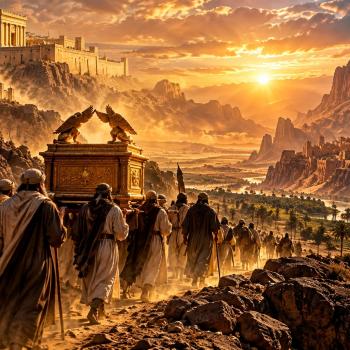
The Ark of The Covenant: All Roads Lead to Yemen

The Debate Over Removing Illegal Immigrants From Welfare
Patheos Explore the world's faith through different perspectives on religion and spirituality! Patheos has the views of the prevalent religions and spiritualities of the world.
Ad-Free & Subscriber Log-In Subscription Support
- About Us
- 2026 Calendar
- Videos
- Podcasts
- Library of World Religions
- Faith In Media Tracker
- Advertise With Us
- Write for Us
- Privacy Policy
- Terms of Service
- Do Not Sell My Data
- Contact Us
- Radiant Digital
- Manage Newsletter Subscriptions
- Unsubscribe From Notifications
- Sitemap
Copyright 2008-2026, Patheos. All rights reserved.
Subscription Support Ad-Free & Subscriber Log-In
Follow Patheos