
BuddhistCatholicContemplativeEvangelicalGeneral ChristianHinduJewishLatter-day SaintMuslimNew VisionsProgressive Christian
Beliefs
- Buddhist
- Catholic
- Contemplative
- Evangelical
- General Christian
- Hindu
- Jewish
- Latter-day Saint
- More Voices
- Muslim
- New Visions
- Pagan
- Progressive Christian
Topics
- Religion News
- Food and Religion
- Sports and Religion
- Religious Art
- Religious Music and Entertainment
- Religious Events
- History and Religion
- Style and Religion
- Politics and Religion
- Women in Religion
- Recreation Outdoors and Religion
- Business Finance and Religion
- Careers Workplace and Religion
- Education and Religion
- Family Parenting and Religion
- Health Fitness and Religion
- Home and Religion
- Relationships and Religion
- Technology and Religion
- Travel and Religion
Columnists
- Buddhist Columnists
- Business Finance and Religion Columnists
- Careers Workplace and Religion Columnists
- Catholic Columnists
- Contemplative Columnists
- Education and Religion Columnists
- Evangelists Columnists
- Family Parenting and Religion Columnists
- General Christian Columnists
- Health Fitness and Religion Columnists
- Hindu Columnists
- History and Religion Columnists
- Home and Religion Columnists
- Jewish Columnists
- More Voices Columnists
- Latter Day Columnists
- Muslim Columnists
- New Visions Columnists
- Nonreligious Columnists
- Pagan Columnists
- Politics and Religion Columnists
- Progressive Columnists
- Recreation Outdoors and Religion Columnists
- Relationships and Religion Columnists
- Religion News Columnists
- Religious Art Columnists
- Religious Events Columnists
- Religious Music and Entertainment Columnists
- Sports and Religion Columnists
- Style and Religion Columnists
- Technology and Religion Columnists
- Travel and Religion Columnists
- Women in Religion Columnists
Resource Library
- 2026 Calendar
- Library of World Religions
- The 100 Most Holy Places on Earth
- Patheos Answers
- Podcasts
- Videos
- Faith Leaders Database
- Anglican Episcopalian
- Bahai
- Baptist
- Buddhism
- Christianity
- Confucianism
- Eastern Orthodoxy
- Hinduism
- Holiness and Pentecostal
- ISKCON
- Islam
- Judaism
- Lutheran
- Methodist
- The Church of Jesus Christ of Latter-day Saints
- New Age
- Paganism
- Presbytarian and Reformed
- Protestantism
- Religion Behind the Scenes
- Roman Catholic
- Scientology
- Shia Islam
- Sikhism
- Sufism
- Sunni Islam
- Taoism
- Zen
- See all religions
Research Tools
 Ad-Free & Subscriber Log-In Subscription Support
Ad-Free & Subscriber Log-In Subscription Support
Follow Patheos 

- Trending:
- Forgiveness
- |
- Marriage
- |
- Consciousness
- |
- Death Penalty
- |
- Election
- |
- Halloween
Jewish
Nature Versus Nurture: Finding the Desert
March 21, 2012 by Eliyahu Yaakov
Modern psychology speaks of "Nature versus Nurture." It turns out the Torah talked about it long before the phrase was coined in the 20th century.
We mentioned in the previous article that the first thing that God said to Abraham in the Torah was to leave "from your land, from your birthplace, and from your father's house; to a land that I will show you." The Kabbalists understand the leaving "from your land" to be a leaving of one's culture, and the leaving "from your father's house" to be a departure from the modes of behavior that have been taught to you there. These, of course, constitute an overall distancing from one's "Nurture." This is especially relevant today due to the high level of social conditioning prevalent in the world's societies. Advertisers are paid to know how to manipulate us into buying their product. The media, movies, and TV have more to do with forming our opinions than anything else. It is obvious, then, that if it is clarity and spirituality that we seek, we must first leave the illusions, conditionings, and falsehoods of the world in which we live.
The Kabbalists further explain that leaving "from your birthplace" refers to rising above one's genetic predisposition, one's "Nature." Each one of us has been born with certain character traits and desires that are ingrained in our minds, bodies, and genetics. If one wants the path of the spiritual journey, one must first take control of his Nature, and not the other way around. We must break out of the limitations and boundaries that we have been born with.
Leaving Egypt for the Desert
When Abraham left these three forms of confinement to journey toward spiritual truth, he led the way for the generation of Jews who left Egypt to do the same. The word for Egypt in Hebrew is Mitzrayim, the same word as metzarim, "constraints." When Egypt had a hold on the Jewish people, it wasn't just a physical hold that it held on them. It was a spiritual hold as well. Before the Jewish people could come to receive spiritual truth at Sinai, they needed to break out of the grasp that Egyptian society had on them. Once the Jewish people left the constraints of Egypt and arrived in the desert, only then could they truly come to clarity and begin to journey spiritually. Only then could they receive the Torah.
The Torah was given in the desert because the desert is a place of nothingness. It is barren. When a person has not properly dealt with the multitudes of conditionings and manipulations he has undergone in his life, he has no capacity for the clarity necessary to properly begin the spiritual journey. Only when he has left his personal Egypt, can he come to his personal desert. In this desert there is no world-generated static or lack of control of oneself. There is nothing. So there is nothing to get in the way. Only by uprooting the interfering preconceptions that have been instilled within him through his Nature and his Nurture, can a person come to a point of objective clarity and truth from which he can start his journey. Only once a person makes himself desert-like by leaving the constraints of his land, birthplace, and father's house, can he receive the Torah and use it to fulfill his unique potential and ascend "to the land that I will show you"—to being the person he didn't even know it was possible for him to be.
3/21/2012 4:00:00 AM
Jewish
Kabbalah Korner
Abraham
Journey
Psychology
Sacred Texts
Judaism
more at patheos
1

Rich Man, Poor Man: Altruism and Agency
2

Eminem Joins Kid Rock on New Christian Album
3

Brendan Sorsby, Texas Tech, and Ken Paxton
4

Speaking of the Devil, and Aliens
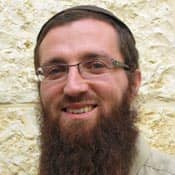
About Eliyahu Yaakov
Rabbi Eliyahu Yaakov is a sought after international speaker on Kabbalah, relationships, parenting, and life. His newly released book, Jewish By Choice: A Kabbalistic Take on Life & Judaism, recently hit #1 on Amazon's Best Seller list.
Patheos Explore the world's faith through different perspectives on religion and spirituality! Patheos has the views of the prevalent religions and spiritualities of the world.
Ad-Free & Subscriber Log-In Subscription Support
- About Us
- 2026 Calendar
- Videos
- Podcasts
- Library of World Religions
- Faith In Media Tracker
- Advertise With Us
- Write for Us
- Privacy Policy
- Terms of Service
- Do Not Sell My Data
- Contact Us
- Radiant Digital
- Manage Newsletter Subscriptions
- Unsubscribe From Notifications
- Sitemap
Copyright 2008-2026, Patheos. All rights reserved.
Subscription Support Ad-Free & Subscriber Log-In
Follow Patheos