
BuddhistCatholicContemplativeEvangelicalGeneral ChristianHinduJewishLatter-day SaintMuslimNew VisionsProgressive Christian
Beliefs
- Buddhist
- Catholic
- Contemplative
- Evangelical
- General Christian
- Hindu
- Jewish
- Latter-day Saint
- More Voices
- Muslim
- New Visions
- Pagan
- Progressive Christian
Topics
- Religion News
- Food and Religion
- Sports and Religion
- Religious Art
- Religious Music and Entertainment
- Religious Events
- History and Religion
- Style and Religion
- Politics and Religion
- Women in Religion
- Recreation Outdoors and Religion
- Business Finance and Religion
- Careers Workplace and Religion
- Education and Religion
- Family Parenting and Religion
- Health Fitness and Religion
- Home and Religion
- Relationships and Religion
- Technology and Religion
- Travel and Religion
Columnists
- Buddhist Columnists
- Business Finance and Religion Columnists
- Careers Workplace and Religion Columnists
- Catholic Columnists
- Contemplative Columnists
- Education and Religion Columnists
- Evangelists Columnists
- Family Parenting and Religion Columnists
- General Christian Columnists
- Health Fitness and Religion Columnists
- Hindu Columnists
- History and Religion Columnists
- Home and Religion Columnists
- Jewish Columnists
- More Voices Columnists
- Latter Day Columnists
- Muslim Columnists
- New Visions Columnists
- Nonreligious Columnists
- Pagan Columnists
- Politics and Religion Columnists
- Progressive Columnists
- Recreation Outdoors and Religion Columnists
- Relationships and Religion Columnists
- Religion News Columnists
- Religious Art Columnists
- Religious Events Columnists
- Religious Music and Entertainment Columnists
- Sports and Religion Columnists
- Style and Religion Columnists
- Technology and Religion Columnists
- Travel and Religion Columnists
- Women in Religion Columnists
Resource Library
- 2026 Calendar
- Library of World Religions
- The 100 Most Holy Places on Earth
- Patheos Answers
- Podcasts
- Videos
- Faith Leaders Database
- Anglican Episcopalian
- Bahai
- Baptist
- Buddhism
- Christianity
- Confucianism
- Eastern Orthodoxy
- Hinduism
- Holiness and Pentecostal
- ISKCON
- Islam
- Judaism
- Lutheran
- Methodist
- The Church of Jesus Christ of Latter-day Saints
- New Age
- Paganism
- Presbytarian and Reformed
- Protestantism
- Religion Behind the Scenes
- Roman Catholic
- Scientology
- Shia Islam
- Sikhism
- Sufism
- Sunni Islam
- Taoism
- Zen
- See all religions
Research Tools
 Ad-Free & Subscriber Log-In Subscription Support
Follow Patheos 

- Trending:
- Advent
- |
- Forgiveness
- |
- Thanksgiving
- |
- Election
- |
- Seasonal Holidays
- |
- Marriage
Progressive Christian
Are You Raw Meat or a Sacred Gift?
March 26, 2012 by Frederick Schmidt
Reviewing Dr. Jeffrey Bishop's latest book, Anticipatory Corpse, Daniel Sulmasy writes:
"Life," says the French physiologist Bichat, "is the sum of the forces by which death is resisted." Life, in other words, is dead matter set in motion by the forces of efficient causation. If this all sounds eerily like a description of the modern intensive care unit, then Bishop has made his point. This is how doctors think.
Yes. But as Sulmasy himself goes on to note, the situation is actually far worse than that. It's the way that we all think:
Once this metaphysics is coupled with the politics of population statistics . . . Bishop argues that only two forces remain to fight for control over life and death: the modern state and the sovereign self. Each fights it out at the bedside, wielding the efficient causation of political power to determine whether the lifeless matter of the body continues in motion or dies.
If that brief snippet of the review leaves you feeling as if you live in a world where your life is nothing more than a lump of raw meat that is protected—albeit temporarily—by fast-changing laws, mores, and your own, futile attempts to preserve your life, then you are right. There is nothing sacred or transcendent in the calculus of modern medicine.
And heaven help you if you are unborn, in the ICU, Cardiac Care, or just too damned old—or not, really, because heaven is an irrelevancy. So scratch the reference to heaven and let's just acknowledge that if you are too slow to get off the starting block—or when you inevitably slow down at the end—you are just plain out of luck.
Dr. Bishop is no egghead (although I did tell him once that he should get a new hobby instead of a new degree). He is also an MD and he has been a firsthand witness to the practice of medicine. Together with another colleague, we wrote an article some years ago that dealt with related issues and we made the point that life and its end were, at one time, part of a sacred mystery.
In the medieval world, you lived out your life in connection with God. As you died, if circumstances allowed, you made your final confession, received the Eucharist, and you were anointed with oil in what we call last rites. Life's final moments—just as surely as all its other moments, were embraced by the presence of God. That's not the case any longer, but it could be and it should be.
Contemporary thinking will tell you that this is religious mumbo jumbo, the product of obsolete convictions about the value and nature of human life, wrapped up in a giant fantasy. But that simplistic assertion hides the fact that there is no approach to medicine and life that is not thread through with powerful assumptions. Remember, for a moment, that it was the Nietzsche-loving Adolf Hitler that gave us the death camps and it was that religiously deluded fool, Dietrich Bonhoeffer, who left the comfortable environs of Manhattan to die eventually in solidarity with German Jews and Christians in 1945. So, the hollowing out of religious convictions is no guarantee of moral sanity.
This isn't Nazi Germany, of course. But the way in which we treat life is deeply conditioned by the place we start. Begin with the assumption that life is sacred—a God-given gift—and you will move slowly, carefully to honor it. Start by thinking that we are all just slabs of meat, protected temporarily by a string of laws and fragile assertions about the value of our lives, and it is much harder to claw your way back to a place of reverence.
From a Christian and spiritual point of view, we will never get back to that place at the hands of the government and public debates about the appropriate limits on health care. No matter how much sensitive rhetoric is wrapped around it, in the final analysis those efforts are the feeble attempt to backload what has already been lost: a reverence for life rooted in the notion that you and I are made in the image of God.
The modern western world revolves around "efficient causation." So, the public debate over health care will be about life expectancy, mortality statistics, budgets, and human rights—such as they are, when humans are no longer anything particularly special. In that environment the Christian perspective on the sacred nature of life will remain unwelcome and unintelligible to many. That should sadden us and motivate us, but it should not deter us.
Article Continued On Next Page
Page: 1 of 2
3/26/2012 4:00:00 AM
Progressive Christian
The Spiritual Landscape
Health Care
Medicine
Christianity
Evangelicalism
more at patheos
1

2

Parable of the Talents: A Call to Justice, Not Capitalism
3
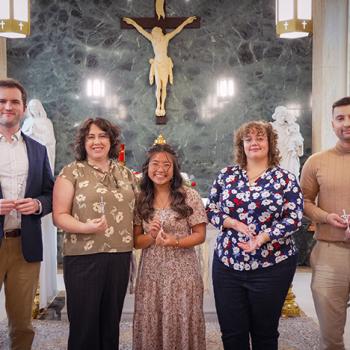
Team Saint Paul Sends Five to Serve U.S. Military
4

Saved By Grace, Called To Good Works

About Frederick Schmidt
Frederick W. Schmidt is the author of The Dave Test: A Raw Look at Real Life in Hard Times (Abingdon Press: 2013) and several other books, including A Still Small Voice: Women, Ordination and the Church (Syracuse University Press, 1998), The Changing Face of God (Morehouse, 2000), When Suffering Persists (Morehouse, 2001), in Italian translation: Sofferenza, All ricerca di una riposta (Torino: Claudiana, 2004), What God Wants for Your Life (Harper, 2005), Conversations with Scripture: Revelation (Morehouse, 2005) and Conversations with Scripture: Luke (Morehouse, 2009). He holds the Rueben P. Job Chair in Spiritual Formation at Garrett-Evangelical Theological Seminary in Evanston, IL, and directs the Job Institute for Spiritual formation. He is an Episcopal Priest, spiritual director, retreat facilitator, conference leader, writer, and Consulting Editor at Church Publishing in New York. He and his wife, Natalie live in Chicago, Illinois. He can also be reached at: http://frederickwschmidt.com/
Patheos Explore the world's faith through different perspectives on religion and spirituality! Patheos has the views of the prevalent religions and spiritualities of the world.
Ad-Free & Subscriber Log-In Subscription Support
- About Us
- 2026 Calendar
- Videos
- Podcasts
- Library of World Religions
- Faith In Media Tracker
- Advertise With Us
- Write for Us
- Privacy Policy
- Terms of Service
- Do Not Sell My Data
- Contact Us
- Radiant Digital
- Manage Newsletter Subscriptions
- Unsubscribe From Notifications
- Sitemap
Copyright 2008-2026, Patheos, part of the Radiant Digital network of media brands. All rights reserved.
Subscription Support Ad-Free & Subscriber Log-In
Follow Patheos