
BuddhistCatholicContemplativeEvangelicalGeneral ChristianHinduJewishLatter-day SaintMuslimNew VisionsProgressive Christian
Beliefs
- Buddhist
- Catholic
- Contemplative
- Evangelical
- General Christian
- Hindu
- Jewish
- Latter-day Saint
- More Voices
- Muslim
- New Visions
- Pagan
- Progressive Christian
Topics
- Religion News
- Food and Religion
- Sports and Religion
- Religious Art
- Religious Music and Entertainment
- Religious Events
- History and Religion
- Style and Religion
- Politics and Religion
- Women in Religion
- Recreation Outdoors and Religion
- Business Finance and Religion
- Careers Workplace and Religion
- Education and Religion
- Family Parenting and Religion
- Health Fitness and Religion
- Home and Religion
- Relationships and Religion
- Technology and Religion
- Travel and Religion
Columnists
- Buddhist Columnists
- Business Finance and Religion Columnists
- Careers Workplace and Religion Columnists
- Catholic Columnists
- Contemplative Columnists
- Education and Religion Columnists
- Evangelists Columnists
- Family Parenting and Religion Columnists
- General Christian Columnists
- Health Fitness and Religion Columnists
- Hindu Columnists
- History and Religion Columnists
- Home and Religion Columnists
- Jewish Columnists
- More Voices Columnists
- Latter Day Columnists
- Muslim Columnists
- New Visions Columnists
- Nonreligious Columnists
- Pagan Columnists
- Politics and Religion Columnists
- Progressive Columnists
- Recreation Outdoors and Religion Columnists
- Relationships and Religion Columnists
- Religion News Columnists
- Religious Art Columnists
- Religious Events Columnists
- Religious Music and Entertainment Columnists
- Sports and Religion Columnists
- Style and Religion Columnists
- Technology and Religion Columnists
- Travel and Religion Columnists
- Women in Religion Columnists
Resource Library
- 2026 Calendar
- Library of World Religions
- The 100 Most Holy Places on Earth
- Patheos Answers
- Podcasts
- Videos
- Faith Leaders Database
- Anglican Episcopalian
- Bahai
- Baptist
- Buddhism
- Christianity
- Confucianism
- Eastern Orthodoxy
- Hinduism
- Holiness and Pentecostal
- ISKCON
- Islam
- Judaism
- Lutheran
- Methodist
- The Church of Jesus Christ of Latter-day Saints
- New Age
- Paganism
- Presbytarian and Reformed
- Protestantism
- Religion Behind the Scenes
- Roman Catholic
- Scientology
- Shia Islam
- Sikhism
- Sufism
- Sunni Islam
- Taoism
- Zen
- See all religions
Research Tools
 Ad-Free & Subscriber Log-In Subscription Support
Ad-Free & Subscriber Log-In Subscription Support
Follow Patheos 

- Trending:
- Forgiveness
- |
- Marriage
- |
- Consciousness
- |
- Death Penalty
- |
- Election
- |
- Halloween
Hindu
A Sense of Place
January 03, 2012 by Ramesh Rao
Human beings have traversed the earth seeking food and refuge from the extremes of weather, escaping hostile neighbors, and looking for a place of bounty and beauty. A good friend, Nayan Chanda, has written a book about how people, over millennia, traveled the world and made contacts with new people, and established new empires and new relationships before anyone labeled it "globalization." One of the types of men who traveled the world was preachers. What Nayan does not tell us, which I hope he will in a new book, is that there were the opposite of preachers who traveled the world, seeking beauty, spiritual solace, a new "home" where their hearts would bloom and where they would find peace: the seekers!
As I have written in a couple of other essays, India has always welcomed such seekers for India is indeed a holy place, and men and women have trekked their way over millennia to find a guru, and experience the mystical and the magical. Sure, there are millions who make their way to Mecca these days, in organized and subsidized Haj "pilgrimages" or to Jerusalem or Rome during Christmas. As far as I know, no non-Muslim or non-Christian has written a book about finding a teacher or a mystic in those places, if indeed any such person went there looking to find one. Whereas, it is said that even Alexander the Great went to India looking to meet one of its great ascetics, about whom he had heard in his native Athens. A story is told of Alexander meeting such a monk and offering him great wealth; when he was told that all such wealth was a waste and a distraction, Alexander in fury sought to lop the head off the monk, but he was shamed by the challenge of the monk to "go ahead and kill me." It was the only time in his march across the world that Alexander surrendered!
Yes, indeed, many of us Indians have trekked our way across the world, and not just recently. Traders from India navigated the seas and established trading posts and relationships along the coast of East Africa as well as across vast stretches of Southeast Asia. These Indian traders and kings even influenced the religious practices of the people, without ever trying to manipulate or coerce them into a new faith, so from Thailand and Malaysia, and from Cambodia to Indonesia you will see how India's spiritual and cultural influences shaped the life of people in those regions. The great Angkor Wat temple complex, for example, reflects one of the South Indian styles of temple architecture.
Over a period of a few decades, recently, a few hundred thousands of Indians have made their way to the United States, after the passing of the Immigration Act of 1965. I believe none of us came here looking for a spiritual teacher or a mentor. I do not believe we have found any, except if that person happened to be a traveling guru from India! However, during that same decade, when Indians began traveling West to the United States, young Americans traveled East, to India, looking not for a stable job, a good university education, or to set up a business. They went seeking spiritual solace, curious, just as Alexander was, about the fabled land where men and women had discovered through rigorous practice the way to "liberation."
I have written about Patrick Levy and about Narvada Puri, and in that sequence of Western seekers from the 1960s, is Richard Slavin, now known as Radhanath Swami, who has written his own wonderful tale of early travails and eventual fulfillment in a beautiful book titled, The Journey Home: Autobiography of an American Swami. The book has attracted more attention than either Patrick Levy's book or Narvada Puri's, including a lame review by the Harvard professor of religion, Francis Clooney, but that attention and limp reviews notwithstanding, this is a story of a beautiful journey that should be read by those who still see India as a spiritual beacon, for it will confirm that the journey to and through that spiritual home is mysterious, powerful, sometimes frustrating, and finally liberating. It is not a book, however, for those who simply seek to travel to India to photograph exotic people and places, nor is it for those who think the spiritual journey will be without hazards or hardships.
Article Continued On Next Page
Page: 1 of 2
1/3/2012 5:00:00 AM
Hindu
God in the Age of Kali
Gurus
India
Hinduism
more at patheos
1

Would Evidence of Aliens "Shatter" Christian Beliefs?
2

Worshiping God Through Images: Seven Bible Proofs
3
The Will to Dwell in an Enchanted World
4

The NYC FY27 Budget Shell Game Exposed
About Ramesh Rao
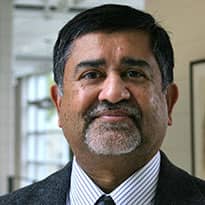
Ramesh Rao, Professor and Chair, DN3 Program, Columbus State University, Columbus, GA, is the author of two books on Indian politics and society and has written numerous op-eds for newspapers and magazines in India, the U.S., and the U.K. Ramesh served as Human Rights Coordinator and Executive Council member at the Hindu American Foundation between 2004-2013. He spent the first twenty-eight years of his life in India where he worked as a bank officer, a school teacher, and a copy editor. He received his MS in Mass Communication from the University of Southern Mississippi, and his PhD in Communication from Michigan State University. He taught at Truman State University in Kirksville, MO, and Longwood University in Farmville, VA, before he joined Columbus State University. He lives with wife Sujaya, and son Sudhanva in Columbus, GA.
Patheos Explore the world's faith through different perspectives on religion and spirituality! Patheos has the views of the prevalent religions and spiritualities of the world.
Ad-Free & Subscriber Log-In Subscription Support
- About Us
- 2026 Calendar
- Videos
- Podcasts
- Library of World Religions
- Faith In Media Tracker
- Advertise With Us
- Write for Us
- Privacy Policy
- Terms of Service
- Do Not Sell My Data
- Contact Us
- Radiant Digital
- Manage Newsletter Subscriptions
- Unsubscribe From Notifications
- Sitemap
Copyright 2008-2026, Patheos. All rights reserved.
Subscription Support Ad-Free & Subscriber Log-In
Follow Patheos