
BuddhistCatholicContemplativeEvangelicalGeneral ChristianHinduJewishLatter-day SaintMuslimNew VisionsProgressive Christian
Beliefs
- Buddhist
- Catholic
- Contemplative
- Evangelical
- General Christian
- Hindu
- Jewish
- Latter-day Saint
- More Voices
- Muslim
- New Visions
- Pagan
- Progressive Christian
Topics
- Religion News
- Food and Religion
- Sports and Religion
- Religious Art
- Religious Music and Entertainment
- Religious Events
- History and Religion
- Style and Religion
- Politics and Religion
- Women in Religion
- Recreation Outdoors and Religion
- Business Finance and Religion
- Careers Workplace and Religion
- Education and Religion
- Family Parenting and Religion
- Health Fitness and Religion
- Home and Religion
- Relationships and Religion
- Technology and Religion
- Travel and Religion
Columnists
- Buddhist Columnists
- Business Finance and Religion Columnists
- Careers Workplace and Religion Columnists
- Catholic Columnists
- Contemplative Columnists
- Education and Religion Columnists
- Evangelists Columnists
- Family Parenting and Religion Columnists
- General Christian Columnists
- Health Fitness and Religion Columnists
- Hindu Columnists
- History and Religion Columnists
- Home and Religion Columnists
- Jewish Columnists
- More Voices Columnists
- Latter Day Columnists
- Muslim Columnists
- New Visions Columnists
- Nonreligious Columnists
- Pagan Columnists
- Politics and Religion Columnists
- Progressive Columnists
- Recreation Outdoors and Religion Columnists
- Relationships and Religion Columnists
- Religion News Columnists
- Religious Art Columnists
- Religious Events Columnists
- Religious Music and Entertainment Columnists
- Sports and Religion Columnists
- Style and Religion Columnists
- Technology and Religion Columnists
- Travel and Religion Columnists
- Women in Religion Columnists
Resource Library
- 2026 Calendar
- Library of World Religions
- The 100 Most Holy Places on Earth
- Patheos Answers
- Podcasts
- Videos
- Faith Leaders Database
- Anglican Episcopalian
- Bahai
- Baptist
- Buddhism
- Christianity
- Confucianism
- Eastern Orthodoxy
- Hinduism
- Holiness and Pentecostal
- ISKCON
- Islam
- Judaism
- Lutheran
- Methodist
- The Church of Jesus Christ of Latter-day Saints
- New Age
- Paganism
- Presbytarian and Reformed
- Protestantism
- Religion Behind the Scenes
- Roman Catholic
- Scientology
- Shia Islam
- Sikhism
- Sufism
- Sunni Islam
- Taoism
- Zen
- See all religions
Research Tools
 Ad-Free & Subscriber Log-In Subscription Support
Ad-Free & Subscriber Log-In Subscription Support
Follow Patheos 

- Trending:
- Forgiveness
- |
- Marriage
- |
- Consciousness
- |
- Death Penalty
- |
- Election
- |
- Halloween
Evangelical
Toward a Relevant Ministry
January 16, 2012 by Samuel Atchison
"Like" the Patheos Evangelical Page on Facebook to receive today's best commentary on Evangelical issues.
And I want to commend the ministers. . . . And I want to thank them, because so often, preachers aren't concerned about anything but themselves. And I'm always happy to see a relevant ministry. ~ Dr. Martin Luther King, Jr., April 3, 1968
As the nation, and in particular the church, celebrates what would have been Martin Luther King Jr.'s 83rd birthday, we are once again confronted with the issue of relevance. And, it seems to me, just in the nick of time. For in an age where Jersey Shore and The Real Housewives of (Name the City) are all the rage, the notion of relevance seems obsolete.
Thus our annual observance of King's birthday affords each of us an opportunity to view his life and legacy in light of our own. Such, perhaps, is King's greatest legacy, for he never allows you to be too comfortable with yourself. Through his committed life of non-violent social change—coupled with his violent death—he remains, in the words of the late labor leader A. Philip Randolph, "the conscience of America."
So when King prods his fellow clergy toward "a relevant ministry," as he did on the eve of his assassination, it's worth our attention even forty-four years later. "It's alright," he told those gathered at Memphis's Mason Temple Church of God in Christ, "to talk about 'long white robes over yonder,' in all its symbolism. But ultimately people want some suits and dresses and shoes to wear down here. It's alright to talk about 'streets flowing with milk and honey,' but God has commanded us to be concerned about the slums down here, and His children who can't eat three square meals a day. It's alright to talk about the new Jerusalem, but one day, God's preacher must talk about the new New York, the new Atlanta, the new Philadelphia, the new Los Angeles, the new Memphis, Tennessee. This is what we have to do."
Within the context of the civil rights movement's 1968 Poor People's campaign, including its protests in support of Memphis's garbage workers, King's understanding of a relevant ministry thus included addressing the temporal needs of the un(der)educated and un(der)skilled masses, most of whom were people of color.
More than four decades later, those masses still exist and the response of many is anything but non-violent. Indeed, research suggests that among adult males, perhaps the greatest predictor of violent crime is joblessness. Curiously, however, studies also show that 1) religious congregations in urban communities provide a broad range of services and programs that are invaluable to those communities; 2) youths involved in church-based interventions are less likely to become involved in a host of dysfunctional behaviors, including substance abuse and juvenile crime; and 3) due to the low-cost, largely volunteer nature of such programs, they are irreplaceable by any other means.
Yet such challenges are not the exclusive province of the urban poor. According to the Brookings Institution, population shifts in the nation's metropolitan areas are increasingly rendering traditional notions of 'poor' cities and 'affluent' suburbs obsolete. The demographic lines are blurred even further by the nation's economic downturn, as rising unemployment, mortgage foreclosures, and family dislocations affect city dwellers and suburbanites alike. The net effect has been to expand the definition of who is considered "at-risk." Ironically, the disparities in race and class mask the similarities in problems, making it difficult for even some clergy to work together.
Thus, if the church's ministry is to remain relevant within the current crisis, it will have to explore the implications of this paradigm shift for its members and the communities in which they live.
1/16/2012 5:00:00 AM
Evangelical
A Matter of Color
Civil Rights
History
Martin Luther King Jr
urban communities
Christianity
Evangelicalism
more at patheos
1
Top of the Country: The Way I Am (Album)
2
Finding God In The Great Outdoors
3
The Door of the Holy of Holies Is Open
4
Sunday Readings: Love, Responsibility, And Faith
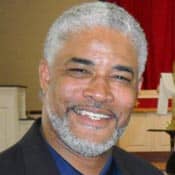
About Samuel Atchison
Rev. Samuel K. Atchison has served as a welfare policy analyst, social services administrator, social policy consultant, and prison chaplain. He is the president of the Trenton Ecumenical Area Ministry (TEAM), which serves as a coordinating agency for the community outreach efforts of churches in Mercer County, New Jersey. He is also a community partnership manager with the Amachi Mentoring Coalition Project (AMCP), a program of the Philadelphia Leadership Foundation that provides mentoring to children impacted by incarceration.
Patheos Explore the world's faith through different perspectives on religion and spirituality! Patheos has the views of the prevalent religions and spiritualities of the world.
Ad-Free & Subscriber Log-In Subscription Support
- About Us
- 2026 Calendar
- Videos
- Podcasts
- Library of World Religions
- Faith In Media Tracker
- Advertise With Us
- Write for Us
- Privacy Policy
- Terms of Service
- Do Not Sell My Data
- Contact Us
- Radiant Digital
- Manage Newsletter Subscriptions
- Unsubscribe From Notifications
- Sitemap
Copyright 2008-2026, Patheos. All rights reserved.
Subscription Support Ad-Free & Subscriber Log-In
Follow Patheos