
BuddhistCatholicContemplativeEvangelicalGeneral ChristianHinduJewishLatter-day SaintMuslimNew VisionsProgressive Christian
Beliefs
- Buddhist
- Catholic
- Contemplative
- Evangelical
- General Christian
- Hindu
- Jewish
- Latter-day Saint
- More Voices
- Muslim
- New Visions
- Pagan
- Progressive Christian
Topics
- Religion News
- Food and Religion
- Sports and Religion
- Religious Art
- Religious Music and Entertainment
- Religious Events
- History and Religion
- Style and Religion
- Politics and Religion
- Women in Religion
- Recreation Outdoors and Religion
- Business Finance and Religion
- Careers Workplace and Religion
- Education and Religion
- Family Parenting and Religion
- Health Fitness and Religion
- Home and Religion
- Relationships and Religion
- Technology and Religion
- Travel and Religion
Columnists
- Buddhist Columnists
- Business Finance and Religion Columnists
- Careers Workplace and Religion Columnists
- Catholic Columnists
- Contemplative Columnists
- Education and Religion Columnists
- Evangelists Columnists
- Family Parenting and Religion Columnists
- General Christian Columnists
- Health Fitness and Religion Columnists
- Hindu Columnists
- History and Religion Columnists
- Home and Religion Columnists
- Jewish Columnists
- More Voices Columnists
- Latter Day Columnists
- Muslim Columnists
- New Visions Columnists
- Nonreligious Columnists
- Pagan Columnists
- Politics and Religion Columnists
- Progressive Columnists
- Recreation Outdoors and Religion Columnists
- Relationships and Religion Columnists
- Religion News Columnists
- Religious Art Columnists
- Religious Events Columnists
- Religious Music and Entertainment Columnists
- Sports and Religion Columnists
- Style and Religion Columnists
- Technology and Religion Columnists
- Travel and Religion Columnists
- Women in Religion Columnists
Resource Library
- 2026 Calendar
- Library of World Religions
- The 100 Most Holy Places on Earth
- Patheos Answers
- Podcasts
- Videos
- Faith Leaders Database
- Anglican Episcopalian
- Bahai
- Baptist
- Buddhism
- Christianity
- Confucianism
- Eastern Orthodoxy
- Hinduism
- Holiness and Pentecostal
- ISKCON
- Islam
- Judaism
- Lutheran
- Methodist
- The Church of Jesus Christ of Latter-day Saints
- New Age
- Paganism
- Presbytarian and Reformed
- Protestantism
- Religion Behind the Scenes
- Roman Catholic
- Scientology
- Shia Islam
- Sikhism
- Sufism
- Sunni Islam
- Taoism
- Zen
- See all religions
Research Tools
 Ad-Free & Subscriber Log-In Subscription Support
Ad-Free & Subscriber Log-In Subscription Support
Follow Patheos 

- Trending:
- Forgiveness
- |
- Marriage
- |
- Consciousness
- |
- Death Penalty
- |
- Election
- |
- Halloween
Evangelical
The Presbyterian Pope
January 04, 2012 by Thomas Kidd
"Like" the Patheos Evangelical Page on Facebook to receive today's best commentary on Evangelical issues.
Everyone interested in American religious history—especially those with Reformed sympathies—should know about Charles Hodge. Some called Hodge, the most influential seminary educator of the 19th century, the "Pope of Presbyterianism." Hodge's stature in religious history has faded, obscured by figures from his era with more dubious legacies, including the evangelist Charles Finney, and Joseph Smith, the founder of Mormonism. But Hodge's place in the first rank of American theologians should receive a deserved boost from Paul Gutjahr's excellent biography (just announced as a 2012 Christianity Today book award winner) Charles Hodge: Guardian of American Orthodoxy.
Hodge's father died when Charles was six months old, but his mother made sure that he was surrounded by mentors in the faith. Ashbel Green was Hodge's pastor at Philadelphia's Second Presbyterian Church, and later, the president at Princeton College when Hodge studied there. These were times—not entirely forgotten in some Christian circles today—of children committing doctrine to memory, and as a boy Hodge routinely appeared before Green to be drilled on the Westminster Catechism. Later, at Princeton, he again had to memorize the Catechism—this time in Latin.
Gutjahr argues that these lessons inextricably shaped Hodge's mature theology and temperament. Hodge spent his career defending and teaching the Calvinist precepts he learned in the Catechism: the absolute supremacy of God, the absolute inability of people to save themselves from the wrath of God against sinners, and the absolute efficacy of Christ's work on the cross to deliver believers from that fate.
The early history of Hodge's church and his employer Princeton were inextricably connected to the gospel preaching of Great Awakening luminaries George Whitefield and Gilbert Tennent. Tennent had been the first pastor at Hodge's home church, and Princeton had originally served as a seminary for revivalist Presbyterian pastors. Hodge, however, balked at what he saw as the exaggerated emotionalism of the First and Second Great Awakenings, and focused more on proper belief and sanctification than godly affections. Like many of his Princeton colleagues, he unapologetically believed in a hierarchy of the well-trained and educated during a time of burgeoning democratization in church and culture.
Still, Hodge's faith stirred him emotionally, too. The great Princeton revival of 1815 was his turning point. Before this revival, Hodge thought he would become a medical doctor. But the awakening led Hodge into an intense season of spiritual searching, and he found that God had made his boyhood beliefs both sincere and heartfelt. He testified to that newly invigorated faith before the Princeton Presbyterian Church on January 15, 1815.
Revival notwithstanding, Hodge and the Princetonians were, in Gutjahr's rendering, unreconstructed Calvinist conservatives who resisted any Arminian dulling of Reformed theology's sharp edges. The growing divide between anti-revivalist "Old School" Calvinists (mostly east coast and southern) and the "New School" revivalists of the trans-Appalachian west led to an ugly national schism in the Presbyterian denomination in 1837, a split which even Hodge knew was orchestrated by his Old School allies in a heavy-handed manner.
Hodge and the Princetonians never seemed prepared to accommodate the egalitarian, populist tendencies within evangelicalism, a fact that limited Hodge's appeal to rank-and-file believers. Indeed, Hodge seems representative of those in the Reformed segment of evangelicalism who struggle to sympathize with their more "democratic" Christian brethren. This tension persists today, as Reformed folks routinely lament the anti-intellectualism and sentimentality of evangelical church life, but often seem unable to engage more revivalistic evangelicals with Hodge's kind of learned, historically-rooted piety.
Hodge was (in)famous for his boast that "a new idea never originated" at Princeton Seminary during his tenure there. But Hodge actually did produce new ideas, as all great Christian thinkers do—ideas that defended the ancient faith for a new generation, in light of contemporary challenges. So, for example, Hodge perceptively commented on Darwinist evolution, the Civil War, and German-led higher criticism of the Bible.
Article Continued On Next Page
Page: 1 of 2
1/4/2012 5:00:00 AM
Evangelical
Faith in History
History
Jonathan Edwards
Reformed
Christianity
Evangelicalism
more at patheos
1

When Mother’s Day Hurts More Than You Expected
2

Kairos, Chronos, and the Eternal Now
3

Who Will Christ Acknowledge Before the Father?
4

'The Chosen' S6 Trailer: The Passion Gets Very Real
About Thomas Kidd
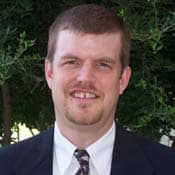
Thomas S. Kidd teaches history and is a Senior Fellow at Baylor University's Institute for Studies of Religion. He is the author of Patrick Henry: First Among Patriots and God of Liberty: A Religious History of the American Revolution. Follow his writings via Facebook and Twitter.
Patheos Explore the world's faith through different perspectives on religion and spirituality! Patheos has the views of the prevalent religions and spiritualities of the world.
Ad-Free & Subscriber Log-In Subscription Support
- About Us
- 2026 Calendar
- Videos
- Podcasts
- Library of World Religions
- Faith In Media Tracker
- Advertise With Us
- Write for Us
- Privacy Policy
- Terms of Service
- Do Not Sell My Data
- Contact Us
- Radiant Digital
- Manage Newsletter Subscriptions
- Unsubscribe From Notifications
- Sitemap
Copyright 2008-2026, Patheos. All rights reserved.
Subscription Support Ad-Free & Subscriber Log-In
Follow Patheos