
BuddhistCatholicContemplativeEvangelicalGeneral ChristianHinduJewishLatter-day SaintMuslimNew VisionsProgressive Christian
Beliefs
- Buddhist
- Catholic
- Contemplative
- Evangelical
- General Christian
- Hindu
- Jewish
- Latter-day Saint
- More Voices
- Muslim
- New Visions
- Pagan
- Progressive Christian
Topics
- Religion News
- Food and Religion
- Sports and Religion
- Religious Art
- Religious Music and Entertainment
- Religious Events
- History and Religion
- Style and Religion
- Politics and Religion
- Women in Religion
- Recreation Outdoors and Religion
- Business Finance and Religion
- Careers Workplace and Religion
- Education and Religion
- Family Parenting and Religion
- Health Fitness and Religion
- Home and Religion
- Relationships and Religion
- Technology and Religion
- Travel and Religion
Columnists
- Buddhist Columnists
- Business Finance and Religion Columnists
- Careers Workplace and Religion Columnists
- Catholic Columnists
- Contemplative Columnists
- Education and Religion Columnists
- Evangelists Columnists
- Family Parenting and Religion Columnists
- General Christian Columnists
- Health Fitness and Religion Columnists
- Hindu Columnists
- History and Religion Columnists
- Home and Religion Columnists
- Jewish Columnists
- More Voices Columnists
- Latter Day Columnists
- Muslim Columnists
- New Visions Columnists
- Nonreligious Columnists
- Pagan Columnists
- Politics and Religion Columnists
- Progressive Columnists
- Recreation Outdoors and Religion Columnists
- Relationships and Religion Columnists
- Religion News Columnists
- Religious Art Columnists
- Religious Events Columnists
- Religious Music and Entertainment Columnists
- Sports and Religion Columnists
- Style and Religion Columnists
- Technology and Religion Columnists
- Travel and Religion Columnists
- Women in Religion Columnists
Resource Library
- 2026 Calendar
- Library of World Religions
- The 100 Most Holy Places on Earth
- Patheos Answers
- Podcasts
- Videos
- Faith Leaders Database
- Anglican Episcopalian
- Bahai
- Baptist
- Buddhism
- Christianity
- Confucianism
- Eastern Orthodoxy
- Hinduism
- Holiness and Pentecostal
- ISKCON
- Islam
- Judaism
- Lutheran
- Methodist
- The Church of Jesus Christ of Latter-day Saints
- New Age
- Paganism
- Presbytarian and Reformed
- Protestantism
- Religion Behind the Scenes
- Roman Catholic
- Scientology
- Shia Islam
- Sikhism
- Sufism
- Sunni Islam
- Taoism
- Zen
- See all religions
Research Tools
 Ad-Free & Subscriber Log-In Subscription Support
Ad-Free & Subscriber Log-In Subscription Support
Follow Patheos 

- Trending:
- Forgiveness
- |
- Marriage
- |
- Consciousness
- |
- Death Penalty
- |
- Election
- |
- Halloween
Catholic
Pray, Prepare, Practice: How I Put Together My Homilies
January 30, 2012 by Greg Kandra
As for length: I usually aim for 1,000 words, which seems about right; read aloud, it comes to about seven minutes. But it's not unusual for me to bring in a homily at around 800 words. The simple reality is: I'm not that smart, and I'm not that deep, and most people get antsy after five or six minutes anyway. I'm reminded of what Abraham Lincoln said when someone asked him how long a man's legs should be. "Long enough," he replied, "to reach the ground." It's the same with a homily: a good five-minute homily is infinitely superior to an eight-minute one.
A word or two about formatting: I single space, using 16-point type. It comes to about four pages, and I can read it easily at a glance. More on that in a moment.
Practice. I can still remember trying out my first homily for an audience of one: my wife. My wife is an actress, and a great lector. I knew she'd be a tough audience. I stood in our living room, four pages of text in my hand, cleared my throat, and delivered what I thought was a very good little sermon about Jesus calming the storm in the Sea of Galilee. My wife listened politely. And when it was finished she looked at me. A long moment passed. Then she spoke.
"That was . . . okay."
I guess she saw my lip quivering.
"Let me look at this," she said, as she took the pages from my trembling hand. She read over the text. "Well, this part is good," she said. "And this one. And I like that. But it's not punching through. You're losing me." She looked at me. "Honey, try to take more time with it. Want to try it again?" I did. And somehow, after a couple more tries, I got it to work. It was a valuable lesson for me: delivering a good homily isn't about reading. It's about preaching.
An old joke asks, "How do you get to Carnegie Hall? Practice." The same could be said about how to get a homily from the page to the pulpit and into the hearts and minds of the people.
I've worked out a system where I practice my homilies three times before I deliver them. The first time is a simple "cold" read to hear how the words come out of my mouth and to see if I've said something stupid. I'll often shorten sentences or change words or adjust the pacing. You never quite know how something will hit the ear until you say it out loud.
After that, I'll try out the homily two more times, working out inflections and phrasing and pacing—what parts to speed up, which ones to slow down. By the time I've completed my third run-through, I have a good sense of the overall text—the geography of it—and when I climb into the pulpit to deliver it, I find I only occasionally have to glance at the page. The printed text becomes a roadmap, guiding me from point to point, phrase to phrase.
The result: I find that I don't read the homily. I preach it.
Some people recoil at the idea of using any text at all—and it may be a matter of personal preference or taste. But I like having it there, to reassure me of where I've been and remind me of where I'm going. Once in a while, I'll ad lib or deviate from it. But words matter, and the choice of words can make a big difference. The text also helps me to keep on time and on track and prevent me from getting lost.
Overall, people seem to appreciate the time and attention I give to this weekly exercise: maybe 20 or 30 minutes a day, across six days, with more time for the actual writing and revising. It won't work for everyone, but this methodology works for me.
After four years and 200 homilies, and counting, the only complaint I've heard comes from my wife—who, late on a Friday night, if I'm stuck trying to find a good ending for a homily, tells me to just turn off the computer and come to bed and worry about fixing it in the morning. As usual, her advice is always the best.
Originally published in Deacon Digest in 2011; reprinted here with permission of the author.
Page: 2 of 2
1/30/2012 5:00:00 AM
Catholic
All Things New
Homilies
Prayer
Preaching Resources
Roman Catholicism
more at patheos
1

'A hermeneutical Pandora’s box'
2
The Surprising Similarities Between Catholicism and Shi'ism
3
Justice Lessons from the Gospel of John
4

Dialogue on Eternal Security / Absolute Assurance
About Greg Kandra
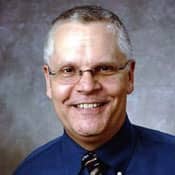
Deacon Greg Kandra is a Roman Catholic Deacon serving the Diocese of Brooklyn, NY, and an award-winning journalist.
Patheos Explore the world's faith through different perspectives on religion and spirituality! Patheos has the views of the prevalent religions and spiritualities of the world.
Ad-Free & Subscriber Log-In Subscription Support
- About Us
- 2026 Calendar
- Videos
- Podcasts
- Library of World Religions
- Faith In Media Tracker
- Advertise With Us
- Write for Us
- Privacy Policy
- Terms of Service
- Do Not Sell My Data
- Contact Us
- Radiant Digital
- Manage Newsletter Subscriptions
- Unsubscribe From Notifications
- Sitemap
Copyright 2008-2026, Patheos. All rights reserved.
Subscription Support Ad-Free & Subscriber Log-In
Follow Patheos