
BuddhistCatholicContemplativeEvangelicalGeneral ChristianHinduJewishLatter-day SaintMuslimNew VisionsProgressive Christian
Beliefs
- Buddhist
- Catholic
- Contemplative
- Evangelical
- General Christian
- Hindu
- Jewish
- Latter-day Saint
- More Voices
- Muslim
- New Visions
- Pagan
- Progressive Christian
Topics
- Religion News
- Food and Religion
- Sports and Religion
- Religious Art
- Religious Music and Entertainment
- Religious Events
- History and Religion
- Style and Religion
- Politics and Religion
- Women in Religion
- Recreation Outdoors and Religion
- Business Finance and Religion
- Careers Workplace and Religion
- Education and Religion
- Family Parenting and Religion
- Health Fitness and Religion
- Home and Religion
- Relationships and Religion
- Technology and Religion
- Travel and Religion
Columnists
- Buddhist Columnists
- Business Finance and Religion Columnists
- Careers Workplace and Religion Columnists
- Catholic Columnists
- Contemplative Columnists
- Education and Religion Columnists
- Evangelists Columnists
- Family Parenting and Religion Columnists
- General Christian Columnists
- Health Fitness and Religion Columnists
- Hindu Columnists
- History and Religion Columnists
- Home and Religion Columnists
- Jewish Columnists
- More Voices Columnists
- Latter Day Columnists
- Muslim Columnists
- New Visions Columnists
- Nonreligious Columnists
- Pagan Columnists
- Politics and Religion Columnists
- Progressive Columnists
- Recreation Outdoors and Religion Columnists
- Relationships and Religion Columnists
- Religion News Columnists
- Religious Art Columnists
- Religious Events Columnists
- Religious Music and Entertainment Columnists
- Sports and Religion Columnists
- Style and Religion Columnists
- Technology and Religion Columnists
- Travel and Religion Columnists
- Women in Religion Columnists
Resource Library
- 2026 Calendar
- Library of World Religions
- The 100 Most Holy Places on Earth
- Patheos Answers
- Podcasts
- Videos
- Faith Leaders Database
- Anglican Episcopalian
- Bahai
- Baptist
- Buddhism
- Christianity
- Confucianism
- Eastern Orthodoxy
- Hinduism
- Holiness and Pentecostal
- ISKCON
- Islam
- Judaism
- Lutheran
- Methodist
- The Church of Jesus Christ of Latter-day Saints
- New Age
- Paganism
- Presbytarian and Reformed
- Protestantism
- Religion Behind the Scenes
- Roman Catholic
- Scientology
- Shia Islam
- Sikhism
- Sufism
- Sunni Islam
- Taoism
- Zen
- See all religions
Research Tools
 Ad-Free & Subscriber Log-In Subscription Support
Ad-Free & Subscriber Log-In Subscription Support
Follow Patheos 

- Trending:
- Forgiveness
- |
- Marriage
- |
- Consciousness
- |
- Death Penalty
- |
- Election
- |
- Halloween
Jewish
Jewish Education for the 21st Century
January 13, 2012 by Eliyahu Yaakov
Recently, I was asked about the "symbolism" of one of the well-known "rituals" in Judaism. To which I politely responded that there is neither "ritual" nor "symbolism" in anything Jewish.
Of course I knew what the questioner intended by her question, and after this brief back-and-forth I did explain to her why we do what we do.
But this little encounter raises a subtle yet foundational point about how we look at life and Judaism.
"Practice" for the sake of "tradition" renders that action trivial at best. It sounds like you are doing it simply because someone passed it on to you as something "we do"—a hollow exercise in which there is nothing real going on, effects no real change in the world, and has within it no real essence. When this is what most of those involved in Judaism intuit, feel, or believe, it's no wonder their kids are opting out.
Similarly, in Fiddler on the Roof, the only answer the Jew has for holding onto his Judaism is "Tradition!" It is obvious that its author felt there to be a general consensus that Jews do not know why they do what they do.
Some believe that Judaism was invented in the desert to manipulate the masses: Murder was outlawed in the desert because everyone was needed to produce for the community at large; the dietary laws are there for health reasons; and the family purity laws were based on some primitive taboo. They see Judaism as a collection of rigorous laws and traditions that are outdated and meaningless.
And the truth is I don't blame them.
Whether you have a classical Jewish background, no Jewish background, or a "Jew*-*ish" background, chances are high that your exposure to Judaism was overwhelmingly to the "whats" of Judaism and the "hows" of Judaism—what do to do and how to do it.
However, why on earth are we doing this? Why should I believe this? Why should I incorporate this into my life?
Somehow this was passed over.
Therefore, what I believe is needed today is to draw up an all-inclusive picture of Judaism and Jewish belief by which we come to understand the world and our place in it—to examine the realities of existence and the purpose of life according to classic Jewish thought and Kabbalah.
By clearly defining and exploring concepts such as God, Free Will, the Soul, Suffering, Death, Reincarnation, Unity, the Male-Female Dynamic, and the Ten Sefirot, we can construct an all-encompassing model of the Jewish and Kabbalistic take on reality and what we are doing here, and explore the tenets of Jewish spirituality.
Focusing on the whats and the hows without the whys is like trying to build a building without putting the foundations in place: there is nothing holding up the building and there is no place for it to sit.
Now, we are not saying here that whether or not a person is involved in a specific Jewish practice should depend on whether or not he or she understands the reason for that particular action. On the contrary, it must be stated clearly at the outset, that when dealing with God we, by definition, will not be able to fully comprehend anything 100 percent.
Having said that, it ought to be our aim to open up a grand comprehensive understanding of the context in which all that we know exists and takes place. And, once we gain a sound familiarity with this reality, to continue to build upon it, further refining and deepening that awareness for the purpose of applying it to our lives in a deep, meaningful, and transformative way.
1/13/2012 5:00:00 AM
Jewish
Kabbalah Korner
education
History
Ritual
Sacred Texts
Tradition
Ten Sefirot
Judaism
Kabbalah
more at patheos
1

Justice Lessons from the Sea of Galilee
2

Palm Sunday Was a Protest March! Analysis of #NoKings Speech
3

A Commentary on Why Christianity is not in Ruins
4

Thinking about D-Day, of course!
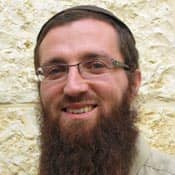
About Eliyahu Yaakov
Rabbi Eliyahu Yaakov is a sought after international speaker on Kabbalah, relationships, parenting, and life. His newly released book, Jewish By Choice: A Kabbalistic Take on Life & Judaism, recently hit #1 on Amazon's Best Seller list.
Patheos Explore the world's faith through different perspectives on religion and spirituality! Patheos has the views of the prevalent religions and spiritualities of the world.
Ad-Free & Subscriber Log-In Subscription Support
- About Us
- 2026 Calendar
- Videos
- Podcasts
- Library of World Religions
- Faith In Media Tracker
- Advertise With Us
- Write for Us
- Privacy Policy
- Terms of Service
- Do Not Sell My Data
- Contact Us
- Radiant Digital
- Manage Newsletter Subscriptions
- Unsubscribe From Notifications
- Sitemap
Copyright 2008-2026, Patheos. All rights reserved.
Subscription Support Ad-Free & Subscriber Log-In
Follow Patheos