
BuddhistCatholicContemplativeEvangelicalGeneral ChristianHinduJewishLatter-day SaintMuslimNew VisionsProgressive Christian
Beliefs
- Buddhist
- Catholic
- Contemplative
- Evangelical
- General Christian
- Hindu
- Jewish
- Latter-day Saint
- More Voices
- Muslim
- New Visions
- Pagan
- Progressive Christian
Topics
- Religion News
- Food and Religion
- Sports and Religion
- Religious Art
- Religious Music and Entertainment
- Religious Events
- History and Religion
- Style and Religion
- Politics and Religion
- Women in Religion
- Recreation Outdoors and Religion
- Business Finance and Religion
- Careers Workplace and Religion
- Education and Religion
- Family Parenting and Religion
- Health Fitness and Religion
- Home and Religion
- Relationships and Religion
- Technology and Religion
- Travel and Religion
Columnists
- Buddhist Columnists
- Business Finance and Religion Columnists
- Careers Workplace and Religion Columnists
- Catholic Columnists
- Contemplative Columnists
- Education and Religion Columnists
- Evangelists Columnists
- Family Parenting and Religion Columnists
- General Christian Columnists
- Health Fitness and Religion Columnists
- Hindu Columnists
- History and Religion Columnists
- Home and Religion Columnists
- Jewish Columnists
- More Voices Columnists
- Latter Day Columnists
- Muslim Columnists
- New Visions Columnists
- Nonreligious Columnists
- Pagan Columnists
- Politics and Religion Columnists
- Progressive Columnists
- Recreation Outdoors and Religion Columnists
- Relationships and Religion Columnists
- Religion News Columnists
- Religious Art Columnists
- Religious Events Columnists
- Religious Music and Entertainment Columnists
- Sports and Religion Columnists
- Style and Religion Columnists
- Technology and Religion Columnists
- Travel and Religion Columnists
- Women in Religion Columnists
Resource Library
- 2026 Calendar
- Library of World Religions
- The 100 Most Holy Places on Earth
- Patheos Answers
- Podcasts
- Videos
- Faith Leaders Database
- Anglican Episcopalian
- Bahai
- Baptist
- Buddhism
- Christianity
- Confucianism
- Eastern Orthodoxy
- Hinduism
- Holiness and Pentecostal
- ISKCON
- Islam
- Judaism
- Lutheran
- Methodist
- The Church of Jesus Christ of Latter-day Saints
- New Age
- Paganism
- Presbytarian and Reformed
- Protestantism
- Religion Behind the Scenes
- Roman Catholic
- Scientology
- Shia Islam
- Sikhism
- Sufism
- Sunni Islam
- Taoism
- Zen
- See all religions
Research Tools
 Ad-Free & Subscriber Log-In Subscription Support
Ad-Free & Subscriber Log-In Subscription Support
Follow Patheos 

- Trending:
- Forgiveness
- |
- Marriage
- |
- Consciousness
- |
- Death Penalty
- |
- Election
- |
- Halloween
Evangelical
God and Bain
January 30, 2012 by J. E. Dyer
When government enters the business of guaranteeing against risk, the first thing created is an opportunity for profits that free-market transactions would not generate. These profits need not be the result of cronyism or deliberate rent-seeking, but they share a characteristic with those practices, in that the profits come not from a voluntary supply-and-demand transaction but from a government decision to levy mandates on the people.
A homelier example, of a different kind, comes from the increasing government intervention in health-care transactions in California, where I live. My optometrist described to me a few months ago what she faces with the expansion of MediCal insurance coverage for eye care. For many years, her sales of prescription eyeglasses have kept her small business in the black. Most of her patients paid cash or had private insurance.
But that has changed over the last three years. Now most of her patients use MediCal—which has reduced not only her compensation for eye-care services, but her ability to sell glasses. The reason? MediCal's compensation for eyeglasses covers only certain retail outlets and brands. Their parent companies lobbied hard for the MediCal contract. Independent retailers are losing business, and the MediCal contractors are profiting from an arbitrary, taxpayer-funded mandate.
What does all this have to do with God? One aspect of the issue is that the flip side of artificial profitability for businesses is wildly expanding debt for the taxpaying public. The same is true of artificial guarantees of jobs and salary levels for workers, and indeed of any kind of benefit that can only be "guaranteed" by making all citizens present and future responsible for it.
The Proverbs warn repeatedly against the sorrows that come with taking on debt irresponsibly. Knowing that debt is an onerous burden, the Lord provided in the Old Testament Law for its forgiveness at 7- and 50-year intervals (see Dt. 15, Lev. 25). He makes clear that it is not good to live under a dark cloud of debt. Presumably God would not approve of governments that heap debt on their people.
God also predicted from the beginning the kinds of demands earthly rulers would make on their subjects. When His own people asked for a king of Israel to rule over them, He had the prophet Samuel warn them (1 Sam. 8:13-18, NIV) of what they were in for—in unmistakably discouraging accents:
He will take your daughters to be perfumers and cooks and bakers. He will take the best of your fields and vineyards and olive groves and give them to his attendants. He will take a tenth of your grain and of your vintage and give it to his officials and attendants. Your male and female servants and the best of your cattle and donkeys he will take for his own use. He will take a tenth of your flocks, and you yourselves will become his slaves. When that day comes, you will cry out for relief from the king you have chosen, but the LORD will not answer you in that day.
Today we dress up our "redistributionist" arrangements with a less forthright, often sanctimonious set of political trappings. But when our governments levy mandates on all the people, and thereby create arbitrary conditions for some of the people to profit, they are essentially doing what God warned the ancient Israelites about.
Governments ever since have sought opportunities to both guarantee against risk at the people's expense, and impose mandates as a means of generating short-term profits for those they favor. Very often, governments piggyback on the ordinary things the people have to do anyway, arranging to extract a flow of income from them—not by providing a service but by collecting arbitrary fees, and imposing regulations that spin off compliance industries of their own. In some cases, government itself realizes the "profits" in the form of revenues; in others, the profits go to businesses, unions, favored investors, and other specific beneficiaries.
In this light, the closest biblical parallel to government's ingenious income-extracting arrangements would be the moneychangers in the Temple, whom Jesus rebuked with righteous anger (Mt. 21:12). The monetary transactions were not evil in themselves, just as profit is not evil. But the moneychangers in the Temple took advantage of the requirements of the Law: worshipping and sacrificing at the Temple were a spiritual obligation to the Lord, exploited by the moneychangers for their own gain. Just as governments seek to extract income flows from the basic obligations and daily needs of their citizens, so the moneychangers sought to extract income flows from the obligations of righteous Jews under the Law.
Jesus' reaction to this indicates that God thinks poorly of such opportunistic rent-seeking. When it was done in the Temple, it was an offense to God's own righteousness and holy prerogatives. But I do not think He takes a more approving view of the practice when the venue is changed.
Article Continued On Next Page
Page: 2 of 3
1/30/2012 5:00:00 AM
Evangelical
The Optimistic Christian
Business
Bain Capital
Capitalism
Campaign
Election
Government
Mitt Romney
politics
regulations
Christianity
Evangelicalism
more at patheos
1
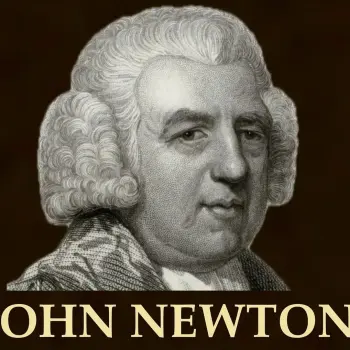
Would a wretch like John Newton be welcome in our churches?
2

"The Plague Dogs" and Mortality
3

6 Things MAGA Christians Should Love (But Somehow Don’t)
4

Big Daddy Weave Announces Fall 2026 “My Hope Is Jesus Tour”

About J. E. Dyer
J.E. Dyer is a retired Naval intelligence officer and evangelical Christian. She retired in 2004 and blogs from the Inland Empire of southern California. She writes for Commentary's CONTENTIONS blog, Hot Air's Green Room, and her own blog, The Optimistic Conservative. Follow her on Facebook and Twitter.
Patheos Explore the world's faith through different perspectives on religion and spirituality! Patheos has the views of the prevalent religions and spiritualities of the world.
Ad-Free & Subscriber Log-In Subscription Support
- About Us
- 2026 Calendar
- Videos
- Podcasts
- Library of World Religions
- Faith In Media Tracker
- Advertise With Us
- Write for Us
- Privacy Policy
- Terms of Service
- Do Not Sell My Data
- Contact Us
- Radiant Digital
- Manage Newsletter Subscriptions
- Unsubscribe From Notifications
- Sitemap
Copyright 2008-2026, Patheos. All rights reserved.
Subscription Support Ad-Free & Subscriber Log-In
Follow Patheos