
BuddhistCatholicContemplativeEvangelicalGeneral ChristianHinduJewishLatter-day SaintMuslimNew VisionsProgressive Christian
Beliefs
- Buddhist
- Catholic
- Contemplative
- Evangelical
- General Christian
- Hindu
- Jewish
- Latter-day Saint
- More Voices
- Muslim
- New Visions
- Pagan
- Progressive Christian
Topics
- Religion News
- Food and Religion
- Sports and Religion
- Religious Art
- Religious Music and Entertainment
- Religious Events
- History and Religion
- Style and Religion
- Politics and Religion
- Women in Religion
- Recreation Outdoors and Religion
- Business Finance and Religion
- Careers Workplace and Religion
- Education and Religion
- Family Parenting and Religion
- Health Fitness and Religion
- Home and Religion
- Relationships and Religion
- Technology and Religion
- Travel and Religion
Columnists
- Buddhist Columnists
- Business Finance and Religion Columnists
- Careers Workplace and Religion Columnists
- Catholic Columnists
- Contemplative Columnists
- Education and Religion Columnists
- Evangelists Columnists
- Family Parenting and Religion Columnists
- General Christian Columnists
- Health Fitness and Religion Columnists
- Hindu Columnists
- History and Religion Columnists
- Home and Religion Columnists
- Jewish Columnists
- More Voices Columnists
- Latter Day Columnists
- Muslim Columnists
- New Visions Columnists
- Nonreligious Columnists
- Pagan Columnists
- Politics and Religion Columnists
- Progressive Columnists
- Recreation Outdoors and Religion Columnists
- Relationships and Religion Columnists
- Religion News Columnists
- Religious Art Columnists
- Religious Events Columnists
- Religious Music and Entertainment Columnists
- Sports and Religion Columnists
- Style and Religion Columnists
- Technology and Religion Columnists
- Travel and Religion Columnists
- Women in Religion Columnists
Resource Library
- 2026 Calendar
- Library of World Religions
- The 100 Most Holy Places on Earth
- Patheos Answers
- Podcasts
- Videos
- Faith Leaders Database
- Anglican Episcopalian
- Bahai
- Baptist
- Buddhism
- Christianity
- Confucianism
- Eastern Orthodoxy
- Hinduism
- Holiness and Pentecostal
- ISKCON
- Islam
- Judaism
- Lutheran
- Methodist
- The Church of Jesus Christ of Latter-day Saints
- New Age
- Paganism
- Presbytarian and Reformed
- Protestantism
- Religion Behind the Scenes
- Roman Catholic
- Scientology
- Shia Islam
- Sikhism
- Sufism
- Sunni Islam
- Taoism
- Zen
- See all religions
Research Tools
 Ad-Free & Subscriber Log-In Subscription Support
Ad-Free & Subscriber Log-In Subscription Support
Follow Patheos 

- Trending:
- Forgiveness
- |
- Marriage
- |
- Consciousness
- |
- Death Penalty
- |
- Election
- |
- Halloween
Evangelical
Patrick Henry, Homeschooler
December 07, 2011 by Thomas Kidd
"Like" the Patheos Evangelical Page on Facebook to receive today's best commentary on Evangelical issues.
Patrick Henry, the greatest orator of the American Revolution, was homeschooled. Born in 1736 as the second of eleven children, he attended a small common school until he was 10. After that, his father took primary responsibility for his education. He read classics of Greek and Roman antiquity (sometimes in the original languages), ancient and modern history, and of course, the Bible. He also worked on his family's farm, hunted, and learned to play the flute and the violin. As a young man, Henry taught himself law in order to pass the bar exam, and in 1765 he burst onto the national scene when, as a freshman legislator in Virginia, he penned the colony's resolves against the Stamp Act and fulminated against the act on the floor of Virginia's House of Burgesses.
His upbringing prepared him to become the "First among Patriots," as the title of my new biography of Henry puts it. Henry's experience wasn't unique among the Founders, of course. George Washington and Ben Franklin also had little formal schooling. John Marshall, the future chief justice of the Supreme Court, was born in a log cabin in Virginia and had only a bit of education outside the home prior to his admission to the bar in 1780. Despite their lack of technical training, these American Patriots became part of the greatest assemblage of political talent the nation has ever known.
In the 18th century, American schooling like Henry's was informal but purposeful. It was not designed to enhance a boy's self-esteem, or even to train him for a vocation (Henry's vocational training came in his daily chores on the farm). It was intended primarily to inculcate the wisdom and ethics one needed to function as a responsible citizen of his county and colony. From his parents' tutoring, and from the great books of the British and Western traditions, Henry came to understand the importance of virtue, the fragility of liberty, and the bedrock principles of the Christian faith.
The Founders' upbringings stand in stark contrast against those of many children today. Today, serious work for children is often deferred until the post-college years (if not longer). Public education, moreover, has largely lost its moral vision. Most people only agree today that schools should train students in "math and science" so America can remain "competitive." But is America's declining competitiveness mostly a matter of the failed transference of knowledge (which, admittedly, is also a problem in our schools)?
The Founding generation would suspect that, to the extent that America is in moral and economic decline, our problem is one of character and virtue. These were the primary issues that Henry's kind of education addressed. As I wrote in an earlier review of Anthony Esolen's brilliant Ten Ways to Destroy the Imagination of Your Child, even highly motivated parents today seem mostly concerned with their children's "success," often defined by getting high test scores and admission to elite colleges and universities (schools that then offer little more than a smorgasbord of nihilism to students). Why should we wonder at revelations such as the SAT cheating scandal that has recently rocked Long Island, New York's Gold Coast? These students are simply doing what they are told; they are trying to achieve the new American dream of amoral achievement.
In today's terms, Henry was actually not much of a success as a young man—his first farm failed, as did two shops he tried to open. But he wasn't a man to move back in with his parents. So he began to read in the law, and there he found his calling. In 1775 he challenged Virginians to take defensive measures against the most powerful military on the face of the earth. In words framed by classical texts and the Bible, he thundered that "an appeal to arms and to the God of hosts, is all that is left us!" With this, he lifted his arms and proclaimed, Joshua-like, "I know not what course others may take; but as for me, give me liberty or give me death!" It was the most dramatic moment of the American Revolution, and a role Henry's upbringing had perfectly prepared him to perform.
12/7/2011 5:00:00 AM
Evangelical
Faith in History
American Revolution
education
Founding Fathers
History
Homeschooling
Parenting
Patriots
Christianity
Evangelicalism
more at patheos
1
The Power of Critical Thinking 2
2

Chapter 9, Julian: The Menu and the Meal
3

The World-Loving God - Lectionary Commentary for Lent 2
4
Defense of 50 NT Passages Against “Faith Alone”, Pt. 4
About Thomas Kidd
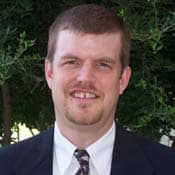
Thomas S. Kidd teaches history and is a Senior Fellow at Baylor University's Institute for Studies of Religion. He is the author of Patrick Henry: First Among Patriots and God of Liberty: A Religious History of the American Revolution. Follow his writings via Facebook and Twitter.
Patheos Explore the world's faith through different perspectives on religion and spirituality! Patheos has the views of the prevalent religions and spiritualities of the world.
Ad-Free & Subscriber Log-In Subscription Support
- About Us
- 2026 Calendar
- Videos
- Podcasts
- Library of World Religions
- Faith In Media Tracker
- Advertise With Us
- Write for Us
- Privacy Policy
- Terms of Service
- Do Not Sell My Data
- Contact Us
- Radiant Digital
- Manage Newsletter Subscriptions
- Unsubscribe From Notifications
- Sitemap
Copyright 2008-2026, Patheos. All rights reserved.
Subscription Support Ad-Free & Subscriber Log-In
Follow Patheos