
BuddhistCatholicContemplativeEvangelicalGeneral ChristianHinduJewishLatter-day SaintMuslimNew VisionsProgressive Christian
Beliefs
- Buddhist
- Catholic
- Contemplative
- Evangelical
- General Christian
- Hindu
- Jewish
- Latter-day Saint
- More Voices
- Muslim
- New Visions
- Pagan
- Progressive Christian
Topics
- Religion News
- Food and Religion
- Sports and Religion
- Religious Art
- Religious Music and Entertainment
- Religious Events
- History and Religion
- Style and Religion
- Politics and Religion
- Women in Religion
- Recreation Outdoors and Religion
- Business Finance and Religion
- Careers Workplace and Religion
- Education and Religion
- Family Parenting and Religion
- Health Fitness and Religion
- Home and Religion
- Relationships and Religion
- Technology and Religion
- Travel and Religion
Columnists
- Buddhist Columnists
- Business Finance and Religion Columnists
- Careers Workplace and Religion Columnists
- Catholic Columnists
- Contemplative Columnists
- Education and Religion Columnists
- Evangelists Columnists
- Family Parenting and Religion Columnists
- General Christian Columnists
- Health Fitness and Religion Columnists
- Hindu Columnists
- History and Religion Columnists
- Home and Religion Columnists
- Jewish Columnists
- More Voices Columnists
- Latter Day Columnists
- Muslim Columnists
- New Visions Columnists
- Nonreligious Columnists
- Pagan Columnists
- Politics and Religion Columnists
- Progressive Columnists
- Recreation Outdoors and Religion Columnists
- Relationships and Religion Columnists
- Religion News Columnists
- Religious Art Columnists
- Religious Events Columnists
- Religious Music and Entertainment Columnists
- Sports and Religion Columnists
- Style and Religion Columnists
- Technology and Religion Columnists
- Travel and Religion Columnists
- Women in Religion Columnists
Resource Library
- 2026 Calendar
- Library of World Religions
- The 100 Most Holy Places on Earth
- Patheos Answers
- Podcasts
- Videos
- Faith Leaders Database
- Anglican Episcopalian
- Bahai
- Baptist
- Buddhism
- Christianity
- Confucianism
- Eastern Orthodoxy
- Hinduism
- Holiness and Pentecostal
- ISKCON
- Islam
- Judaism
- Lutheran
- Methodist
- The Church of Jesus Christ of Latter-day Saints
- New Age
- Paganism
- Presbytarian and Reformed
- Protestantism
- Religion Behind the Scenes
- Roman Catholic
- Scientology
- Shia Islam
- Sikhism
- Sufism
- Sunni Islam
- Taoism
- Zen
- See all religions
Research Tools
 Ad-Free & Subscriber Log-In Subscription Support
Ad-Free & Subscriber Log-In Subscription Support
Follow Patheos 

- Trending:
- Forgiveness
- |
- Marriage
- |
- Consciousness
- |
- Death Penalty
- |
- Election
- |
- Halloween
Pagan
Meditations on a Bumper Sticker
December 02, 2011 by Gus diZerega
"Like" the Patheos Pagan Page on Facebook to receive today's best commentary on Pagan issues.
While in Maine last week I saw a bumper sticker on a car in a parking lot. It said, "If that which you seek you find not within yourself, you will never find it without." Many of you will recognize it as a version of the closing lines in the Charge of the Goddess, a version of which is recited in every orthodox Gardnerian circle as well as in many other Wiccan contexts.
I placed a small note under the car's windshield wiper with my email addy, asking the driver to let me know where the bumper sticker could be obtained. Soon an answer arrived along with a cheerful Blessed Be! I could find it at the grocery CO-OP in Belfast. Before leaving Maine I drove there and picked one up. (From the looks of the CO-OP, Belfast is very Pagan-friendly territory.)
But this column is about more than my tendency to collect cool bumper stickers. It is about the core meaning of the passage.
America's dominant spiritual traditions would most likely deeply disagree with this message. From those dominant perspectives human beings are fallen or otherwise fundamentally out of connection with the sacred. God's role is to reach out and contact us, for He is transcendental to everything in the world. We do not have within us what we seek spiritually and must ask, pray, or simply be blessed from without, in order to find salvation.
We Wiccans have a more positive view. What we seek is already within, at least as a seed.
This is both good news and complicated news. The good news is that we are never truly cut off from access to the sacred, although those seeds may require watering and the transcendent dimension can certainly speed up their growth. I have suggested in an earlier post that this sacred dimension of immanence offers Western culture a way out of the nihilism that is slowly consuming it. We do not need commandments in any number, transcendental Reason, or anything else from the outside to know that value exists. As the song goes, "My skin, my bones, my heretic heart are my authority."
But there is also a challenge here. She is everywhere, and so every relationship, every encounter, has an ethical dimension. No exceptions. We do not live in a world of objects, or "resources." We live in a world of incredibly complicated and often paradoxical relationships. We live in a sacramental world within a sacramental universe. To pick friendship as an example to make my point, friends are very useful to have, but if we have friends because they are useful, we are not truly friends.
This same point holds for all our relationships, and there are too many of them for us to be aware of them all, let alone of the most appropriate way of relating to them all. We live in a world of relationships, all of which are capable of exhibiting an ethical dimension. It's complicated.
For example, many of my readers and I eat organic food whenever we are able to. But why do we eat it? Because it tastes better? Because it is healthier? If those reasons are the only reasons we eat organic, we are like the person who seeks friendship only because it is useful.
Far more than agribusiness, organic farmers must take care of the earth as they grow their crops. Some even do so out of a sense of its sacred character. And it is this character of the earth that I think is the most important reason for eating organic. It helps establish right-relationships, not only for us but for entire communities.
The same reasoning holds for my strongly preferring to "buy local." Those who live in our community are not necessarily better or more deserving people than those living farther away. Not at all. Some are jerks. Some seek only to enrich themselves, just as do corporations. But the more spread out our economic production becomes, the more that we rely on impersonal organizations and corporations to provide us with our food and other necessities, the more we make it difficult for values other than profit to maintain a viable presence in our economy. We need push-back.
By buying locally when we can, we help maintain an ethically rich network of community relationships—visible in that food CO-OP in Belfast that sold me the bumper sticker, a product important enough to the community it served for it to stock. Safeway would not have done this out here in California, not even in Sonoma County, nor would the Northeast's in many ways superb chain of Hannaford's.
Of course not every product is available through local production any more than is every kind of food available organically. We needn't become fanatics, and fanatics make for poor relationships anyway, because they always subordinate the living to their abstract ideals. Rather, I think we need to cultivate as best we can a caring relationship with our world and everything within it.
This column will appear after Thanksgiving, which is today, but perhaps in the days to come we can increase our awareness of that one area of thankfulness I think our society most often omits thinking about: the intricate networks of relationships that enrich and make beautiful our world and our living within it.
12/2/2011 5:00:00 AM
Pagan
Pointedly Pagan
Community
Organic
Relationships
Paganism
more at patheos
1

The Incarnation: Why Only Christ Took Human Form
2

Blogkeeping Notes for Spooky Season
3

Miraculous Eucharist (vs. Francois Turretin #4)
4

About Gus diZerega
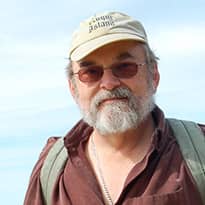
Gus diZerega is a Gardnerian Elder with over 25 years practice, including six years close study with a Brazilian shaman. He has been active in interfaith work off and on for most of those 25 years as well. He has conducted workshops and given presentations on healing, shamanism, ecology and politics at Pagan gatherings in the United States and Canada. Follow Gus on Facebook. Gus blogs at Pointedly Pagan
Patheos Explore the world's faith through different perspectives on religion and spirituality! Patheos has the views of the prevalent religions and spiritualities of the world.
Ad-Free & Subscriber Log-In Subscription Support
- About Us
- 2026 Calendar
- Videos
- Podcasts
- Library of World Religions
- Faith In Media Tracker
- Advertise With Us
- Write for Us
- Privacy Policy
- Terms of Service
- Do Not Sell My Data
- Contact Us
- Radiant Digital
- Manage Newsletter Subscriptions
- Unsubscribe From Notifications
- Sitemap
Copyright 2008-2026, Patheos. All rights reserved.
Subscription Support Ad-Free & Subscriber Log-In
Follow Patheos