
BuddhistCatholicContemplativeEvangelicalGeneral ChristianHinduJewishLatter-day SaintMuslimNew VisionsProgressive Christian
Beliefs
- Buddhist
- Catholic
- Contemplative
- Evangelical
- General Christian
- Hindu
- Jewish
- Latter-day Saint
- More Voices
- Muslim
- New Visions
- Pagan
- Progressive Christian
Topics
- Religion News
- Food and Religion
- Sports and Religion
- Religious Art
- Religious Music and Entertainment
- Religious Events
- History and Religion
- Style and Religion
- Politics and Religion
- Women in Religion
- Recreation Outdoors and Religion
- Business Finance and Religion
- Careers Workplace and Religion
- Education and Religion
- Family Parenting and Religion
- Health Fitness and Religion
- Home and Religion
- Relationships and Religion
- Technology and Religion
- Travel and Religion
Columnists
- Buddhist Columnists
- Business Finance and Religion Columnists
- Careers Workplace and Religion Columnists
- Catholic Columnists
- Contemplative Columnists
- Education and Religion Columnists
- Evangelists Columnists
- Family Parenting and Religion Columnists
- General Christian Columnists
- Health Fitness and Religion Columnists
- Hindu Columnists
- History and Religion Columnists
- Home and Religion Columnists
- Jewish Columnists
- More Voices Columnists
- Latter Day Columnists
- Muslim Columnists
- New Visions Columnists
- Nonreligious Columnists
- Pagan Columnists
- Politics and Religion Columnists
- Progressive Columnists
- Recreation Outdoors and Religion Columnists
- Relationships and Religion Columnists
- Religion News Columnists
- Religious Art Columnists
- Religious Events Columnists
- Religious Music and Entertainment Columnists
- Sports and Religion Columnists
- Style and Religion Columnists
- Technology and Religion Columnists
- Travel and Religion Columnists
- Women in Religion Columnists
Resource Library
- 2026 Calendar
- Library of World Religions
- The 100 Most Holy Places on Earth
- Patheos Answers
- Podcasts
- Videos
- Faith Leaders Database
- Anglican Episcopalian
- Bahai
- Baptist
- Buddhism
- Christianity
- Confucianism
- Eastern Orthodoxy
- Hinduism
- Holiness and Pentecostal
- ISKCON
- Islam
- Judaism
- Lutheran
- Methodist
- The Church of Jesus Christ of Latter-day Saints
- New Age
- Paganism
- Presbytarian and Reformed
- Protestantism
- Religion Behind the Scenes
- Roman Catholic
- Scientology
- Shia Islam
- Sikhism
- Sufism
- Sunni Islam
- Taoism
- Zen
- See all religions
Research Tools
 Ad-Free & Subscriber Log-In Subscription Support
Ad-Free & Subscriber Log-In Subscription Support
Follow Patheos 

- Trending:
- Forgiveness
- |
- Marriage
- |
- Consciousness
- |
- Death Penalty
- |
- Election
- |
- Halloween
Progressive Christian
Famine and Feast: Bono, ONE, and the Kingdom of God
November 02, 2011 by Greg Garrett
"Like" the Patheos Progressive Christian Page on Facebook to receive today's best commentary on Progressive Christian issues.
In November, "Faithful Citizenship" will explore the problem of hunger around the world and at home, with the ONE movement's campaign against famine as an organizing focus, and our festive celebration of Thanksgiving as contrast. Bono recently wrote that the famine in the Horn of Africa is the worst in twenty years (the United Nations concurs), and that we must all pull together now and take action. Today, I'd like to gather some of the theological elements for why we must take action, and in honor of Bono and ONE, I'd like to do so with a slightly-revised excerpt from my book We Get to Carry Each Other: The Gospel according to U2 (used by permission of Westminster John Knox Press).
We have heard Bono speaking about his understanding of Jesus, that Jesus represents for us the will of God expressed in its most human way. But what is it that Jesus does? The New Testament scholar and Anglican bishop N. T. Wright says that Jesus inaugurates for us a quest for peace and justice. In his apologetic book Simply Christian, Wright begins by talking first about justice because, he says,
It is important to see, and to say, that those who follow Jesus are committed, as he taught us to pray, to God's will being done 'on earth as it is in heaven.' And that means that God's passion for justice must become ours too. When Christians use their belief in Jesus as a way of escaping from that demand and challenge, they are abandoning a central element in their own faith.
For Wright, that central element is what scholars call "the kingdom teachings" of Jesus, which he discussed in parables and acted out in healing and feeding miracles. In this understanding, the kingdom teachings and actions of Jesus are intended to show us how to live. In a recent talk, I heard Wright affirm that it is in the life of the flesh-and-blood Jesus that we best understand God and God's kingdom and assert that Jesus' identity cannot be understood apart from the kingdom teachings.
The kingdom of God/kingdom of heaven seems to have both a present and a future meaning when Jesus talks about it in the Gospels. In the Gospel of Luke, for example, when Jesus casts out demons, he tells people that "the kingdom of God has come to you" (the Greek verb epthasen suggests "is here" or "has arrived").
This links Jesus' work of healing with God's kingdom and suggests that, with Jesus, the reign of God has begun. But clearly it has not been concluded; you don't have to look around very hard to see that even though Jesus taught and healed and fed people, even though people of faith today may be trying to act with kindness and compassion, the world is still a mess. The kingdom has, simultaneously, past, present, and future orientations. Although Jesus has begun God's work, and we are to continue it, a time is coming when that work will be complete, when God will truly rule on earth as he does in heaven, when God's tide of peace and justice will roll across the whole planet.
The name for the theological talk about the end of things, the time when we trust that God's reign will come in fullness, is "eschatology," which comes from the Greek words meaning "talk of last things." The coming perfection of the world is an important element of faith, and we do see the impulse toward eschatology in U2 songs like "Still Haven't Found What I'm Looking For," "Where the Streets Have No Name," and "The Playboy Mansion" ("Then there will be no time for sorrow / Then there will be no time for shame"). In the world to come, at the time when God perfects all things, then we will find what we're looking for, street names won't matter, and there will be no time for sorrow.
These are beautiful teachings. But when the "then/now" balance of understanding the kingdom teachings is skewed entirely to the future end of the seesaw, we won't act in the present, which is what the kingdom teachings seem to require. In the Gospel of Mark, when Jesus begins his ministry by talking about the kingdom, he links us to it: "Now after John was arrested, Jesus came to Galilee, proclaiming the good news of God, and saying, 'The time is fulfilled, and the kingdom of God has come near; repent, and believe in the good news'" (Mark 1:14-15). That is, we are called to "repentance" (that metanoia or transformation we have been talking about) because the kingdom has come near; Jesus' teaching of the kingdom requires action from us.
Article Continued On Next Page
Page: 1 of 2
11/2/2011 4:00:00 AM
Progressive Christian
Faithful Citizenship
Bono
hunger
Kingdom
ONE
Poverty
U2
Christianity
more at patheos
1

Why Free Will and God’s Sovereignty is Worth Discussing
2
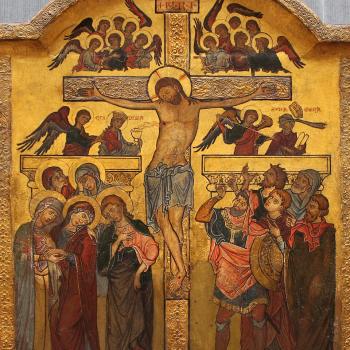
Reflections For Holy Friday 2026: The New Covenant*
3

Our Ancestors Can Help Us Through This
4

On Appalachia, Generational Poverty, and the Siders Family

About Greg Garrett
Greg Garrett is (according to BBC Radio) one of America's leading voices on religion and culture. He is the author or co-author of over twenty books of fiction, theology, cultural criticism, and spiritual autobiography. His most recent books are The Prodigal, written with the legendary Brennan Manning, Entertaining Judgment: The Afterlife in Popular Imagination, and My Church Is Not Dying: Episcopalians in the 21st Century. A contributor to Patheos since 2010, Greg also writes for the Huffington Post, Salon.com, OnFaith, The Tablet, Reform, and other web and print publications in the US and UK.
Patheos Explore the world's faith through different perspectives on religion and spirituality! Patheos has the views of the prevalent religions and spiritualities of the world.
Ad-Free & Subscriber Log-In Subscription Support
- About Us
- 2026 Calendar
- Videos
- Podcasts
- Library of World Religions
- Faith In Media Tracker
- Advertise With Us
- Write for Us
- Privacy Policy
- Terms of Service
- Do Not Sell My Data
- Contact Us
- Radiant Digital
- Manage Newsletter Subscriptions
- Unsubscribe From Notifications
- Sitemap
Copyright 2008-2026, Patheos. All rights reserved.
Subscription Support Ad-Free & Subscriber Log-In
Follow Patheos