
BuddhistCatholicContemplativeEvangelicalGeneral ChristianHinduJewishLatter-day SaintMuslimNew VisionsProgressive Christian
Beliefs
- Buddhist
- Catholic
- Contemplative
- Evangelical
- General Christian
- Hindu
- Jewish
- Latter-day Saint
- More Voices
- Muslim
- New Visions
- Pagan
- Progressive Christian
Topics
- Religion News
- Food and Religion
- Sports and Religion
- Religious Art
- Religious Music and Entertainment
- Religious Events
- History and Religion
- Style and Religion
- Politics and Religion
- Women in Religion
- Recreation Outdoors and Religion
- Business Finance and Religion
- Careers Workplace and Religion
- Education and Religion
- Family Parenting and Religion
- Health Fitness and Religion
- Home and Religion
- Relationships and Religion
- Technology and Religion
- Travel and Religion
Columnists
- Buddhist Columnists
- Business Finance and Religion Columnists
- Careers Workplace and Religion Columnists
- Catholic Columnists
- Contemplative Columnists
- Education and Religion Columnists
- Evangelists Columnists
- Family Parenting and Religion Columnists
- General Christian Columnists
- Health Fitness and Religion Columnists
- Hindu Columnists
- History and Religion Columnists
- Home and Religion Columnists
- Jewish Columnists
- More Voices Columnists
- Latter Day Columnists
- Muslim Columnists
- New Visions Columnists
- Nonreligious Columnists
- Pagan Columnists
- Politics and Religion Columnists
- Progressive Columnists
- Recreation Outdoors and Religion Columnists
- Relationships and Religion Columnists
- Religion News Columnists
- Religious Art Columnists
- Religious Events Columnists
- Religious Music and Entertainment Columnists
- Sports and Religion Columnists
- Style and Religion Columnists
- Technology and Religion Columnists
- Travel and Religion Columnists
- Women in Religion Columnists
Resource Library
- 2026 Calendar
- Library of World Religions
- The 100 Most Holy Places on Earth
- Patheos Answers
- Podcasts
- Videos
- Faith Leaders Database
- Anglican Episcopalian
- Bahai
- Baptist
- Buddhism
- Christianity
- Confucianism
- Eastern Orthodoxy
- Hinduism
- Holiness and Pentecostal
- ISKCON
- Islam
- Judaism
- Lutheran
- Methodist
- The Church of Jesus Christ of Latter-day Saints
- New Age
- Paganism
- Presbytarian and Reformed
- Protestantism
- Religion Behind the Scenes
- Roman Catholic
- Scientology
- Shia Islam
- Sikhism
- Sufism
- Sunni Islam
- Taoism
- Zen
- See all religions
Research Tools
 Ad-Free & Subscriber Log-In Subscription Support
Ad-Free & Subscriber Log-In Subscription Support
Follow Patheos 

- Trending:
- Forgiveness
- |
- Marriage
- |
- Consciousness
- |
- Death Penalty
- |
- Election
- |
- Halloween
Pagan
The Underlying Unity Within Pagan Diversity
October 16, 2011 by Gus diZerega
Pagans are clearly at ease with levels of diversity that have driven many monotheists to violence. It has always been so, the closest exceptions being when a practice, not a belief,was considered disruptive to daily life or when, as was once the case, people in a community believed their community's well-being rested on honoring the local deities or, in Rome, the emperor's "genius." They made no claims to exclusive honors nor did they expect people everywhere to do the same. Even imperial Rome had no problem giving Jews special exemption from pouring a libation to the emperor's genius.
There is a reason for this. If Pagans have a common core, one element is the belief that the sacred is immanent in the world. Further, we realize the world is a diverse place, from the arctic tundra of the far north to the luxuriant rain forests of wet equatorial regions, and more. Every place has its spiritual energy, and that energy varies.
Approached with an appropriate attitude, virtually any action can be a part of a sacred practice, from making love to planting crops to taking a photograph to burying the dead. In States of Grace Charlene Spretnak described this reality as it was lived within many Native American communities:
The Pomo and O'odhdam peoples . . . consider their acts of basket making, including the gathering of grasses and vegetable dyes and the weaving itself, to be a ritual recapitulation of the total process of creation. The completed basket is the universe in an image. The Dineh blanket weaver . . . participates in acts that evoke the ongoing creation of the cosmos. A Plains Indian woman, as a member of a women's quillwork sodality, fasts and prays before beginning her work, which she then performs in a contemplative state of mind. (p. 95)
Pagan rituals range from May Poles and Drawing Down the Moon to sweat lodges and Sun Dances to drumming ceremonies calling down the Loa and Orixas to honoring our ancestors and much more. Our practices, real and potential, mirror the diversity of the world.
Even within a particular tradition this diversity continues at the level of individual belief. Speaking as a Gardnerian (not for them!), different members of a coven will have different interpretations of what they do together. The coven of which I was longest a member had people steeped in ritual magick, some who looked on the Gods as archetypes, others (myself for one) who regarded the Gods as discrete beings; some of us were monists and others were polytheists and some were not sure the deities 'really' existed at all. Some of us practiced possessory techniques; others were more devotional in their participation. And for years none of these differences mattered because we circled very well together.
This diversity would drive the average Christian up a wall. It would be as if the arguments that split the early church were happily contained within a single community that worshipped together. But for Pagans it is the norm, and not just today.
Years ago I made the acquaintance of a Crow Indian spiritual leader. I began reading about their traditional beliefs and found, for example, that there were many differences of opinion among traditional Crow as to who Coyote was, and even whether he was important. And so on. A Crow Sun Dance chief in Montana told me that if he taught me how to conduct sweat ceremonies, the day would come when I would change what he had taught me. "And that is fine, that is how you make it yours," he added.
Heresy is a monotheistic invention. Its root meaning is "choice."
The difference between Pagans and Christians is profound and rooted in our contrasting focuses on the sacred. Christian monotheists pretty much cannot help but think of the sacred as a vast hierarchy or pyramid with God at the apex. There is One Truth and one Truth Giver. Everything is subordinate to it and Him. They argue with one another as to what God's qualities are, so much so that I consider Christianity a polytheism where the devotees of different Gods all claim their deity is God. When you add to this view a belief that we all need salvation and to win it you need to get the key details right, the seeds of violence and totalitarianism are planted deeply.
I am personally a monist, which is superficially similar to monotheism. Monists believe there is One Source for everything, including the Gods. But this perspective need not imply any hierarchy. The best image that comes to my mind is of a flower with countless petals endlessly opening. While each petal is connected to the center, each is discrete and the unfolding never stops and every petal, seen properly, is a reflection of the sacred. A flower is not a pyramid. Its center manifests but does not rule.
Article Continued On Next Page
Page: 2 of 3
10/16/2011 4:00:00 AM
Pagan
Pointedly Pagan
Diversity
History
Monotheism
Monism
Polytheism
Unity
Christianity
Paganism
more at patheos
1
The Fathers Of Nicea And Christ's Kingdom
2

Spirit Advocate and Social Injustice
3
Protecting the Church from the State
4

Christian Hip Hop and Secular Rap: Finding the Middle Ground
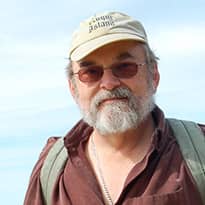
About Gus diZerega
Gus diZerega is a Gardnerian Elder with over 25 years practice, including six years close study with a Brazilian shaman. He has been active in interfaith work off and on for most of those 25 years as well. He has conducted workshops and given presentations on healing, shamanism, ecology and politics at Pagan gatherings in the United States and Canada. Follow Gus on Facebook. Gus blogs at Pointedly Pagan
Patheos Explore the world's faith through different perspectives on religion and spirituality! Patheos has the views of the prevalent religions and spiritualities of the world.
Ad-Free & Subscriber Log-In Subscription Support
- About Us
- 2026 Calendar
- Videos
- Podcasts
- Library of World Religions
- Faith In Media Tracker
- Advertise With Us
- Write for Us
- Privacy Policy
- Terms of Service
- Do Not Sell My Data
- Contact Us
- Radiant Digital
- Manage Newsletter Subscriptions
- Unsubscribe From Notifications
- Sitemap
Copyright 2008-2026, Patheos. All rights reserved.
Subscription Support Ad-Free & Subscriber Log-In
Follow Patheos