
BuddhistCatholicContemplativeEvangelicalGeneral ChristianHinduJewishLatter-day SaintMuslimNew VisionsProgressive Christian
Beliefs
- Buddhist
- Catholic
- Contemplative
- Evangelical
- General Christian
- Hindu
- Jewish
- Latter-day Saint
- More Voices
- Muslim
- New Visions
- Pagan
- Progressive Christian
Topics
- Religion News
- Food and Religion
- Sports and Religion
- Religious Art
- Religious Music and Entertainment
- Religious Events
- History and Religion
- Style and Religion
- Politics and Religion
- Women in Religion
- Recreation Outdoors and Religion
- Business Finance and Religion
- Careers Workplace and Religion
- Education and Religion
- Family Parenting and Religion
- Health Fitness and Religion
- Home and Religion
- Relationships and Religion
- Technology and Religion
- Travel and Religion
Columnists
- Buddhist Columnists
- Business Finance and Religion Columnists
- Careers Workplace and Religion Columnists
- Catholic Columnists
- Contemplative Columnists
- Education and Religion Columnists
- Evangelists Columnists
- Family Parenting and Religion Columnists
- General Christian Columnists
- Health Fitness and Religion Columnists
- Hindu Columnists
- History and Religion Columnists
- Home and Religion Columnists
- Jewish Columnists
- More Voices Columnists
- Latter Day Columnists
- Muslim Columnists
- New Visions Columnists
- Nonreligious Columnists
- Pagan Columnists
- Politics and Religion Columnists
- Progressive Columnists
- Recreation Outdoors and Religion Columnists
- Relationships and Religion Columnists
- Religion News Columnists
- Religious Art Columnists
- Religious Events Columnists
- Religious Music and Entertainment Columnists
- Sports and Religion Columnists
- Style and Religion Columnists
- Technology and Religion Columnists
- Travel and Religion Columnists
- Women in Religion Columnists
Resource Library
- 2026 Calendar
- Library of World Religions
- The 100 Most Holy Places on Earth
- Patheos Answers
- Podcasts
- Videos
- Faith Leaders Database
- Anglican Episcopalian
- Bahai
- Baptist
- Buddhism
- Christianity
- Confucianism
- Eastern Orthodoxy
- Hinduism
- Holiness and Pentecostal
- ISKCON
- Islam
- Judaism
- Lutheran
- Methodist
- The Church of Jesus Christ of Latter-day Saints
- New Age
- Paganism
- Presbytarian and Reformed
- Protestantism
- Religion Behind the Scenes
- Roman Catholic
- Scientology
- Shia Islam
- Sikhism
- Sufism
- Sunni Islam
- Taoism
- Zen
- See all religions
Research Tools
 Ad-Free & Subscriber Log-In Subscription Support
Ad-Free & Subscriber Log-In Subscription Support
Follow Patheos 

- Trending:
- Forgiveness
- |
- Marriage
- |
- Consciousness
- |
- Death Penalty
- |
- Election
- |
- Halloween
Evangelical
We Need a New Reformation
October 31, 2011 by Douglas Baker
"Like" the Patheos Evangelical Page on Facebook to receive today's best commentary on Evangelical issues.
I am bound by the Scriptures I have quoted and my conscience is captive to the Word of God. I cannot and I will not retract anything, since it is neither safe nor right to go against conscience. I cannot do otherwise, here I stand, may God help me, Amen.
Martin Luther, April 18, 1521, Diet of Worms
The world of the early sixteenth century could accurately be described as a religious system of corruption that had as its goal the growth of a Christian "industry" built on the backs of peasants. The current talk of income inequality holds no comparison to the economic deprivation in this era, fueled by religious persecution and motivated by a desire for political control. Ironically, recent research has revealed that the culture of this time was anything but anti-religious. To the contrary, religion was big business.
The Apostle Peter's successor as the father (or "papa" or "pope") of the Roman church was believed to be the vicar (representative) of Jesus Christ. The pope was, therefore, a primary channel of God's grace to the world. Through him came the power to ordain bishops who, in turn, would ordain priests who would, in turn, manage the Christian empire. God's grace was known through the seven sacraments: baptism, confirmation, the Mass, penance, marriage, ordination and last rites. Participation in these actions became the path to receiving divine grace.
The Mass was performed in Latin. Most who attended did not understand one word that was said. Worse, most of the professional priests did not understand what they uttered before the people. For many of them, it was easier to learn the sounds of the words by rote than learn a new language that was as unfamiliar to many of them as it was to the people who heard them speak. The words of the Bible remained hidden in obscurity until courageous martyrs stepped forward to speak the truth.
A misconception surrounds the exact date of the Protestant Reformation as it is commonly thought to begin on Oct. 31, 1517. To be sure, Martin Luther's 95 theses on the Wittenburg door quickly gained traction in the new world of the printing press and the overall unrest surrounding the unjust practices of the Church. Long before Luther's dramatic appearance on the world stage, however, tremors of reform had been felt through the lives of people who dared to read the Bible in English to "commoners." Robert Grosseteste (1168-1253) became bishop of Lincoln in 1235 and believed that the chief duty of the "clergy" should be to preach the Bible—not give the Mass. He preached in English, not Latin, and clashed a number of times with the pope.
In the early 1300s, John Wycliffe openly stated that the Bible (not the pope) was the supreme authority for the Church. This created a huge backlash that ultimately ended in Wycliffe being banished to obscurity until his death in 1384. Jan Hus, the rector of the University of Prague, became the champion of Wycliffe's teaching. Hus challenged the authority of the pope to issue indulgences (a gift of merit by the pope to free imprisoned souls in purgatory) and reaffirmed the primacy of the Bible as the only authority for the Church. He was condemned to death as a heretic in 1415.
By the time Luther stood before Charles V, the Holy Roman Emperor, on April 18, 1521, and uttered his famous statement (quoted above), the thunder of reformation had been heard and was gaining momentum. Slowly the grip of the papacy was loosened, as many of the most nefarious teachings of the Church were shown to be erroneous. Luther's grand message was that a person could stand confident before God on the basis of "merely" trusting God's acceptance of Jesus' work in their behalf by faith. And so works were replaced by words that were founded by the Word of God. By faith alone a person was justified before the judgment throne of God by believing it was so on the basis of Holy Scripture alone.
Most modern Protestants who read the history of the Reformation cannot fully grasp a world without the Bible. Today, however, the reformation which must come is not one void of the presence of the Bible. Today's scandal is that the Bible, while widely available, is seldom read at all, let alone understood, by most who listen to preaching every week. For many of them, it is as if the Latin Mass is still in play.
In Kenda Creasy Dean's book, Almost Christian: What the Faith of our Teenagers is Telling the American Church, it seems that the problem is far worse than anyone imagined. The National Study of Youth and Religion discovered that "the majority of American teenagers, who disproportionately call themselves mainline Protestant or Roman Catholic, harbor an attitude toward religion that one researcher described as 'benign positive regard.' While teenagers (and young adults) agree that religion is good, even important, they cannot explain why this is so, and many of them believe religion makes no difference to them personally. Most religious communities' central problem is not teen rebellion, but teenagers' 'benign whateverism.'"
Article Continued On Next Page
Page: 1 of 2
10/31/2011 4:00:00 AM
Evangelical
Crisis and Kairos
Day of Reformation
Martin Luther
reformation
Christianity
Evangelicalism
more at patheos
1
2
'Where, exactly, this is all heading'
3
Faith and Covenant: Two Promises in the Opening of Scripture
4
The Gospel of Matthew: Midnight Epiphanies
About Douglas Baker
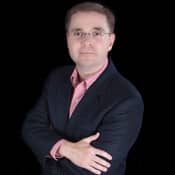
Douglas E. Baker is the former Executive Editor of The Baptist Messenger, and serves now as Assistant to the Provost of Union University. Follow him via Twitter or Facebook.
Patheos Explore the world's faith through different perspectives on religion and spirituality! Patheos has the views of the prevalent religions and spiritualities of the world.
Ad-Free & Subscriber Log-In Subscription Support
- About Us
- 2026 Calendar
- Videos
- Podcasts
- Library of World Religions
- Faith In Media Tracker
- Advertise With Us
- Write for Us
- Privacy Policy
- Terms of Service
- Do Not Sell My Data
- Contact Us
- Radiant Digital
- Manage Newsletter Subscriptions
- Unsubscribe From Notifications
- Sitemap
Copyright 2008-2026, Patheos. All rights reserved.
Subscription Support Ad-Free & Subscriber Log-In
Follow Patheos