
BuddhistCatholicContemplativeEvangelicalGeneral ChristianHinduJewishLatter-day SaintMuslimNew VisionsProgressive Christian
Beliefs
- Buddhist
- Catholic
- Contemplative
- Evangelical
- General Christian
- Hindu
- Jewish
- Latter-day Saint
- More Voices
- Muslim
- New Visions
- Pagan
- Progressive Christian
Topics
- Religion News
- Food and Religion
- Sports and Religion
- Religious Art
- Religious Music and Entertainment
- Religious Events
- History and Religion
- Style and Religion
- Politics and Religion
- Women in Religion
- Recreation Outdoors and Religion
- Business Finance and Religion
- Careers Workplace and Religion
- Education and Religion
- Family Parenting and Religion
- Health Fitness and Religion
- Home and Religion
- Relationships and Religion
- Technology and Religion
- Travel and Religion
Columnists
- Buddhist Columnists
- Business Finance and Religion Columnists
- Careers Workplace and Religion Columnists
- Catholic Columnists
- Contemplative Columnists
- Education and Religion Columnists
- Evangelists Columnists
- Family Parenting and Religion Columnists
- General Christian Columnists
- Health Fitness and Religion Columnists
- Hindu Columnists
- History and Religion Columnists
- Home and Religion Columnists
- Jewish Columnists
- More Voices Columnists
- Latter Day Columnists
- Muslim Columnists
- New Visions Columnists
- Nonreligious Columnists
- Pagan Columnists
- Politics and Religion Columnists
- Progressive Columnists
- Recreation Outdoors and Religion Columnists
- Relationships and Religion Columnists
- Religion News Columnists
- Religious Art Columnists
- Religious Events Columnists
- Religious Music and Entertainment Columnists
- Sports and Religion Columnists
- Style and Religion Columnists
- Technology and Religion Columnists
- Travel and Religion Columnists
- Women in Religion Columnists
Resource Library
- 2026 Calendar
- Library of World Religions
- The 100 Most Holy Places on Earth
- Patheos Answers
- Podcasts
- Videos
- Faith Leaders Database
- Anglican Episcopalian
- Bahai
- Baptist
- Buddhism
- Christianity
- Confucianism
- Eastern Orthodoxy
- Hinduism
- Holiness and Pentecostal
- ISKCON
- Islam
- Judaism
- Lutheran
- Methodist
- The Church of Jesus Christ of Latter-day Saints
- New Age
- Paganism
- Presbytarian and Reformed
- Protestantism
- Religion Behind the Scenes
- Roman Catholic
- Scientology
- Shia Islam
- Sikhism
- Sufism
- Sunni Islam
- Taoism
- Zen
- See all religions
Research Tools
 Ad-Free & Subscriber Log-In Subscription Support
Ad-Free & Subscriber Log-In Subscription Support
Follow Patheos 

- Trending:
- Forgiveness
- |
- Marriage
- |
- Consciousness
- |
- Death Penalty
- |
- Election
- |
- Halloween
Catholic
The Catholic Things We Do
October 12, 2011 by Julie Davis
"Like" the Patheos Catholic Page on Facebook to receive today's best commentary on Catholic issues.
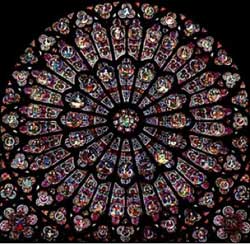 Since my conversion, I have read many a book about saints, angels, prayer, virtues, and all those good Catholic subjects. Reviewing the list, however, I was surprised to see how few of them covered Catholicism as a whole.
The Catechism of the Catholic Church, of course, is a reference I use regularly. The impeccable logic of Peter Kreeft's Catholic Christianity helped settle my mind about Catholic teachings on controversial issues. Catholicism for Dummies and The Complete Idiot's Guide to the Catholic Catechism are favorite references.
None of them, however, are designed to be engaging, uplifting reading (although the Catechism certainly can perform that function).
Enter Catholicism: A Journey to the Heart of the Faith by Father Robert Barron. Barron has the knack of articulating Catholic theology in a way that makes one sit up in astonishment and delight as well-worn concepts take on fresh, new life. Look at his presentation of what the Incarnation means to us, as human beings.
In their own ways, Marx, Freud, Feuerbach, and Sartre all maintain that God must be eliminated if humans are to be fully themselves. But there is none of this in the Christian doctrine of the Incarnation. The Word does indeed become human, but nothing of the human is destroyed in the process; God does indeed enter into his creation, but the world is thereby enhanced and elevated. The God capable of incarnation is not a competitive supreme being but rather, in the words of Saint Thomas Aquinas, the sheer act of being itself, that which grounds and sustains all of creation, the way a singer sustains a song.
And the Incarnation tells us the most important truth about ourselves: we are destined for divinization. The church fathers never tired of repeating this phrase as a sort of summary of Christian belief: Deus fit homo ut homo fieret Deus (God became human so that humans might become God). God condescended to enter into human flesh so that our flesh might partake of the divine life, that we might participate in the love that holds the Father, Son, and Holy Spirit in communion. And this is why Christianity is the greatest humanism that has ever appeared, indeed that could appear. No philosophical or political or religious program in history—neither Greek nor Renaissance nor Marxist humanism—has ever made a claim about human destiny as extravagant as Christianity's. We are called not simply to moral perfection or artistic self-expression or economic liberation but to what the Eastern fathers called theiosis*, transformation into God.*
God's noncompetitive love and our transformation into the divine are touchstones that Barron returns to throughout the book. As he presents Catholicism in all its complexity—from Jesus as warrior to Mary and the saints to the Eucharist and beyond—readers begin to grasp that love and transformation are indeed the core of the Catholic faith.
Barron's enthusiasm is palpable and his examples vivid. I especially enjoyed the way he wove imagery throughout his text, only to suddenly expand it to make larger theological points. I already was familiar with Noah's ark as an image of the Church, as a place of safety for all. However, it was a revelation when he took it one step further and pointed out how medieval architects reinforced the connection by endeavoring to make cathedrals look like great ships. He gave me potent, mind's-eye images that stuck with me through the rest of that section.
Article Continued On Next Page
Page: 1 of 2
10/12/2011 4:00:00 AM
Catholic
A Free Mind
Art
Catechism
History
Roman Catholicism
more at patheos
1

Who Are the "Bad Guys" in this Iran War?
2
Chris Bledsoe’s October 7 Prophecy: An October 8 UPDATE
3

Jehovah Nissi: The Meaning of "The Lord Is My Banner"?
4
'Newsboy' John James Returns with New Book, Music

About Julie Davis
Julie Davis blogs about it at Happy Catholic and discusses both books and movies at A Good Story is Hard to Find podcast. Her new book is Happy Catholic, published by Servant Publishing. Follow Julie on Twitter and Facebook
Patheos Explore the world's faith through different perspectives on religion and spirituality! Patheos has the views of the prevalent religions and spiritualities of the world.
Ad-Free & Subscriber Log-In Subscription Support
- About Us
- 2026 Calendar
- Videos
- Podcasts
- Library of World Religions
- Faith In Media Tracker
- Advertise With Us
- Write for Us
- Privacy Policy
- Terms of Service
- Do Not Sell My Data
- Contact Us
- Radiant Digital
- Manage Newsletter Subscriptions
- Unsubscribe From Notifications
- Sitemap
Copyright 2008-2026, Patheos. All rights reserved.
Subscription Support Ad-Free & Subscriber Log-In
Follow Patheos