
BuddhistCatholicContemplativeEvangelicalGeneral ChristianHinduJewishLatter-day SaintMuslimNew VisionsProgressive Christian
Beliefs
- Buddhist
- Catholic
- Contemplative
- Evangelical
- General Christian
- Hindu
- Jewish
- Latter-day Saint
- More Voices
- Muslim
- New Visions
- Pagan
- Progressive Christian
Topics
- Religion News
- Food and Religion
- Sports and Religion
- Religious Art
- Religious Music and Entertainment
- Religious Events
- History and Religion
- Style and Religion
- Politics and Religion
- Women in Religion
- Recreation Outdoors and Religion
- Business Finance and Religion
- Careers Workplace and Religion
- Education and Religion
- Family Parenting and Religion
- Health Fitness and Religion
- Home and Religion
- Relationships and Religion
- Technology and Religion
- Travel and Religion
Columnists
- Buddhist Columnists
- Business Finance and Religion Columnists
- Careers Workplace and Religion Columnists
- Catholic Columnists
- Contemplative Columnists
- Education and Religion Columnists
- Evangelists Columnists
- Family Parenting and Religion Columnists
- General Christian Columnists
- Health Fitness and Religion Columnists
- Hindu Columnists
- History and Religion Columnists
- Home and Religion Columnists
- Jewish Columnists
- More Voices Columnists
- Latter Day Columnists
- Muslim Columnists
- New Visions Columnists
- Nonreligious Columnists
- Pagan Columnists
- Politics and Religion Columnists
- Progressive Columnists
- Recreation Outdoors and Religion Columnists
- Relationships and Religion Columnists
- Religion News Columnists
- Religious Art Columnists
- Religious Events Columnists
- Religious Music and Entertainment Columnists
- Sports and Religion Columnists
- Style and Religion Columnists
- Technology and Religion Columnists
- Travel and Religion Columnists
- Women in Religion Columnists
Resource Library
- 2026 Calendar
- Library of World Religions
- The 100 Most Holy Places on Earth
- Patheos Answers
- Podcasts
- Videos
- Faith Leaders Database
- Anglican Episcopalian
- Bahai
- Baptist
- Buddhism
- Christianity
- Confucianism
- Eastern Orthodoxy
- Hinduism
- Holiness and Pentecostal
- ISKCON
- Islam
- Judaism
- Lutheran
- Methodist
- The Church of Jesus Christ of Latter-day Saints
- New Age
- Paganism
- Presbytarian and Reformed
- Protestantism
- Religion Behind the Scenes
- Roman Catholic
- Scientology
- Shia Islam
- Sikhism
- Sufism
- Sunni Islam
- Taoism
- Zen
- See all religions
Research Tools
 Ad-Free & Subscriber Log-In Subscription Support
Ad-Free & Subscriber Log-In Subscription Support
Follow Patheos 

- Trending:
- Forgiveness
- |
- Marriage
- |
- Consciousness
- |
- Death Penalty
- |
- Election
- |
- Halloween
Progressive Christian
The Barren Woman Bible
October 03, 2011 by Monica Coleman
"Like" the Patheos Progressive Christian Page on Facebook to receive today's best commentary on Progressive Christian issues.
I know that men wrote the Bible. That's no surprise to anyone who has had a brush with feminism or biblical scholarship. But there are times when one is more aware of this than at other times. As I mourn the loss of my miscarried babies, I think of how the Bible tells the stories of barren women.
When I read about Sarai, Leah, Rachel, Hannah and Elizabeth, the story is always the same. The woman cannot have children.
Like a choose-your-own-adventure novel, the story goes like this:
Option A: You give your husband your maidservant, who then gives him a male child or two or three, and then, later, God opens your womb so you can bear a male child yourself.
Option B: You pray to God about how much you want children, and then, later, God opens you womb so you can bear a male child yourself.
You end up on the same page at the end: the male child becomes an important religious leader.
I wish!
First of all, it's hard to know much about a biblical woman's barrenness. Perhaps they had children, but they were all girls, and only boys really count to the biblical writers. Perhaps they could get pregnant, but they always miscarried. Maybe they were never able to get pregnant. But if one chose option B, there's no way to know which attempting parent bore biological responsibility.
In any event, it's too neat. The women cry out to God—or scoff God says as in Sarai's case (which is very understandable for a 90 year-old woman)—and God makes it happen. The women thank God for the male child and salvation history continues, happily ever after.
In real life, barrenness is much more complicated. It's infertility and miscarriages. It's bleeding and not-bleeding—but on the opposite schedule than you want. It's counting days, doctor visits, taking blood, running tests, more doctor's visits and a slew of bills and—if you're lucky enough—insurance forms. And did I mention what it does to sex?! What was once fun and adventurous can become calculated, programmed or halted.
And then there's the ending. In real life, God's "fix" is not always a boy-prophet. Sometimes it's adoption. Sometimes it's a birthed child. Sometimes it's nieces and nephews. Sometimes it's finding peace with childlessness.
At least that's how it is for me and the other women who I talk with. But that's the other thing. In real life, there are other women.
After I miscarried, the women came.
One sister-friend let me sleep on her bed between doctor's appointments. She took my midnight texts when I asked her, "But what do I do about the grief?"
My play-sister looked at pictures of every pregnancy test, helping me to decipher how many lines I saw
Another sister-friend brought her teen to play with mine, dragging me out of the bed and into the light of day
Another sister-friend found out the pain had me in bed and brought two days worth of dinner for my entire family
My mother drew me a bath, knelt on the bathroom floor and washed my hair
If women wrote the Bible, it might mention how messy the enterprise of not having children really is. It might mention the girl children the women loved. It might talk about how the men were in the temple, while the bleeding women gathered somewhere else. If women wrote the Bible, we would have more than these solitary scenes where a woman pours out her heart to God, and God fixes it by "opening her womb."
If this woman wrote the Bible, I'd write about barren women ... and the women who support them. Those stories would be my love letter to them.
10/3/2011 4:00:00 AM
Progressive Christian
Women In Spirit and Flesh
Childlessness
Infertility
Sacred Texts
Christianity
more at patheos
1

Speaking (and singing) of the dead
2
Out-Crowleying Crowley: The Emptiness of the O9A
3

Angel Reese, Dream Forward: Forged By Fire, Kept By Faith
4

What does New Testament grace giving look like?
About Monica Coleman
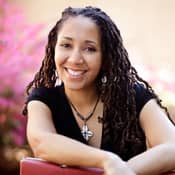
Monica A. Coleman is Associate Professor of Constructive Theology and African American Religions and Co-Director for Process Studies at Claremont School of Theology and Claremont Lincoln University. An ordained elder in the African Methodist Episcopal Church, Coleman has earned degrees at Harvard University, Vanderbilt University and Claremont Graduate University.
Patheos Explore the world's faith through different perspectives on religion and spirituality! Patheos has the views of the prevalent religions and spiritualities of the world.
Ad-Free & Subscriber Log-In Subscription Support
- About Us
- 2026 Calendar
- Videos
- Podcasts
- Library of World Religions
- Faith In Media Tracker
- Advertise With Us
- Write for Us
- Privacy Policy
- Terms of Service
- Do Not Sell My Data
- Contact Us
- Radiant Digital
- Manage Newsletter Subscriptions
- Unsubscribe From Notifications
- Sitemap
Copyright 2008-2026, Patheos. All rights reserved.
Subscription Support Ad-Free & Subscriber Log-In
Follow Patheos