
BuddhistCatholicContemplativeEvangelicalGeneral ChristianHinduJewishLatter-day SaintMuslimNew VisionsProgressive Christian
Beliefs
- Buddhist
- Catholic
- Contemplative
- Evangelical
- General Christian
- Hindu
- Jewish
- Latter-day Saint
- More Voices
- Muslim
- New Visions
- Pagan
- Progressive Christian
Topics
- Religion News
- Food and Religion
- Sports and Religion
- Religious Art
- Religious Music and Entertainment
- Religious Events
- History and Religion
- Style and Religion
- Politics and Religion
- Women in Religion
- Recreation Outdoors and Religion
- Business Finance and Religion
- Careers Workplace and Religion
- Education and Religion
- Family Parenting and Religion
- Health Fitness and Religion
- Home and Religion
- Relationships and Religion
- Technology and Religion
- Travel and Religion
Columnists
- Buddhist Columnists
- Business Finance and Religion Columnists
- Careers Workplace and Religion Columnists
- Catholic Columnists
- Contemplative Columnists
- Education and Religion Columnists
- Evangelists Columnists
- Family Parenting and Religion Columnists
- General Christian Columnists
- Health Fitness and Religion Columnists
- Hindu Columnists
- History and Religion Columnists
- Home and Religion Columnists
- Jewish Columnists
- More Voices Columnists
- Latter Day Columnists
- Muslim Columnists
- New Visions Columnists
- Nonreligious Columnists
- Pagan Columnists
- Politics and Religion Columnists
- Progressive Columnists
- Recreation Outdoors and Religion Columnists
- Relationships and Religion Columnists
- Religion News Columnists
- Religious Art Columnists
- Religious Events Columnists
- Religious Music and Entertainment Columnists
- Sports and Religion Columnists
- Style and Religion Columnists
- Technology and Religion Columnists
- Travel and Religion Columnists
- Women in Religion Columnists
Resource Library
- 2026 Calendar
- Library of World Religions
- The 100 Most Holy Places on Earth
- Patheos Answers
- Podcasts
- Videos
- Faith Leaders Database
- Anglican Episcopalian
- Bahai
- Baptist
- Buddhism
- Christianity
- Confucianism
- Eastern Orthodoxy
- Hinduism
- Holiness and Pentecostal
- ISKCON
- Islam
- Judaism
- Lutheran
- Methodist
- The Church of Jesus Christ of Latter-day Saints
- New Age
- Paganism
- Presbytarian and Reformed
- Protestantism
- Religion Behind the Scenes
- Roman Catholic
- Scientology
- Shia Islam
- Sikhism
- Sufism
- Sunni Islam
- Taoism
- Zen
- See all religions
Research Tools
 Ad-Free & Subscriber Log-In Subscription Support
Follow Patheos 

- Trending:
- Advent
- |
- Forgiveness
- |
- Thanksgiving
- |
- Election
- |
- Seasonal Holidays
- |
- Marriage
Progressive Christian
The Adventurous Seminary: Holistic, Relational, and Innovative
October 17, 2011 by Bruce Epperly
Interdependence. We live in a world of lively and dynamic interdependence. Whitehead once noted that the whole universe conspires to create each moment of experience. Too often, seminaries have acted as if they are self-contained and do not need pastors, laypeople, congregations, or denominations for their institutional sense of mission and vitality. Within the body of Christ, writ large, everything is connected. Seminaries will eventually fade into irrelevance if their mission is primarily institutional survival and not the well-being of the whole church. Seminaries need to enter into partnerships that strengthen congregations in terms of worship, preaching, pastoral care, and Christian formation. Apart from strong and vital congregations, seminaries will experience a shrinking number of applicants and well-qualified students. The education of pastors does not end with the M.Div. but continues over a lifetime through workshops, colleague groups, and seminary-sponsored congregational enrichment programs.
The relational nature of life compels seminaries to ask:
- How does our pedagogy strengthen congregations in fulfilling their vision?
- Where can we join with congregations and denominations in creating hybrid programs emerging from the creative intersections of church and seminary?
- How do we help congregations more creatively and intentionally respond to cultural and social transformation, pluralism, and the postmodern ethos?
- What practical guidance can we provide for denominations and congregations in areas such as stewardship, evangelism in a pluralistic age, spiritual formation, social networking, and other forms of technology?
- Where can we partner with other institutions, for example, denominational offices, councils of churches, CPE programs, spiritual life programs, parish resource programs, and on-line vehicles to create theological, spiritual, and practical synergies for professional, congregational, denominational, and social transformation?
Innovation. Today's seminaries are called to originate novelty to match the novelty of the postmodern, pluralistic, interdependent, and rapidly changing world. It is a truism that seminaries often move slowly and are decades behind the cultural and scientific ethos in terms of pedagogy, technology, and practice. Academic Ph.D. programs are often backward rather than forward looking in scope. In academia, cultural and congregational irrelevance is often rewarded while practical and concrete reflection, necessary for the flourishing of the church and its mission, is seen as inferior to theoretical research. While we need to treasure the living thoughts of dead people, Ph.D. programs that train potential theological professors must also be innovative in research, focus, and pedagogy.
Seminary professors need to be interdisciplinary in attitude and training. Study outside their academic field is no longer optional for faculty; it is a necessity for responsible scholarship and teaching. This may require seminaries to transform and overhaul their approaches to teaching the traditional academic disciplines. Indeed, the boundaries of disciplines must be blurred and expanded in order to be relevant to a dynamic world. Seminaries are not primarily archivists of past theological achievements; they are adventurers in the integration of ancient, future, and present. They must continually join theory and practice, and concrete and abstract. In the spirit of Whitehead's metaphor of the airplane flight, seminary education, at its best, begins with concrete experiences of ministerial call and congregational life, soars upward in quest of larger perspectives, and then returns to the concrete to test theological reflection, only to continue the adventure with further syntheses of theory and practice.
Seminaries need to be prudent risk-takers, constantly looking for creative and revenue positive partnerships and exploring new ways of approaching their vocation as the mind of the church. The old time religion may have been good enough for grandma or grandpa, but seminaries must apply spiritual and theological CPR to traditional ideas for these ideas to live again. Once it was said that pastors need to have the New York Times in one hand and the Bible in the other. Today, we must supplement the New York Times with the Huffington Post, Patheos, various online resources, as well as cable news to be relevant and innovative. Like the prophets of old, today's seminaries need to cultivate a "fluid eschatology," looking toward the horizons of the future in their embrace of emerging possibilities for congregational, educational, and spiritual transformation. This is the calling of adventurous seminaries living in partnership with adventurous congregations.
Page: 2 of 2
10/17/2011 4:00:00 AM
Progressive Christian
Culture
education
Emerging Church
FOSE
History
Pedagogy
Seminaries
Seminary education
Technology
Christianity
more at patheos
1

Magnifica Humanitas Ch 3: We Need to Do Something
2

Vocation: The Theology of the Christian Life
3

Luke Tillman: The Kid Pastor & Voice for Future Generations
4

Best Books of 2026 on American Christianity
About Bruce Epperly
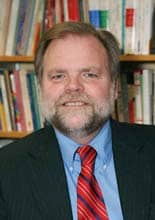
Bruce Epperly is a theologian, spiritual guide, pastor, and author of twenty one books, including Process Theology: A Guide for the Perplexed, Holy Adventure: 41 Days of Audacious Living, and The Center is Everywhere: Celtic Spirituality for the Postmodern Age. He may be reached at [email protected] for lectures, workshops, and retreats.
Patheos Explore the world's faith through different perspectives on religion and spirituality! Patheos has the views of the prevalent religions and spiritualities of the world.
Ad-Free & Subscriber Log-In Subscription Support
- About Us
- 2026 Calendar
- Videos
- Podcasts
- Library of World Religions
- Faith In Media Tracker
- Advertise With Us
- Write for Us
- Privacy Policy
- Terms of Service
- Do Not Sell My Data
- Contact Us
- Radiant Digital
- Manage Newsletter Subscriptions
- Unsubscribe From Notifications
- Sitemap
Copyright 2008-2026, Patheos, part of the Radiant Digital network of media brands. All rights reserved.
Subscription Support Ad-Free & Subscriber Log-In
Follow Patheos