
BuddhistCatholicContemplativeEvangelicalGeneral ChristianHinduJewishLatter-day SaintMuslimNew VisionsProgressive Christian
Beliefs
- Buddhist
- Catholic
- Contemplative
- Evangelical
- General Christian
- Hindu
- Jewish
- Latter-day Saint
- More Voices
- Muslim
- New Visions
- Pagan
- Progressive Christian
Topics
- Religion News
- Food and Religion
- Sports and Religion
- Religious Art
- Religious Music and Entertainment
- Religious Events
- History and Religion
- Style and Religion
- Politics and Religion
- Women in Religion
- Recreation Outdoors and Religion
- Business Finance and Religion
- Careers Workplace and Religion
- Education and Religion
- Family Parenting and Religion
- Health Fitness and Religion
- Home and Religion
- Relationships and Religion
- Technology and Religion
- Travel and Religion
Columnists
- Buddhist Columnists
- Business Finance and Religion Columnists
- Careers Workplace and Religion Columnists
- Catholic Columnists
- Contemplative Columnists
- Education and Religion Columnists
- Evangelists Columnists
- Family Parenting and Religion Columnists
- General Christian Columnists
- Health Fitness and Religion Columnists
- Hindu Columnists
- History and Religion Columnists
- Home and Religion Columnists
- Jewish Columnists
- More Voices Columnists
- Latter Day Columnists
- Muslim Columnists
- New Visions Columnists
- Nonreligious Columnists
- Pagan Columnists
- Politics and Religion Columnists
- Progressive Columnists
- Recreation Outdoors and Religion Columnists
- Relationships and Religion Columnists
- Religion News Columnists
- Religious Art Columnists
- Religious Events Columnists
- Religious Music and Entertainment Columnists
- Sports and Religion Columnists
- Style and Religion Columnists
- Technology and Religion Columnists
- Travel and Religion Columnists
- Women in Religion Columnists
Resource Library
- 2026 Calendar
- Library of World Religions
- The 100 Most Holy Places on Earth
- Patheos Answers
- Podcasts
- Videos
- Faith Leaders Database
- Anglican Episcopalian
- Bahai
- Baptist
- Buddhism
- Christianity
- Confucianism
- Eastern Orthodoxy
- Hinduism
- Holiness and Pentecostal
- ISKCON
- Islam
- Judaism
- Lutheran
- Methodist
- The Church of Jesus Christ of Latter-day Saints
- New Age
- Paganism
- Presbytarian and Reformed
- Protestantism
- Religion Behind the Scenes
- Roman Catholic
- Scientology
- Shia Islam
- Sikhism
- Sufism
- Sunni Islam
- Taoism
- Zen
- See all religions
Research Tools
 Ad-Free & Subscriber Log-In Subscription Support
Ad-Free & Subscriber Log-In Subscription Support
Follow Patheos 

- Trending:
- Forgiveness
- |
- Marriage
- |
- Consciousness
- |
- Death Penalty
- |
- Election
- |
- Halloween
Catholic
Why Are Catholics Obsessed With Sex?: Sex and Christianity, Part 5
September 19, 2011 by Tim Muldoon
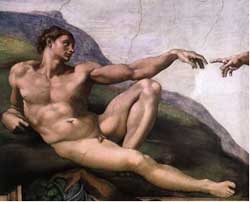 There is a spiritual DNA that comprises two deep yearnings in the human heart: one, for the physical touch of another human being; and the other, for the love of God. The experience of desire, of longing, is at the root of both prayer and sex: and so Christian faith will always be inextricably linked to sex. Both faith and sexual desire arise from places in the heart that can neither be named nor fully understood. Their spontaneity can surprise and overwhelm us, even when cultivated. They confront us with the reality that we are never fully masters over our own selves.
The roots of this sex- and God-obsession are Biblical. The prophet Jeremiah could describe God as having "seduced" him (20:7). The prophet Hosea wrote of God commanding him to marry a harlot, in order that he might understand the deep wound of adultery as an analogy for God's own feeling slighted by Israel. Later, the Song of Songs provided a dramatic, erotic image for the way that God pursues the human heart like a lover for his beloved. (The first century Rabbi Akiva once described the Song of Songs as the "Holy of Holies," describing as it does the kind of intense love one ought to have for God.)
In the New Testament, Paul proposes that the heart can, ultimately, have only one true object: "it is better to marry than to be aflame with passion" (1 Cor. 7:9). He intuits at this early stage of Christian life that sex can derail a heart's yearning, and turn its focus away from God and toward the body. Later, Saint Augustine, reading Paul through the lens of his early study of the Greek philosopher Plato, would come to see his own (extensive) experience with sex as a stumbling block to his coming to know God. At a significant point in his own process of conversion to Christianity, he would utter the prayer "Lord make me chaste--but not yet!" (Confessions 8.7.17). Augustine was right to understand that sex was a powerful expression of desire, and that if misdirected, it could lead to addiction. What he failed to understand, though, was that if integrated into the search for holiness, sex too could be part of the gift of self to God through the other. (It would take centuries more reflection to hit that note.)
Catholics are sex- and God-obsessed in equal measure because they have, over history, tasted the depth of both of those expressions of desire. And they understand on some deep communal level, buried under centuries of tradition and the conspiracy (Latin "breathing together") of shared desire, that getting sex right means a good deal toward getting God right, and that conversely getting sex wrong will almost certainly mean getting God wrong. For sex is never only about bodies, and the human grasp of God can never wholly abstracted from bodies. Ours is an incarnational faith, meaning that Christ's taking on of human flesh meant everything that human flesh signifies. Christ's transformation of that human experience means, among other things, the transformation of sex, too—not the abolition of it, not the running away from it, not the stingy finger-wagging in the direction of any talk about it. No: the transformation of sex from something merely titillating, exciting, endorphin-producing, into something that drives us closer and closer to sanctity, because through it we mysteriously reach out to others in love.
How I wish, when I am my best self, I could love the way that Jesus did: to be free from any ill motives when dealing with those I find attractive, and to simply reach out in love. I know I have been guilty of acting differently toward those to whom I feel an attraction, and at those times I sometimes wonder what it would be like to simply love with the kind of abandon that Jesus showed at the wedding in Cana, or with the Samaritan woman at the well, or with the woman caught in adultery, or with the woman with a hemorrhage. I like to think that perhaps Jesus found some of those women beautiful, and yet simply reached out in love to all of them the same.
I have hints of that kind of freedom when I act in loving ways toward my wife, and echoes of that freedom when my daughters or my students summon from me gifts of presence. Marriage and fatherhood, for me, constitute a school of desire, and I find that this training in generosity bears fruit in both ordinary life and in prayer at roughly the same speed. So my own obsession with sex (I guess) is rooted not in any sort of lurid venereal delight, but rather in the sense that there is a depth to sex--that is, to our spiritual/relational DNA—matched only by the depths I find in prayer.
Article Continued On Next Page
Page: 1 of 2
9/19/2011 4:00:00 AM
Catholic
Culture at the Crossroads
Sex
Christianity
Roman Catholicism
more at patheos
1

A Response to Francis Chan's Public Apology
2

Taking Every Thought Captive: Learning Gratitude
3

4


About Tim Muldoon
Tim Muldoon holds a Ph.D. in Catholic systematic theology and is an award-winning author and Catholic theologian of the new evangelization.
Patheos Explore the world's faith through different perspectives on religion and spirituality! Patheos has the views of the prevalent religions and spiritualities of the world.
Ad-Free & Subscriber Log-In Subscription Support
- About Us
- 2026 Calendar
- Videos
- Podcasts
- Library of World Religions
- Faith In Media Tracker
- Advertise With Us
- Write for Us
- Privacy Policy
- Terms of Service
- Do Not Sell My Data
- Contact Us
- Radiant Digital
- Manage Newsletter Subscriptions
- Unsubscribe From Notifications
- Sitemap
Copyright 2008-2026, Patheos. All rights reserved.
Subscription Support Ad-Free & Subscriber Log-In
Follow Patheos