
BuddhistCatholicContemplativeEvangelicalGeneral ChristianHinduJewishLatter-day SaintMuslimNew VisionsProgressive Christian
Beliefs
- Buddhist
- Catholic
- Contemplative
- Evangelical
- General Christian
- Hindu
- Jewish
- Latter-day Saint
- More Voices
- Muslim
- New Visions
- Pagan
- Progressive Christian
Topics
- Religion News
- Food and Religion
- Sports and Religion
- Religious Art
- Religious Music and Entertainment
- Religious Events
- History and Religion
- Style and Religion
- Politics and Religion
- Women in Religion
- Recreation Outdoors and Religion
- Business Finance and Religion
- Careers Workplace and Religion
- Education and Religion
- Family Parenting and Religion
- Health Fitness and Religion
- Home and Religion
- Relationships and Religion
- Technology and Religion
- Travel and Religion
Columnists
- Buddhist Columnists
- Business Finance and Religion Columnists
- Careers Workplace and Religion Columnists
- Catholic Columnists
- Contemplative Columnists
- Education and Religion Columnists
- Evangelists Columnists
- Family Parenting and Religion Columnists
- General Christian Columnists
- Health Fitness and Religion Columnists
- Hindu Columnists
- History and Religion Columnists
- Home and Religion Columnists
- Jewish Columnists
- More Voices Columnists
- Latter Day Columnists
- Muslim Columnists
- New Visions Columnists
- Nonreligious Columnists
- Pagan Columnists
- Politics and Religion Columnists
- Progressive Columnists
- Recreation Outdoors and Religion Columnists
- Relationships and Religion Columnists
- Religion News Columnists
- Religious Art Columnists
- Religious Events Columnists
- Religious Music and Entertainment Columnists
- Sports and Religion Columnists
- Style and Religion Columnists
- Technology and Religion Columnists
- Travel and Religion Columnists
- Women in Religion Columnists
Resource Library
- 2026 Calendar
- Library of World Religions
- The 100 Most Holy Places on Earth
- Patheos Answers
- Podcasts
- Videos
- Faith Leaders Database
- Anglican Episcopalian
- Bahai
- Baptist
- Buddhism
- Christianity
- Confucianism
- Eastern Orthodoxy
- Hinduism
- Holiness and Pentecostal
- ISKCON
- Islam
- Judaism
- Lutheran
- Methodist
- The Church of Jesus Christ of Latter-day Saints
- New Age
- Paganism
- Presbytarian and Reformed
- Protestantism
- Religion Behind the Scenes
- Roman Catholic
- Scientology
- Shia Islam
- Sikhism
- Sufism
- Sunni Islam
- Taoism
- Zen
- See all religions
Research Tools
 Ad-Free & Subscriber Log-In Subscription Support
Ad-Free & Subscriber Log-In Subscription Support
Follow Patheos 

- Trending:
- Forgiveness
- |
- Marriage
- |
- Consciousness
- |
- Death Penalty
- |
- Election
- |
- Halloween
Catholic
"There's the Saint for Me!" St. Vincent de Paul
September 19, 2011 by Pat McNamara
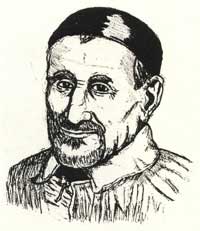 Throughout the eighteenth century, the French philosopher François-Marie Arouet, better known by his pen name Voltaire, used his capable pen to attack the Catholic Church as a foe of reason and human progress. But when Vincent de Paul was canonized in 1737, he said: "Now there's the saint for me!" During the anti-religious hysteria of the French Revolution, as churches were desecrated and religious images defiled, one person's image was left untouched, the priest known as "the father of the poor."
But as one biographer notes, Vincent "was not born a saint." An intelligent child from a poor family, he initially saw the priesthood as an escape from poverty. Once he acquired a wealthy parish, he planned to use his income to take care of his parents in their old age. In pursuing a religious vocation, he had mixed motives, to say the least.
A stocky man of medium height, Vincent was shrewd, astute, and possessed of enormous common sense. One biographer describes him as having "a gift for winning other people's good will." Another writes that he "charmed everyone on first approach." He was undeniably ambitious, but he balanced this with a deep compassion for society's least. In time, he would translate that compassion into action.
But as a young priest, he was less interested in reform than in his own income. In time he acquired several prestigious positions, including chaplain to the wealthy De Gondi family. It was there while ministering to the tenants on their vast estates that he discovered his life's mission. It happened over time as he identified three major problems in seventeenth century France: religious ignorance, poorly trained clergy, and widespread poverty.
To meet the first challenge, he organized parish missions for the rural poor. These were weeklong events promoting repentance and renewal, consisting of morning and evening lectures followed by confession. He founded a community of priests to conduct them, the Congregation of the Mission (better known as the Vincentians). Its motto is from Luke's Gospel, Evangelizare Pauperibus Misit Me ("He has sent me to bring the Good News to the poor.")
Vincent once told a group of priests, "We are the cause of the desolation that afflicts the Church." One historian observes, "At the time it was asking a good deal of a priest to require that he should know how to read and write." Many heard confession without knowing the formula for absolution. To face this problem, he organized seminaries (then a relatively new innovation) and organized ongoing lecture series for clergy. There was, he said, "no greater work than the formation of priests."
It was in Vincent's work with the poor that his organizing genius emerged. At the parish level he organized Confraternities of Charity to meet material needs. Among the wealthy he raised funds and organized volunteers. With St. Louise de Marillac, he founded the Daughters of Charity, a community working outside the cloister among the poor and the sick. "Let us love God, my brothers," Vincent once told his priests, "but let it be with the work of our hands and the sweat of our brows."
Through these various groups, Vincent addressed the needs of the poor, the sick, orphans, refugees, the elderly. He could be quite persuasive. On one occasion, when a group of volunteers debated whether they could continue their work with orphans, he told them:
You know, you became the mothers of these children by grace, when their mothers by nature deserted them, and I am now going to take your votes to find out what you want to do about them. Cease to be their mothers and become their judges. Their life and death are in your hands. If you keep on caring for them, they are going to live, to be brought up Catholics; but if you give up this work, they are going to die. All your experience with them teaches you that. So now, vote!
They voted unanimously, to continue.
Vincent's commitment to social change was rooted in a spirituality integrating love of God with love of neighbor. His was a practical spirituality. He once said: "It is the hour for prayer; if you hear the poor calling you, mortify yourselves and leave God for God." The single major theme he preached throughout his priesthood was the love of God, as found in the face of God's least.
More than charity, Vincentian spirituality stresses justice. In a world that negates the person's innate dignity, Vincent calls men and women to work for deeper changes in society. For Vincent, this change must be rooted in a concrete, joyful experience of the Lord's deep love, a love burning to translate into action.
By the time of his death at age eighty-four, France had experienced a religious revival. New religious orders were being founded, missionaries were being sent abroad, and the priesthood had been reformed. One historian calls Vincent's work with the poor "perhaps the greatest accomplishment of human genius in the order of organized charity."
Article Continued On Next Page
Page: 1 of 2
9/19/2011 4:00:00 AM
Catholic
In Ages Past
French Revolution
Roman Catholicism
more at patheos
1

The Ambiguity of Scripture – September 6, 2026– Pentecost 15
2

Scriptures: Lost, Found, and Forged
3

The Significance of Leaves for Healing on the New Earth
4

Archbishop Broglio to Celebrate 32nd Annual Memorial Mass

About Pat McNamara
Dr. Pat McNamara is a published historian. He blogs about American Catholic History at McNamara's Blog.
Patheos Explore the world's faith through different perspectives on religion and spirituality! Patheos has the views of the prevalent religions and spiritualities of the world.
Ad-Free & Subscriber Log-In Subscription Support
- About Us
- 2026 Calendar
- Videos
- Podcasts
- Library of World Religions
- Faith In Media Tracker
- Advertise With Us
- Write for Us
- Privacy Policy
- Terms of Service
- Do Not Sell My Data
- Contact Us
- Radiant Digital
- Manage Newsletter Subscriptions
- Unsubscribe From Notifications
- Sitemap
Copyright 2008-2026, Patheos. All rights reserved.
Subscription Support Ad-Free & Subscriber Log-In
Follow Patheos