
BuddhistCatholicContemplativeEvangelicalGeneral ChristianHinduJewishLatter-day SaintMuslimNew VisionsProgressive Christian
Beliefs
- Buddhist
- Catholic
- Contemplative
- Evangelical
- General Christian
- Hindu
- Jewish
- Latter-day Saint
- More Voices
- Muslim
- New Visions
- Pagan
- Progressive Christian
Topics
- Religion News
- Food and Religion
- Sports and Religion
- Religious Art
- Religious Music and Entertainment
- Religious Events
- History and Religion
- Style and Religion
- Politics and Religion
- Women in Religion
- Recreation Outdoors and Religion
- Business Finance and Religion
- Careers Workplace and Religion
- Education and Religion
- Family Parenting and Religion
- Health Fitness and Religion
- Home and Religion
- Relationships and Religion
- Technology and Religion
- Travel and Religion
Columnists
- Buddhist Columnists
- Business Finance and Religion Columnists
- Careers Workplace and Religion Columnists
- Catholic Columnists
- Contemplative Columnists
- Education and Religion Columnists
- Evangelists Columnists
- Family Parenting and Religion Columnists
- General Christian Columnists
- Health Fitness and Religion Columnists
- Hindu Columnists
- History and Religion Columnists
- Home and Religion Columnists
- Jewish Columnists
- More Voices Columnists
- Latter Day Columnists
- Muslim Columnists
- New Visions Columnists
- Nonreligious Columnists
- Pagan Columnists
- Politics and Religion Columnists
- Progressive Columnists
- Recreation Outdoors and Religion Columnists
- Relationships and Religion Columnists
- Religion News Columnists
- Religious Art Columnists
- Religious Events Columnists
- Religious Music and Entertainment Columnists
- Sports and Religion Columnists
- Style and Religion Columnists
- Technology and Religion Columnists
- Travel and Religion Columnists
- Women in Religion Columnists
Resource Library
- 2026 Calendar
- Library of World Religions
- The 100 Most Holy Places on Earth
- Patheos Answers
- Podcasts
- Videos
- Faith Leaders Database
- Anglican Episcopalian
- Bahai
- Baptist
- Buddhism
- Christianity
- Confucianism
- Eastern Orthodoxy
- Hinduism
- Holiness and Pentecostal
- ISKCON
- Islam
- Judaism
- Lutheran
- Methodist
- The Church of Jesus Christ of Latter-day Saints
- New Age
- Paganism
- Presbytarian and Reformed
- Protestantism
- Religion Behind the Scenes
- Roman Catholic
- Scientology
- Shia Islam
- Sikhism
- Sufism
- Sunni Islam
- Taoism
- Zen
- See all religions
Research Tools
 Ad-Free & Subscriber Log-In Subscription Support
Ad-Free & Subscriber Log-In Subscription Support
Follow Patheos 

- Trending:
- Forgiveness
- |
- Marriage
- |
- Consciousness
- |
- Death Penalty
- |
- Election
- |
- Halloween
Progressive Christian
Sharing a Table: My Ramadan Dinner
September 01, 2011 by Greg Garrett
But these more recent conversations likewise came as a component of relationship between human beings—not between labels or stereotypes, and certainly, thankfully, not between enemy and enemy.
To all those who say they hate Islam, I repeat my question of a couple of weeks ago: Do you know any Muslims?
To all those that say that Islam is a religion of aggression and terror—an erroneous accusation repeated by Christians since the Middle Ages—I repeat my question: Have you read the Quran and tried to understand it in its original context?
To all those who worry that Islam is going to take over America, I repeat this question: Have you related to any Muslims enough to have any idea what they want?
I didn't join Muslims for Ramadan dinner because I expected that I would become one; I am still a devoted and faithful Christian, although I expect to be in ongoing relationship with some of the Muslims I have met recently, and I look forward to learning more about Islam from practitioners and not just from books.
I didn't have dinner with Muslims because I expected that once they heard about how my faith had transformed my life, they would become Christians (preferably Episcopalians, preferably members of my own St. David's, Austin, congregation), although I expect to show my new friends how love and compassion are at the center of my faith.
But by having dinner with people who differ from me in important ways, and who are often vilified in American culture, I was able to stand in solidarity with them and against unreasoning hate—which is one of the things I believe Christians are called to do.
By taking the time to have conversation, by accepting generous offers of hospitality, and by putting myself, shy person that I am, outside of my usual comfort zone, I was able to put aside some of my preconceptions and misconceptions about Islam through the very simple act of meeting human beings who practice Islam.
And this is, I think, the way forward for us after 9/11. If that event offered one horrifying negative—the fact that many Americans now live their lives with fear as their organizing principle—it also gave us this wondrous possibility. After 9/11, for people of good conscience, interfaith conversation became even more important.
Just as we seek to be understood, we need to seek to understand others.
Just as we seek the right to practice our faith freely, we need to allow others to seek the same thing.
Just as we seek, following in the footsteps of Jesus, to love those who have been marginalized by their society, we need to seek to love American Muslims who through no fault of their own have come become our Great Satan.
I finished Ramadan convinced that people of good faith on both sides of the Muslim/Christian divide could meet as friends and not enemies, and I can report that this is also the desire of the Muslims I met this Ramadan. In this next decade, Insh'Allah—God willing—let us all move forward in love instead of hate, in hope instead of fear.
That would be the truly Christian response to 9/11.
Page: 2 of 2
9/1/2011 4:00:00 AM
Progressive Christian
Faithful Citizenship
Interfaith Dialogue
Muslims
Ramadan
Christianity
Islam
more at patheos
1

Meet Quilter and Catholic Historical Writer Anne Faye
2

Indigenous Peoples’ Day and the Church
3
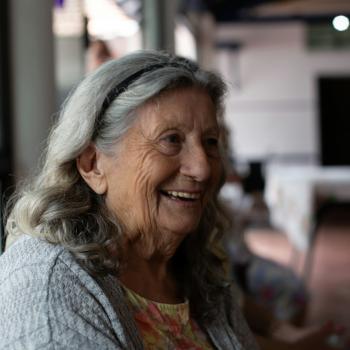
Seventy and Five Years Old: God Still Starts New Chapters
4

Revising the "Disability [Pride] Flag"

About Greg Garrett
Greg Garrett is (according to BBC Radio) one of America's leading voices on religion and culture. He is the author or co-author of over twenty books of fiction, theology, cultural criticism, and spiritual autobiography. His most recent books are The Prodigal, written with the legendary Brennan Manning, Entertaining Judgment: The Afterlife in Popular Imagination, and My Church Is Not Dying: Episcopalians in the 21st Century. A contributor to Patheos since 2010, Greg also writes for the Huffington Post, Salon.com, OnFaith, The Tablet, Reform, and other web and print publications in the US and UK.
Patheos Explore the world's faith through different perspectives on religion and spirituality! Patheos has the views of the prevalent religions and spiritualities of the world.
Ad-Free & Subscriber Log-In Subscription Support
- About Us
- 2026 Calendar
- Videos
- Podcasts
- Library of World Religions
- Faith In Media Tracker
- Advertise With Us
- Write for Us
- Privacy Policy
- Terms of Service
- Do Not Sell My Data
- Contact Us
- Radiant Digital
- Manage Newsletter Subscriptions
- Unsubscribe From Notifications
- Sitemap
Copyright 2008-2026, Patheos. All rights reserved.
Subscription Support Ad-Free & Subscriber Log-In
Follow Patheos