
BuddhistCatholicContemplativeEvangelicalGeneral ChristianHinduJewishLatter-day SaintMuslimNew VisionsProgressive Christian
Beliefs
- Buddhist
- Catholic
- Contemplative
- Evangelical
- General Christian
- Hindu
- Jewish
- Latter-day Saint
- More Voices
- Muslim
- New Visions
- Pagan
- Progressive Christian
Topics
- Religion News
- Food and Religion
- Sports and Religion
- Religious Art
- Religious Music and Entertainment
- Religious Events
- History and Religion
- Style and Religion
- Politics and Religion
- Women in Religion
- Recreation Outdoors and Religion
- Business Finance and Religion
- Careers Workplace and Religion
- Education and Religion
- Family Parenting and Religion
- Health Fitness and Religion
- Home and Religion
- Relationships and Religion
- Technology and Religion
- Travel and Religion
Columnists
- Buddhist Columnists
- Business Finance and Religion Columnists
- Careers Workplace and Religion Columnists
- Catholic Columnists
- Contemplative Columnists
- Education and Religion Columnists
- Evangelists Columnists
- Family Parenting and Religion Columnists
- General Christian Columnists
- Health Fitness and Religion Columnists
- Hindu Columnists
- History and Religion Columnists
- Home and Religion Columnists
- Jewish Columnists
- More Voices Columnists
- Latter Day Columnists
- Muslim Columnists
- New Visions Columnists
- Nonreligious Columnists
- Pagan Columnists
- Politics and Religion Columnists
- Progressive Columnists
- Recreation Outdoors and Religion Columnists
- Relationships and Religion Columnists
- Religion News Columnists
- Religious Art Columnists
- Religious Events Columnists
- Religious Music and Entertainment Columnists
- Sports and Religion Columnists
- Style and Religion Columnists
- Technology and Religion Columnists
- Travel and Religion Columnists
- Women in Religion Columnists
Resource Library
- 2026 Calendar
- Library of World Religions
- The 100 Most Holy Places on Earth
- Patheos Answers
- Podcasts
- Videos
- Faith Leaders Database
- Anglican Episcopalian
- Bahai
- Baptist
- Buddhism
- Christianity
- Confucianism
- Eastern Orthodoxy
- Hinduism
- Holiness and Pentecostal
- ISKCON
- Islam
- Judaism
- Lutheran
- Methodist
- The Church of Jesus Christ of Latter-day Saints
- New Age
- Paganism
- Presbytarian and Reformed
- Protestantism
- Religion Behind the Scenes
- Roman Catholic
- Scientology
- Shia Islam
- Sikhism
- Sufism
- Sunni Islam
- Taoism
- Zen
- See all religions
Research Tools
 Ad-Free & Subscriber Log-In Subscription Support
Ad-Free & Subscriber Log-In Subscription Support
Follow Patheos 

- Trending:
- Forgiveness
- |
- Marriage
- |
- Consciousness
- |
- Death Penalty
- |
- Election
- |
- Halloween
Pagan
Mainstreaming Pagans
September 22, 2011 by Gus diZerega
"Like" the Patheos Pagan Page on Facebook to receive today's best commentary on Pagan issues.
The United States has a long occult tradition; the United Kingdom's is even longer. Most of those involved devoted considerable effort to study and practice. The subject was so disreputable in many circles, and so often terrifying to outsiders, that this level of commitment followed almost as a matter of course. To study the occult was not like having a fish tank or electric train set. The first public witches were part of this larger occult community.
Today, it is relatively easy to be a Pagan the way many people are Christians. By this I do not mean to criticize, but rather to point out that for many it can be one interest among many, an interest pursued relatively easily within the context of a normal day-to-day set of priorities. Attending eight Sabbats is not a serious time commitment, and honoring thirteen Full Moons a year in addition is still less than regular church attendance. Further, many Pagans now study and learn on their own, at their own pace. Few are members of covens or equivalent groups.
I think this growth is good, and I think the growth of a mass of less deeply trained Pagans is also good. But it also changes the flavor of the broader community. I have talked to more than a few Pagans of the first camp (with which I myself identify) who are bothered. I am not because I think it is a sign of developing a deeper cultural matrix within which the specialists in healing, spirit, and occult work generally can find a more comfortable and supportive environment. Further, I think this diversity is also what many Pagan societies were.
Shamans were always or nearly always solitaries who sometimes had hard working students, but rarely had very many of them. They were the original edgy intermediaries between the world of humanity and the worlds of powers and spirits. Sometimes shamanic skills were divvied up among different specialists. Some were healers and some were diviners and some knew herbs and some knew spirits and so on. But again, they were generally individuals and they spent years and years mastering their work even if they also needed to engage in day-to day work like other community members.
The "lay people" within their communities were also Pagans and generally respected their responsibilities towars the other-than-human world, but those responsibilities were relatively light, safe, and did not require years of preparatory work.
If we look at Pagan cultures of a more contemporary nature, we see something similar. In Brazil and China, to pick two otherwise pretty different places, mediums work with spirits and perform many services to those who seek them out. They have accepted roles in society as a whole. But most people do not want to be mediums, people through whom Orixas or caboclos and preto velhos speak through. Nor do most people want to be the channels for ancestors in China.
Priests also emerge as a society develops in complexity, and unlike shamans and mediums, their religious duties are pretty predictable and associated with serving an institution, such as a temple. But again, most people are not priests or priestesses.
I suspect something like this will eventually develop if we continue to grow within American or British society, with one important difference. Modern medicine has taken over a great deal of the original shaman's healing work. But not completely. When I had a stroke, I visited a Chi Gung master and did my own stuff, and in about two months, I went from not being able to sign my name, barely talk, and barely walk, to driving alone cross-country. Some doctors I talked to later had a hard time believing it.
I suspect we will see a deep differentiation within our community. There will be the "shamans," those who work with little institutional connection and who have developed a reasonably reliable set of skills, be they healing, divination, something else, with which to interact with the spirit world for the benefit of others. I suspect they will do more psychological work than physical healing, but the best can do both. There will hopefully in time be priests tending temples, such as exists today in Japan. That may be a good model for what will develop here. And there will be a rank and file, people focused primarily on other activities, but hoping to live in better harmony with the more-than-human by some involvement in Pagan community activities and a more mindful living of their day to day life.
But it seems to me that NeoPagans have brought something potentially knew into common experience, at least by hearsay: the coven or equivalent group, such as a grove. These are small groups that meet regularly and combine magick, worship, possessory work (in my tradition and a few others), and fun and feasting. Over the years, deep friendships develop, and in older groups the magickal working can be very impressive, both for themselves and for others. Speaking as a Wiccan of the Gardnerian species, much of the power and beauty of our practice is in coven work.
Article Continued On Next Page
Page: 1 of 2
9/22/2011 4:00:00 AM
Pagan
Pointedly Pagan
Paganism
more at patheos
1

What Is National Crime Victims' Rights Week?
2

3

Top of the Country: I Knew It I Knew You
4

Suffocation By Design: Stay Awake With Me
About Gus diZerega
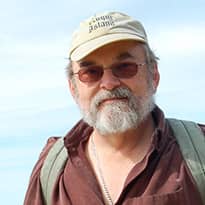
Gus diZerega is a Gardnerian Elder with over 25 years practice, including six years close study with a Brazilian shaman. He has been active in interfaith work off and on for most of those 25 years as well. He has conducted workshops and given presentations on healing, shamanism, ecology and politics at Pagan gatherings in the United States and Canada. Follow Gus on Facebook. Gus blogs at Pointedly Pagan
Patheos Explore the world's faith through different perspectives on religion and spirituality! Patheos has the views of the prevalent religions and spiritualities of the world.
Ad-Free & Subscriber Log-In Subscription Support
- About Us
- 2026 Calendar
- Videos
- Podcasts
- Library of World Religions
- Faith In Media Tracker
- Advertise With Us
- Write for Us
- Privacy Policy
- Terms of Service
- Do Not Sell My Data
- Contact Us
- Radiant Digital
- Manage Newsletter Subscriptions
- Unsubscribe From Notifications
- Sitemap
Copyright 2008-2026, Patheos. All rights reserved.
Subscription Support Ad-Free & Subscriber Log-In
Follow Patheos