
BuddhistCatholicContemplativeEvangelicalGeneral ChristianHinduJewishLatter-day SaintMuslimNew VisionsProgressive Christian
Beliefs
- Buddhist
- Catholic
- Contemplative
- Evangelical
- General Christian
- Hindu
- Jewish
- Latter-day Saint
- More Voices
- Muslim
- New Visions
- Pagan
- Progressive Christian
Topics
- Religion News
- Food and Religion
- Sports and Religion
- Religious Art
- Religious Music and Entertainment
- Religious Events
- History and Religion
- Style and Religion
- Politics and Religion
- Women in Religion
- Recreation Outdoors and Religion
- Business Finance and Religion
- Careers Workplace and Religion
- Education and Religion
- Family Parenting and Religion
- Health Fitness and Religion
- Home and Religion
- Relationships and Religion
- Technology and Religion
- Travel and Religion
Columnists
- Buddhist Columnists
- Business Finance and Religion Columnists
- Careers Workplace and Religion Columnists
- Catholic Columnists
- Contemplative Columnists
- Education and Religion Columnists
- Evangelists Columnists
- Family Parenting and Religion Columnists
- General Christian Columnists
- Health Fitness and Religion Columnists
- Hindu Columnists
- History and Religion Columnists
- Home and Religion Columnists
- Jewish Columnists
- More Voices Columnists
- Latter Day Columnists
- Muslim Columnists
- New Visions Columnists
- Nonreligious Columnists
- Pagan Columnists
- Politics and Religion Columnists
- Progressive Columnists
- Recreation Outdoors and Religion Columnists
- Relationships and Religion Columnists
- Religion News Columnists
- Religious Art Columnists
- Religious Events Columnists
- Religious Music and Entertainment Columnists
- Sports and Religion Columnists
- Style and Religion Columnists
- Technology and Religion Columnists
- Travel and Religion Columnists
- Women in Religion Columnists
Resource Library
- 2026 Calendar
- Library of World Religions
- The 100 Most Holy Places on Earth
- Patheos Answers
- Podcasts
- Videos
- Faith Leaders Database
- Anglican Episcopalian
- Bahai
- Baptist
- Buddhism
- Christianity
- Confucianism
- Eastern Orthodoxy
- Hinduism
- Holiness and Pentecostal
- ISKCON
- Islam
- Judaism
- Lutheran
- Methodist
- The Church of Jesus Christ of Latter-day Saints
- New Age
- Paganism
- Presbytarian and Reformed
- Protestantism
- Religion Behind the Scenes
- Roman Catholic
- Scientology
- Shia Islam
- Sikhism
- Sufism
- Sunni Islam
- Taoism
- Zen
- See all religions
Research Tools
 Ad-Free & Subscriber Log-In Subscription Support
Follow Patheos 

- Trending:
- Advent
- |
- Forgiveness
- |
- Thanksgiving
- |
- Election
- |
- Seasonal Holidays
- |
- Marriage
Evangelical
"A Kind of Death"? Pat Roberston, Alzheimer's, and Human Nature
September 20, 2011 by Kyle Roberts
"Like" the Patheos Evangelical Page on Facebook to receive today's best commentary on Evangelical issues.
If Pat Robertson was my child (an idea both impossible and weird), I would wash out his mouth with soap.
Both the evangelical and medical communities have responded swiftly to Pat Robertson's latest thoughtless comment. This time it wasn't about blaming earthquakes or floods on homosexuality or societal decadence. This time he encouraged a man who was thinking of divorcing his Alzheimer's wife to go ahead and "move on with his life," since Alzheimer's is a "kind of death." Robertson may have been playing the sympathetic pastor here, offering a bit of empathy through a grid of realism. If the guy isn't going to be "true to his vows" (which he admitted), he should just move on and make sure she has medical care.
Commentators have reacted swiftly to Robertson's advice. Some have pointed out that Robertson's response highlights the lack of an evangelical theology of divorce while others pointed to the insufficiency of this position in light of the Gospel we profess to believe. Both are right. But much more needs to be said.
Today (September 21) is Global Alzheimer's Day—an initiative spearheaded by Alzheimer's Diease International and related groups for the purpose of bringing attention to a growing global problem. As life expectancies increase, the problem of Alzheimer's grows with it. Currently, ADI reports an estimated 30 million persons suffer from dementia; by 2050, over 100 million people will suffer from this degeneration of the brain which impacts memory, language use, problem solving and other capacities we so often take for granted. Alzhiemer's Disease, the leading cause of dementia, kills brain cells; but it's not, in Robertson's terminology, a "kind of death."
Robertson's comment illustrates a deficiency in our theology of the human person. What does it mean to be human? What does it mean to be created in the image of God? In the early and medieval Christian tradition, the image of God was primarily defined in substantive terms, primarily with reference to the capacities of humans for high intellect and rational thought. While most contemporary theologians have discarded this view, in the popular imagination it has unfortunately remained with us. A human is a person and reflects the image of God insofar as they can "reason" and insofar as they have access to and mastery of the common world of understanding. In this scheme, the more intelligent a person is, the more he or she reflects the image of God. The loss of these capacities reflects the loss of the imago Dei.
A kind of death. If a person has lost precious memories of the distant and recent past, is he or she no longer alive? No longer a person worthy of our respect, our commitment and our sacrifice? If a person now struggles for words, because linguistic capabilities have been disabled, are they no longer capable of relationship?
Psychologists and caregivers are helping us to think of a different and better way to understand what is happening with someone who has Alzheimer's and other degenerative brain diseases that lead to dementia. In Deeper into the Soul (Elders Academy Press, 2008),Nader Robert Shabahangi and Bogna Szymkiewicz suggest that we conceptualize Alzheimer's not so much as a degeneration, but as a "journey toward forgetfulness." Those suffering from Alzheimer's progressively find themselves inhabiting a "dreamlike" state, different from the common world of rationality that most of us regularly inhabit. In this dreamlike state, a person does not have easy access to memories of past and present, struggles with depth perception and lacks a general sense of belonging in the regular, common world of traffic negotiation, public achievement, and time constraints. But these people are not devoid of emotion, feeling, relational capacities and even powerful religious experiences. In fact, they can often experience these things to a greater and deeper degree than the rest of us.
Robertson's comment is more consistent with naturalistic atheism than with biblical Christianity. If we're just a bundle of cells, nerves and neurons wrapped in flesh casing, when the brain dies (or is fundamentally altered), the "self" dies with it. We are the sum of our natural parts, and nothing more. When those parts cease to function as we have become accustomed to them, we are no longer worthy of commitment and no longer capable of genuine relationship. A kind of death.
Surely Robertson wouldn't agree with this naturalist conception of the self, but his advice nonetheless reflects an inadequate theology of human nature. We have bodies and brains, but the relationship between the "mind," the body, and the spiritual nature of the self remains beyond our ability to nail down with precision. For those who believe in the divine creation of humanity, mystery runs all the way down. We must resist the temptation to reduce the image of God to some particular substance or even to some particular function of the human person, such as the ability to remember and to navigate the world through an articulate command of language.
Article Continued On Next Page
Page: 1 of 2
9/20/2011 4:00:00 AM
Evangelical
Theological Provocations
Alzheimer's
Culture
History
literature
Philosophy
Pat Robertson
Christianity
Evangelicalism
more at patheos
1

17 Church Fathers on Purgatory (Esp. 1 Cor 3:10-15)
2

3

4
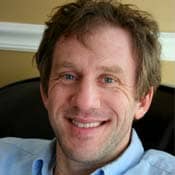
About Kyle Roberts
Kyle Roberts is Assistant Professor of Systematic Theology and Lead Faculty of Christian Thought, Bethel Seminary (St. Paul, MN). He researches and writes on issues related to the intersection of theology, philosophy, and culture. Follow Kyle Roberts' reflections on faith and culture at his blog or via Twitter.
Patheos Explore the world's faith through different perspectives on religion and spirituality! Patheos has the views of the prevalent religions and spiritualities of the world.
Ad-Free & Subscriber Log-In Subscription Support
- About Us
- 2026 Calendar
- Videos
- Podcasts
- Library of World Religions
- Faith In Media Tracker
- Advertise With Us
- Write for Us
- Privacy Policy
- Terms of Service
- Do Not Sell My Data
- Contact Us
- Radiant Digital
- Manage Newsletter Subscriptions
- Unsubscribe From Notifications
- Sitemap
Copyright 2008-2026, Patheos, part of the Radiant Digital network of media brands. All rights reserved.
Subscription Support Ad-Free & Subscriber Log-In
Follow Patheos