
BuddhistCatholicContemplativeEvangelicalGeneral ChristianHinduJewishLatter-day SaintMuslimNew VisionsProgressive Christian
Beliefs
- Buddhist
- Catholic
- Contemplative
- Evangelical
- General Christian
- Hindu
- Jewish
- Latter-day Saint
- More Voices
- Muslim
- New Visions
- Pagan
- Progressive Christian
Topics
- Religion News
- Food and Religion
- Sports and Religion
- Religious Art
- Religious Music and Entertainment
- Religious Events
- History and Religion
- Style and Religion
- Politics and Religion
- Women in Religion
- Recreation Outdoors and Religion
- Business Finance and Religion
- Careers Workplace and Religion
- Education and Religion
- Family Parenting and Religion
- Health Fitness and Religion
- Home and Religion
- Relationships and Religion
- Technology and Religion
- Travel and Religion
Columnists
- Buddhist Columnists
- Business Finance and Religion Columnists
- Careers Workplace and Religion Columnists
- Catholic Columnists
- Contemplative Columnists
- Education and Religion Columnists
- Evangelists Columnists
- Family Parenting and Religion Columnists
- General Christian Columnists
- Health Fitness and Religion Columnists
- Hindu Columnists
- History and Religion Columnists
- Home and Religion Columnists
- Jewish Columnists
- More Voices Columnists
- Latter Day Columnists
- Muslim Columnists
- New Visions Columnists
- Nonreligious Columnists
- Pagan Columnists
- Politics and Religion Columnists
- Progressive Columnists
- Recreation Outdoors and Religion Columnists
- Relationships and Religion Columnists
- Religion News Columnists
- Religious Art Columnists
- Religious Events Columnists
- Religious Music and Entertainment Columnists
- Sports and Religion Columnists
- Style and Religion Columnists
- Technology and Religion Columnists
- Travel and Religion Columnists
- Women in Religion Columnists
Resource Library
- 2026 Calendar
- Library of World Religions
- The 100 Most Holy Places on Earth
- Patheos Answers
- Podcasts
- Videos
- Faith Leaders Database
- Anglican Episcopalian
- Bahai
- Baptist
- Buddhism
- Christianity
- Confucianism
- Eastern Orthodoxy
- Hinduism
- Holiness and Pentecostal
- ISKCON
- Islam
- Judaism
- Lutheran
- Methodist
- The Church of Jesus Christ of Latter-day Saints
- New Age
- Paganism
- Presbytarian and Reformed
- Protestantism
- Religion Behind the Scenes
- Roman Catholic
- Scientology
- Shia Islam
- Sikhism
- Sufism
- Sunni Islam
- Taoism
- Zen
- See all religions
Research Tools
 Ad-Free & Subscriber Log-In Subscription Support
Ad-Free & Subscriber Log-In Subscription Support
Follow Patheos 

- Trending:
- Forgiveness
- |
- Marriage
- |
- Consciousness
- |
- Death Penalty
- |
- Election
- |
- Halloween
Evangelical
Keeping the Peace Behind Bars on September 11
September 07, 2011 by Samuel Atchison
I had taken the day off from my job as supervising chaplain at Trenton's New Jersey State Prison (NJSP), when my wife called and told me the news. It was September 11, 2001. Like most Americans, I spent much of the remainder of the day in front of the television, transfixed by the images flashing in front of me on the screen.
When I conferred with my Muslim and Roman Catholic colleagues at the prison the next morning, it became clear that the Chaplaincy Department needed to develop a coordinated response to the issues the attack raised among the inmate population. This was confirmed a day or two later when the Commissioner of the Department of Corrections issued orders to prison administrators statewide to report on measures being taken to keep the peace within each institution.
At issue was the fear that the 9/11 attacks would incite extremist fervor among the Muslim inmates, leading to violence within the prisons. Such concerns, understandable though they were in the already-tense atmosphere that pervades most prisons, were overblown. For example, at NJSP, which houses the state's toughest inmate population, the prisoners comported themselves admirably. While there were scattered reports of irresponsible comments by a few Muslim inmates, the Muslim community as a whole—under the leadership of a strong inmate imam who was respected throughout the prison—effectively regulated itself. The prison's other religious congregations followed suit.
For our part, each chaplain's weekly congregational sermon or teaching drew from principals of peace inherent in that faith. We distributed literature on the same theme within our congregations, worked closely with congregational leaders to keep our fingers on the pulse of the situation, and maintained an ongoing dialogue with administration officials and correctional staff, who had implemented measures governing inmate movements and activities.
Thus was a potential disaster averted, both at NJSP and other facilities throughout the state. The key to this success was, in my opinion, the recognition by senior prison and corrections officials of the importance of chaplaincy staff in addressing the delicate religious issues at stake.
In prison, where convicted felons are physically (and often emotionally) ostracized from their families and society as a whole because of their crimes, the need for personal redemption takes on paramount importance. For many, religious faith and practice become the means of such redemption, as well as the source of a new self-identity. One of the many roles of a chaplain is to facilitate this self-awareness, helping the prisoner to gain a healthier perspective on himself/herself and others. To impede this process in any way risks incurring the wrath of an already volatile individual. Multiply that by the number of inmates in a given institution and you have a dangerous situation indeed.
Thus for correctional chaplains, navigating dangerous religious terrain—diplomacy at its most essential level—is their stock-in-trade.
It is against this background that I've begun reading Douglas M. Johnston's new book, Religion, Terror and Error: U.S. Foreign Policy and the Challenge of Spiritual Engagement. Although I'm still reading the book and hardly qualify as an authority on statecraft, it's clear to me that Johnston "gets it": religion plays an indispensible role in diplomacy between people groups, including United States foreign policy.
In much the same way that intellectuals, domestic policymakers and the courts are wrestling with the role of religion in public life, the foreign policy establishment must begin to engage the issue as well. The response to 9/11 forged stronger links between the national security and domestic law enforcement establishments through (1) the creation of federal and state homeland security departments; (2) the formation of attendant enforcement agencies charged with fulfilling the mandates of those departments; and (3) the development of a communications apparatus to ensure that law enforcement personnel at all levels—federal, state and local—have access to necessary information on matters of domestic security.
As an example of how this plays out, State Department concerns about identifying the purveyors of extremist Muslim ideology on foreign soil are mirrored on the domestic front by federal and state corrections officials worried about Islamic radicalization in American prisons, and by law enforcement personnel concerned with gun trafficking among street gangs—thus the need to develop a coordinated approach to policymaking that values the contributions of religious leaders on both the foreign and domestic fronts would seem wise.
Yet, as Johnston points out, there is considerable reluctance on the part of national security officials to engage the services of religious clerics. He argues—correctly, I believe—that the notion of "separation of church and state" makes government officials loath to engage in healthy, informative dialogue with faith leaders in other countries: "...[T]hose who work in the executive branch of the U.S. government (especially in the national security arena) feel constrained by separation of church and state considerations from engaging with the clerical elements of other societies. As a result, whether by cautious interpretation of "policy," or by personal inclination, they do not feel comfortable allying with the important religious leadership elements that could help combat a whole range of problems, including extremist ideology."
In other words, their fear of the unknown keeps them from obtaining valuable information—to the possible detriment of our nation. Ten years after 9/11, is this really the path we want to follow?
9/7/2011 4:00:00 AM
Evangelical
Book Club
A Matter of Color
9/11
Evangelism
Foreign Policy
Christianity
Black Church
more at patheos
1

Why Christians Have a Sacred Duty to Vote: Biblical Guidance
2

3

Generational Miracles: True Stories of God’s Protection
4
Church Hurt: Defining, Recognizing, & Healing from It's Pain
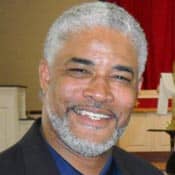
About Samuel Atchison
Rev. Samuel K. Atchison has served as a welfare policy analyst, social services administrator, social policy consultant, and prison chaplain. He is the president of the Trenton Ecumenical Area Ministry (TEAM), which serves as a coordinating agency for the community outreach efforts of churches in Mercer County, New Jersey. He is also a community partnership manager with the Amachi Mentoring Coalition Project (AMCP), a program of the Philadelphia Leadership Foundation that provides mentoring to children impacted by incarceration.
Patheos Explore the world's faith through different perspectives on religion and spirituality! Patheos has the views of the prevalent religions and spiritualities of the world.
Ad-Free & Subscriber Log-In Subscription Support
- About Us
- 2026 Calendar
- Videos
- Podcasts
- Library of World Religions
- Faith In Media Tracker
- Advertise With Us
- Write for Us
- Privacy Policy
- Terms of Service
- Do Not Sell My Data
- Contact Us
- Radiant Digital
- Manage Newsletter Subscriptions
- Unsubscribe From Notifications
- Sitemap
Copyright 2008-2026, Patheos. All rights reserved.
Subscription Support Ad-Free & Subscriber Log-In
Follow Patheos