
BuddhistCatholicContemplativeEvangelicalGeneral ChristianHinduJewishLatter-day SaintMuslimNew VisionsProgressive Christian
Beliefs
- Buddhist
- Catholic
- Contemplative
- Evangelical
- General Christian
- Hindu
- Jewish
- Latter-day Saint
- More Voices
- Muslim
- New Visions
- Pagan
- Progressive Christian
Topics
- Religion News
- Food and Religion
- Sports and Religion
- Religious Art
- Religious Music and Entertainment
- Religious Events
- History and Religion
- Style and Religion
- Politics and Religion
- Women in Religion
- Recreation Outdoors and Religion
- Business Finance and Religion
- Careers Workplace and Religion
- Education and Religion
- Family Parenting and Religion
- Health Fitness and Religion
- Home and Religion
- Relationships and Religion
- Technology and Religion
- Travel and Religion
Columnists
- Buddhist Columnists
- Business Finance and Religion Columnists
- Careers Workplace and Religion Columnists
- Catholic Columnists
- Contemplative Columnists
- Education and Religion Columnists
- Evangelists Columnists
- Family Parenting and Religion Columnists
- General Christian Columnists
- Health Fitness and Religion Columnists
- Hindu Columnists
- History and Religion Columnists
- Home and Religion Columnists
- Jewish Columnists
- More Voices Columnists
- Latter Day Columnists
- Muslim Columnists
- New Visions Columnists
- Nonreligious Columnists
- Pagan Columnists
- Politics and Religion Columnists
- Progressive Columnists
- Recreation Outdoors and Religion Columnists
- Relationships and Religion Columnists
- Religion News Columnists
- Religious Art Columnists
- Religious Events Columnists
- Religious Music and Entertainment Columnists
- Sports and Religion Columnists
- Style and Religion Columnists
- Technology and Religion Columnists
- Travel and Religion Columnists
- Women in Religion Columnists
Resource Library
- 2026 Calendar
- Library of World Religions
- The 100 Most Holy Places on Earth
- Patheos Answers
- Podcasts
- Videos
- Faith Leaders Database
- Anglican Episcopalian
- Bahai
- Baptist
- Buddhism
- Christianity
- Confucianism
- Eastern Orthodoxy
- Hinduism
- Holiness and Pentecostal
- ISKCON
- Islam
- Judaism
- Lutheran
- Methodist
- The Church of Jesus Christ of Latter-day Saints
- New Age
- Paganism
- Presbytarian and Reformed
- Protestantism
- Religion Behind the Scenes
- Roman Catholic
- Scientology
- Shia Islam
- Sikhism
- Sufism
- Sunni Islam
- Taoism
- Zen
- See all religions
Research Tools
 Ad-Free & Subscriber Log-In Subscription Support
Ad-Free & Subscriber Log-In Subscription Support
Follow Patheos 

- Trending:
- Forgiveness
- |
- Marriage
- |
- Consciousness
- |
- Death Penalty
- |
- Election
- |
- Halloween
Evangelical
Can You Be Christian on Campus?
September 13, 2011 by Thomas Kidd
"Like" the Patheos Evangelical Page on Facebook to receive today's best commentary on Evangelical issues.
In recent years, depriving Christian student organizations of campus benefits at America's public colleges has become a major priority of certain secularist lawyers and university officials. State universities are increasingly pressuring Christian student groups to open their membership to all, regardless of whether prospective members are Christians, or whether they support the group's policies or priorities. Two recent court decisions illustrate this disturbing trend.
The cases, Christian Legal Society v. Martinez and Alpha Delta Chi v. Reed, are directly connected. Christian Legal Society considered whether a Christian association had the right to restrict membership to those affirming a policy against premarital sex or homosexual behavior. The University of California's Hastings College of the Law requires student groups to adopt an all-comers policy or lose access to campus facilities. As I noted prior to the decision, the college's actions raise serious questions about students' rights to free association and religious liberty. Nevertheless, last year the Supreme Court decided 5-4 against the students, with the narrow majority arguing that the Christian Legal Society's rules were discriminatory.
Then, last month, the Ninth Circuit Court of Appeals built upon CLS v. Martinez and asserted in Alpha Delta Chi v. Reed that San Diego State University could deny campus privileges, such as meeting rooms and publicity, to groups that restricted membership to Christians. The only glimmer of hope in the Ninth Circuit's decision is that they tentatively suggested that San Diego State's current policy might be unequally applied.
Indeed, it is obvious that San Diego State's rule against restricted membership applies only to evangelical Christians. Other religious organizations have not been targeted, and some groups, such as an African drama society, apparently confine their leadership to people of African nationality. Furthermore, the university does not force political groups such as the College Democrats or Republicans to open their organizations to ideological rivals. Broad, consistent enforcement of the campus policy would be impossible and preposterous. A student group—whether for vegetarians, gays and lesbians, Hispanic students, or others—cannot function if they cannot define their own membership policies, or if they must allow people who oppose the group's purposes to become its leaders.
The reality is that these colleges are placing Christian groups under special disadvantages because administrators disapprove of the groups' views, especially (in Christian Legal Society) as they relate to homosexual behavior. But that's exactly the problem: religious liberty, free speech, and free association apply especially in cases where a group's beliefs are controversial. As Justice Samuel Alito argued in his dissenting opinion in Christian Legal Society, these decisions enshrine a new principle of "no freedom for expression that offends prevailing standards of political correctness in our country's institutions of higher learning."
When America's Founders adopted the First Amendment and its religion clauses—its ban on an "establishment of religion" and its guarantee of "free exercise of religion"—they intended to keep the government from placing special legal disadvantages on any religious association. The First Amendment represented a reaction against the persecution of religious groups in the colonial era, when most of the colonies had tax-supported churches, and when dissenting pastors were often fined, beaten, and imprisoned for illegal preaching.
Banning an "establishment of religion" meant that the United States would have no preferred religious opinions. Requiring that Christian students adopt certain principles, or face a withdrawal of benefits, is exactly the sort of thing the Founders meant to prevent. Secularist lawyers routinely cite the establishment clause as a justification for placing exceptional legal burdens on religious organizations. Their argument is truly ironic. In effect, secularists are themselves promoting a new kind of establishment. These cases demonstrate that if religious organizations adopt current liberal norms of equity and fairness—in effect, the secularists' preferred religious views—they will receive access to university resources. If they maintain traditional, exclusive Christian beliefs, they will not.
To be fair, losing campus privileges is not the same as being horsewhipped and jailed for failing to comply with the government's religious standards. We are, however, on a slippery slope. Courts and colleges must not be allowed to punish Christian student groups for wanting to remain distinctly Christian.
9/13/2011 4:00:00 AM
Evangelical
Faith in History
Academia
Associations
Campus
Conformity
education
History
Law
politics
Christianity
Evangelicalism
more at patheos
1

Atheist or Theist: Are There Only Two Choices?
2
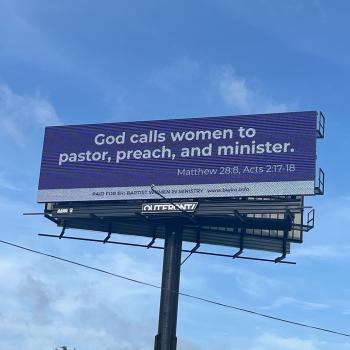
Yes, There Are Women Preachers and the Bible Settles It
3

The Abolition of Man Part 2: Chapter 2: The Way
4

Three Instruments and the Test of Discernment

About Thomas Kidd
Thomas S. Kidd teaches history and is a Senior Fellow at Baylor University's Institute for Studies of Religion. He is the author of Patrick Henry: First Among Patriots and God of Liberty: A Religious History of the American Revolution. Follow his writings via Facebook and Twitter.
Patheos Explore the world's faith through different perspectives on religion and spirituality! Patheos has the views of the prevalent religions and spiritualities of the world.
Ad-Free & Subscriber Log-In Subscription Support
- About Us
- 2026 Calendar
- Videos
- Podcasts
- Library of World Religions
- Faith In Media Tracker
- Advertise With Us
- Write for Us
- Privacy Policy
- Terms of Service
- Do Not Sell My Data
- Contact Us
- Radiant Digital
- Manage Newsletter Subscriptions
- Unsubscribe From Notifications
- Sitemap
Copyright 2008-2026, Patheos. All rights reserved.
Subscription Support Ad-Free & Subscriber Log-In
Follow Patheos