
BuddhistCatholicContemplativeEvangelicalGeneral ChristianHinduJewishLatter-day SaintMuslimNew VisionsProgressive Christian
Beliefs
- Buddhist
- Catholic
- Contemplative
- Evangelical
- General Christian
- Hindu
- Jewish
- Latter-day Saint
- More Voices
- Muslim
- New Visions
- Pagan
- Progressive Christian
Topics
- Religion News
- Food and Religion
- Sports and Religion
- Religious Art
- Religious Music and Entertainment
- Religious Events
- History and Religion
- Style and Religion
- Politics and Religion
- Women in Religion
- Recreation Outdoors and Religion
- Business Finance and Religion
- Careers Workplace and Religion
- Education and Religion
- Family Parenting and Religion
- Health Fitness and Religion
- Home and Religion
- Relationships and Religion
- Technology and Religion
- Travel and Religion
Columnists
- Buddhist Columnists
- Business Finance and Religion Columnists
- Careers Workplace and Religion Columnists
- Catholic Columnists
- Contemplative Columnists
- Education and Religion Columnists
- Evangelists Columnists
- Family Parenting and Religion Columnists
- General Christian Columnists
- Health Fitness and Religion Columnists
- Hindu Columnists
- History and Religion Columnists
- Home and Religion Columnists
- Jewish Columnists
- More Voices Columnists
- Latter Day Columnists
- Muslim Columnists
- New Visions Columnists
- Nonreligious Columnists
- Pagan Columnists
- Politics and Religion Columnists
- Progressive Columnists
- Recreation Outdoors and Religion Columnists
- Relationships and Religion Columnists
- Religion News Columnists
- Religious Art Columnists
- Religious Events Columnists
- Religious Music and Entertainment Columnists
- Sports and Religion Columnists
- Style and Religion Columnists
- Technology and Religion Columnists
- Travel and Religion Columnists
- Women in Religion Columnists
Resource Library
- 2026 Calendar
- Library of World Religions
- The 100 Most Holy Places on Earth
- Patheos Answers
- Podcasts
- Videos
- Faith Leaders Database
- Anglican Episcopalian
- Bahai
- Baptist
- Buddhism
- Christianity
- Confucianism
- Eastern Orthodoxy
- Hinduism
- Holiness and Pentecostal
- ISKCON
- Islam
- Judaism
- Lutheran
- Methodist
- The Church of Jesus Christ of Latter-day Saints
- New Age
- Paganism
- Presbytarian and Reformed
- Protestantism
- Religion Behind the Scenes
- Roman Catholic
- Scientology
- Shia Islam
- Sikhism
- Sufism
- Sunni Islam
- Taoism
- Zen
- See all religions
Research Tools
 Ad-Free & Subscriber Log-In Subscription Support
Ad-Free & Subscriber Log-In Subscription Support
Follow Patheos 

- Trending:
- Forgiveness
- |
- Marriage
- |
- Consciousness
- |
- Death Penalty
- |
- Election
- |
- Halloween
Progressive Christian
Becoming American? A Book Review
September 19, 2011 by Greg Garrett
"But we don't want the Irish."
*--*Olson Johnson (David Huddleston), Blazing Saddles
One of America's primary dramas has always been how and when immigrants have been assimilated into mainstream American culture. Typically, these newer immigrants have faced resistance from American Protestants belonging to earlier immigrant groups. Over the centuries, we have harbored anti-German sentiments, anti-Chinese sentiments, and, as my epigraph suggests, anti-Irish sentiments. American Protestants looked down their noses at ethnic Jews and at Roman Catholics. Whole Nativist political movements grew up around anti-immigrant feelings; the Know-Nothing Party of the mid-19th Century, for example, execrated Catholics and insisted that public office should only be held by white, Protestant Anglo-Saxons.
In one respect, the vilifying and othering of immigrant groups by more established Americans is nothing new. It's not unique that a group be singled out for suspicion because its religious beliefs might suggest an inability or unwillingness to become completely American. Nor is it unique that a section of the populace should be regarded with suspicion because we are currently at war with members of that group in some foreign clime—ask German Americans during World War I and Japanese Americans during World War II how it felt to take the heat for something people on another continent had done.
But fear of Islamic terrorism has given us our generation's great anti-immigrant prejudice, and so we must pay attention to the phenomenon, even if it is nothing new. History tells us that somehow, God willing, this prejudice too will be resolved, and Americans will grow to accept a new and valuable branch on the American tree. But assimilation has to take place on two fronts. Not only must mainstream America become willing to accept an immigrant group—the group itself must set aside its reservations about elements of American culture that may be in opposition to its own strongly-held beliefs.
In her brief but information-packed new book, Becoming American?, Yvonne Yazbeck Haddad, one of the most notable of Arab-American scholars, explores the problem of Arab or Muslim American identity from the standpoint of Muslims in America. While studies done in both the 1950s and the 1980s showed that the use of English, respect for education, and desire for middle-class life were pushing Muslim- and Arab-Americans to assimilate into mainstream culture, it also seems to be true that mainstream American culture has resisted their full citizenship. Their American identity has, as Haddad notes, "been profoundly influenced by American prejudice and hostility toward Arabs and Muslims, both real and perceived." (14)
America's overwhelming favoritism toward Israel in Middle Eastern geopolitics seems to many Americans of Arab descent or Muslim faith to be a sticking point; Jews have political influence, while Muslims do not. Witness, for example, their inability to have their political donations even accepted, let alone valued. George McGovern, Walter Mondale, and Hilary Clinton have all returned donations made by Arab Americans and American Muslims because the money seemed to those candidates to be a political liability. In a system where money marks the most powerful form of political influence, if one is not even permitted to make donations, how can one be considered fully American?
Haddad records the development of Arab-American political organizations and scholarly organizations, and it is a record of Arab and Muslim advocacy similar to that of many immigrant groups. How, such groups have always asked, can our voices be heard? How can we be seen as we truly are, and not as our foes would have us portrayed? This has become even more important for Arab and Muslim Americans in the wake of 9/11. That event has led to the suspicion of all Muslims, not simply those who are extremists, so that, as Haddad points out, American Muslims in general are much less interested in contributing to a geo-political discussion of why the 9/11 attacks happened than in an attempt to "dissociate and distance themselves from the perpetrators. They have sought to repossess a role in defining their own faith and take it back from the extremists as well as those who thrive on demonizing Islam." (37)
Part of this attempt has been the conscious promotion of a moderate Islam in reaction to the fire-breathing rhetoric of Islamic fundamentalists overseas. As Haddad suggests, part of this movement has been wishful suggest-from-outside thinking on the part of American politicians, and part of it has been an organic, grown-from-within development among American Muslims. She summarizes the thinking of Muslim scholars like Khaled Abou El Fadl, a Professor of Law at UCLA, who seeks to affirm that "diversity and difference are the essential teachings of the Qur'an," that "it is the duty of every Muslim to emphasize the tolerance of Islam," and that Islam needs to be differentiated in the minds of the West—and even in the minds of Muslims—from the more radical Saudi Wahhabist interpretations followed by the planners and perpetrators of the 9/11 attacks. (61)
Article Continued On Next Page
Page: 1 of 2
9/19/2011 4:00:00 AM
Progressive Christian
Book Club
Faithful Citizenship
Becoming American
Muslims
Christianity
Islam
more at patheos
1

What Is Christian Zionism and Why Is It So Complex?
2

3

Obedience To God Cannot Be Deconstructed
4
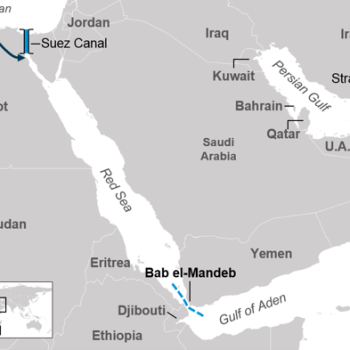
Could Iran and Houthis Force Creation of Palestinian state?

About Greg Garrett
Greg Garrett is (according to BBC Radio) one of America's leading voices on religion and culture. He is the author or co-author of over twenty books of fiction, theology, cultural criticism, and spiritual autobiography. His most recent books are The Prodigal, written with the legendary Brennan Manning, Entertaining Judgment: The Afterlife in Popular Imagination, and My Church Is Not Dying: Episcopalians in the 21st Century. A contributor to Patheos since 2010, Greg also writes for the Huffington Post, Salon.com, OnFaith, The Tablet, Reform, and other web and print publications in the US and UK.
Patheos Explore the world's faith through different perspectives on religion and spirituality! Patheos has the views of the prevalent religions and spiritualities of the world.
Ad-Free & Subscriber Log-In Subscription Support
- About Us
- 2026 Calendar
- Videos
- Podcasts
- Library of World Religions
- Faith In Media Tracker
- Advertise With Us
- Write for Us
- Privacy Policy
- Terms of Service
- Do Not Sell My Data
- Contact Us
- Radiant Digital
- Manage Newsletter Subscriptions
- Unsubscribe From Notifications
- Sitemap
Copyright 2008-2026, Patheos. All rights reserved.
Subscription Support Ad-Free & Subscriber Log-In
Follow Patheos