
BuddhistCatholicContemplativeEvangelicalGeneral ChristianHinduJewishLatter-day SaintMuslimNew VisionsProgressive Christian
Beliefs
- Buddhist
- Catholic
- Contemplative
- Evangelical
- General Christian
- Hindu
- Jewish
- Latter-day Saint
- More Voices
- Muslim
- New Visions
- Pagan
- Progressive Christian
Topics
- Religion News
- Food and Religion
- Sports and Religion
- Religious Art
- Religious Music and Entertainment
- Religious Events
- History and Religion
- Style and Religion
- Politics and Religion
- Women in Religion
- Recreation Outdoors and Religion
- Business Finance and Religion
- Careers Workplace and Religion
- Education and Religion
- Family Parenting and Religion
- Health Fitness and Religion
- Home and Religion
- Relationships and Religion
- Technology and Religion
- Travel and Religion
Columnists
- Buddhist Columnists
- Business Finance and Religion Columnists
- Careers Workplace and Religion Columnists
- Catholic Columnists
- Contemplative Columnists
- Education and Religion Columnists
- Evangelists Columnists
- Family Parenting and Religion Columnists
- General Christian Columnists
- Health Fitness and Religion Columnists
- Hindu Columnists
- History and Religion Columnists
- Home and Religion Columnists
- Jewish Columnists
- More Voices Columnists
- Latter Day Columnists
- Muslim Columnists
- New Visions Columnists
- Nonreligious Columnists
- Pagan Columnists
- Politics and Religion Columnists
- Progressive Columnists
- Recreation Outdoors and Religion Columnists
- Relationships and Religion Columnists
- Religion News Columnists
- Religious Art Columnists
- Religious Events Columnists
- Religious Music and Entertainment Columnists
- Sports and Religion Columnists
- Style and Religion Columnists
- Technology and Religion Columnists
- Travel and Religion Columnists
- Women in Religion Columnists
Resource Library
- 2026 Calendar
- Library of World Religions
- The 100 Most Holy Places on Earth
- Patheos Answers
- Podcasts
- Videos
- Faith Leaders Database
- Anglican Episcopalian
- Bahai
- Baptist
- Buddhism
- Christianity
- Confucianism
- Eastern Orthodoxy
- Hinduism
- Holiness and Pentecostal
- ISKCON
- Islam
- Judaism
- Lutheran
- Methodist
- The Church of Jesus Christ of Latter-day Saints
- New Age
- Paganism
- Presbytarian and Reformed
- Protestantism
- Religion Behind the Scenes
- Roman Catholic
- Scientology
- Shia Islam
- Sikhism
- Sufism
- Sunni Islam
- Taoism
- Zen
- See all religions
Research Tools
 Ad-Free & Subscriber Log-In Subscription Support
Ad-Free & Subscriber Log-In Subscription Support
Follow Patheos 

- Trending:
- Forgiveness
- |
- Marriage
- |
- Consciousness
- |
- Death Penalty
- |
- Election
- |
- Halloween
Catholic
9/11 and the Ever-Present Christ
September 11, 2011 by Pat Gohn
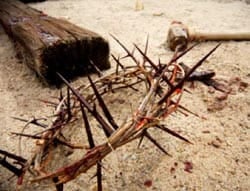 For those who observed it, it was unlike any other day in recorded history. It was seared into the memories of those who lived it. It changed lives forever. In the retelling, its horror still scandalizes people. And writers will continue, and well they should, to use the strongest language possible to describe it.
Total annihilation.
Immolation of all things holy.
Innocent human life crushed.
Grisly death.
Indeed, the blackest day.
Meanwhile, she stood by, watching it, buffeted by the morbid cataclysm set in motion—eyes riveted, unable to help, and unable to walk away.
Then, all of a sudden, the earth quaked. And an excruciating sword of suffering sliced once-recognizable lives into two distinct halves—before and after that hour.
Hell was having a proverbial field day. Heaven cried.
As Jesus died upon the cross, Mary, his mother, deeply pained and grieving, stood by.
The death of the Savior, God's Only Begotten Son, bore the sins of every single evil action in history—before, during, and since the Crucifixion. In no uncertain terms, despite the wickedness, vice, depravity, sadness, and bad news that unhinges the strongest souls, death and sin have been permanently vanquished through the shedding of the blood of Jesus.
The body of Jesus was raised to perfection after death. Even in its glorified state, it still bears the scars from the wounds of his suffering. Not to remind him of the victory over death and sin, but to remind us. There is the hope of heaven—or restoration and reunion—through the Divine Mercy of Jesus who was crucified, died, and was raised. He lives to come again.
+++
For the Christian, suffering, atrocities, and death, are not the ultimate end.
But, events like 9/11 still shock us, and rile us.
Intuitively, deep down, we know there is more to life. Humanity knows this about itself. The will to survive and live beyond the grave is innate to the species. It is a holy desire designed in us by God himself, as he crafted man and woman in his image. God our Creator knows us best and longs to see us live in union with him and one another. He built that same longing into us. We know it in the deepest recesses of our hearts, but our experience of it is often dulled by sin and miseries.
The death of innocents, especially when it is perpetrated by our inhumanity toward one another, pummels and bruises our convictions about what is good and true and beautiful about life, and about a God who loves us. Suffering and evil taints our reality to the point that we actually become accustomed to tragedy. Each time we play a different part. We might be a victim, a survivor, or an onlooker.
But the truth is, no matter where we are on the tragic continuum, God is deliberately near to each soul he has made. The Lover of our souls is intimately aware of our circumstances and profoundly in tune with our sufferings.
We know this because God, in Jesus, became a man—a human person like us in all things except sin. He lived, as the prophet Isaiah says, as "a suffering Servant," acquainted with our grief. Entering in the deepest suffering on Calvary, and combating the darkest evil, Jesus gave us a way through the sufferings, sin, and evil we face. It would not be easy, and it would require grace from him.
Jesus knows every victim, survivor, and onlooker even if they cannot fathom God's nearness to them amidst carnage.
How does one go on? How does one begin to pick up the pieces in the aftermath of tragedy?
One piece at a time.
I found it comforting that, in the careful sifting of the fresh rubble of the World Trade Center twin towers, crews performing search and recovery duties unearthed an iron cross. Made of fused I-beams from WTC Tower One, it was erected at Ground Zero as a symbol of hope to the onlookers on site and around the world. The blessing of the cross makes it something more than a symbol. It becomes a sacramental. A sacramental points to something much larger than itself. It reminds us of the sacred in our ordinary lives.
On a day like 9/11, the cross should remind us of the presence of Jesus in the midst of all suffering. Thanks to Christ's victory on Calvary's Cross, it bears particular witness to Christ's presence that day—inside the doomed, scorched wreckage. For, God is everywhere, and Christ is especially present to every person at the moment of death.
Article Continued On Next Page
Page: 1 of 3
9/11/2011 4:00:00 AM
Catholic
A Word in Season
9/11
John Paul II
Sacred Texts
Suffering
Christianity
Roman Catholicism
more at patheos
1
On 'James Talarico and the [white] religious left'
2
3

4
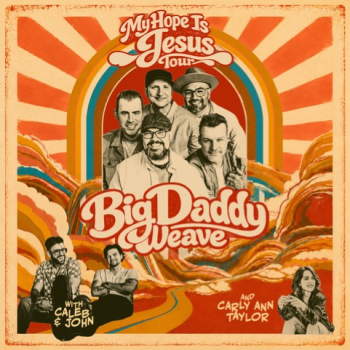
Big Daddy Weave Announces Fall 2026 “My Hope Is Jesus Tour”

About Pat Gohn
Pat Gohn is a Catholic writer, speaker, and the host of the Among Women Podcast and blog. Her book Blessed, Beautiful and Bodacious: Celebrating the Gift of Catholic Womanhood is published by Ave Maria Press.
Patheos Explore the world's faith through different perspectives on religion and spirituality! Patheos has the views of the prevalent religions and spiritualities of the world.
Ad-Free & Subscriber Log-In Subscription Support
- About Us
- 2026 Calendar
- Videos
- Podcasts
- Library of World Religions
- Faith In Media Tracker
- Advertise With Us
- Write for Us
- Privacy Policy
- Terms of Service
- Do Not Sell My Data
- Contact Us
- Radiant Digital
- Manage Newsletter Subscriptions
- Unsubscribe From Notifications
- Sitemap
Copyright 2008-2026, Patheos. All rights reserved.
Subscription Support Ad-Free & Subscriber Log-In
Follow Patheos