
BuddhistCatholicContemplativeEvangelicalGeneral ChristianHinduJewishLatter-day SaintMuslimNew VisionsProgressive Christian
Beliefs
- Buddhist
- Catholic
- Contemplative
- Evangelical
- General Christian
- Hindu
- Jewish
- Latter-day Saint
- More Voices
- Muslim
- New Visions
- Pagan
- Progressive Christian
Topics
- Religion News
- Food and Religion
- Sports and Religion
- Religious Art
- Religious Music and Entertainment
- Religious Events
- History and Religion
- Style and Religion
- Politics and Religion
- Women in Religion
- Recreation Outdoors and Religion
- Business Finance and Religion
- Careers Workplace and Religion
- Education and Religion
- Family Parenting and Religion
- Health Fitness and Religion
- Home and Religion
- Relationships and Religion
- Technology and Religion
- Travel and Religion
Columnists
- Buddhist Columnists
- Business Finance and Religion Columnists
- Careers Workplace and Religion Columnists
- Catholic Columnists
- Contemplative Columnists
- Education and Religion Columnists
- Evangelists Columnists
- Family Parenting and Religion Columnists
- General Christian Columnists
- Health Fitness and Religion Columnists
- Hindu Columnists
- History and Religion Columnists
- Home and Religion Columnists
- Jewish Columnists
- More Voices Columnists
- Latter Day Columnists
- Muslim Columnists
- New Visions Columnists
- Nonreligious Columnists
- Pagan Columnists
- Politics and Religion Columnists
- Progressive Columnists
- Recreation Outdoors and Religion Columnists
- Relationships and Religion Columnists
- Religion News Columnists
- Religious Art Columnists
- Religious Events Columnists
- Religious Music and Entertainment Columnists
- Sports and Religion Columnists
- Style and Religion Columnists
- Technology and Religion Columnists
- Travel and Religion Columnists
- Women in Religion Columnists
Resource Library
- 2026 Calendar
- Library of World Religions
- The 100 Most Holy Places on Earth
- Patheos Answers
- Podcasts
- Videos
- Faith Leaders Database
- Anglican Episcopalian
- Bahai
- Baptist
- Buddhism
- Christianity
- Confucianism
- Eastern Orthodoxy
- Hinduism
- Holiness and Pentecostal
- ISKCON
- Islam
- Judaism
- Lutheran
- Methodist
- The Church of Jesus Christ of Latter-day Saints
- New Age
- Paganism
- Presbytarian and Reformed
- Protestantism
- Religion Behind the Scenes
- Roman Catholic
- Scientology
- Shia Islam
- Sikhism
- Sufism
- Sunni Islam
- Taoism
- Zen
- See all religions
Research Tools
 Ad-Free & Subscriber Log-In Subscription Support
Ad-Free & Subscriber Log-In Subscription Support
Follow Patheos 

- Trending:
- Forgiveness
- |
- Marriage
- |
- Consciousness
- |
- Death Penalty
- |
- Election
- |
- Halloween
Catholic
Why the Wild Things Are
August 11, 2011 by Joseph Susanka
"Like" the Patheos Catholic Page on Facebook to receive today's best commentary on Catholic issues.
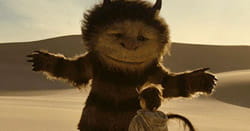 "In a word, the great difference between Sendak's book and Jonze's film is that the book is about anger, while the film is as much about sadness. Here is a film broken-hearted over the messiness of the world. It is sad, and beautiful, and true." - Steven D. Greydanus
When legendary author Maurice Sendak was told of concerns that the film based on his beloved Where the Wild Things Are was too mature for young audiences, his reply was remarkably direct (if a trifle impolitic). "I would tell them to go to hell," he said. "That's a question I will not tolerate." Pressed further, Sendak dismissed the notion of inappropriateness altogether. "I saw the most horrendous movies that were unfit for child's eyes," he reminded his interviewer. "So what? I managed to survive."
The vehemence of Sendak's response should come as no surprise. The author has railed long and loudly against the Disneyfication of young American imaginations, and the many battles he waged against the suggestion that Where the Wild Things Are (and his subsequent work, In the Night Kitchen) were but thinly-veiled attempts to "demythify" the innocence of childhood have undoubtedly left him a bit sore on the subject.
Moreover, the book is easily defended against such claims. Its imagery—harshly criticized when the book was first released—is more fantastical than frightening. And while some of the issues raised are undeniably complex, they simmer well under the surface of most youthful consciousnesses. In fact, Where the Wild Things Are is far more likely to trouble adults than children, and one suspects that much of the initial resistance to Sendak's work is tied to that very fact.
But is that same defense applicable to the film? Or do the radical differences in mediums bring validity to the parental concerns that Sendak's original manages to avoid?
The book itself, first published in 1963, is a marvel of concision and visual storytelling. In thirty-seven captivating pages (bolstered by a mere ten sentences of dialogue), the reader is introduced to Max, an exuberant young boy whose propensity for mischief has landed him in bed without supper. Magically ignoring the restricting walls of his room, Max travels to an imaginary island populated by a herd of large, angry "things"—outlandishly shaggy, inimitable monsters who are greatly impressed by Max's own wildness, embrace him as one of their own, and gleefully name him King of all Wild Things. After a series of rambunctious melees—"Let the wild rumpus start!" Max proclaims with his first royal command—the newly-crowned king bids his subjects farewell and returns home, somewhat chastened by his experience of authority. Upon arriving safely within the walls of his bedroom once again, he is pleasantly surprised to discover that his soup has been set aside for him, "and it was still hot."
The material that flows from Sendak's wondrous pen is much too short for a feature film. As a result, the film's director (Spike Jonze) and his co-writer (best-selling author Dave Eggers) were faced with the unenviable task of crafting a larger, more complex edifice to fit around Sendak's original work—one that hits many of the same plot points, but goes far beyond them. Now, rather than simply experiencing (and subduing) the Wild Things, Max comes to understand why they are wild. Instead of spending his time on the island "rumpussing" it up with his nameless subjects, the young boy struggles to find an explanation for the sadness that permeates so many of their waking moments. (In one of the film's most poignant scenes, a confused Max asks for guidance in confronting the most difficult task he has ever set himself. "How do I make everyone Okay?" he beseeches his listeners, deeply moved by the suffering of his new-found friends.)
Article Continued On Next Page
Page: 1 of 2
8/11/2011 4:00:00 AM
Catholic
Through a Lens Darkly
Maurice Sendak
Where the Wild Things Are
Christianity
Roman Catholicism
more at patheos
1
Reconciling Spirituality and a LGBTQ+ Ally's and Mom's Love
2

Aligning With God's Will Via Empathy And Action
3
Grab this weeks Amazon Number One Best Seller Easter Book
4

Sacred Heart Re-Releases Catholic Anxiety Guide

About Joseph Susanka
Joseph Susanka has been doing development work for institutions of Catholic higher education since his graduation from Thomas Aquinas College in 1999. He blogs at Crisis Magazine, where he also contributes feature articles on a variety of topics.
Patheos Explore the world's faith through different perspectives on religion and spirituality! Patheos has the views of the prevalent religions and spiritualities of the world.
Ad-Free & Subscriber Log-In Subscription Support
- About Us
- 2026 Calendar
- Videos
- Podcasts
- Library of World Religions
- Faith In Media Tracker
- Advertise With Us
- Write for Us
- Privacy Policy
- Terms of Service
- Do Not Sell My Data
- Contact Us
- Radiant Digital
- Manage Newsletter Subscriptions
- Unsubscribe From Notifications
- Sitemap
Copyright 2008-2026, Patheos. All rights reserved.
Subscription Support Ad-Free & Subscriber Log-In
Follow Patheos