
BuddhistCatholicContemplativeEvangelicalGeneral ChristianHinduJewishLatter-day SaintMuslimNew VisionsProgressive Christian
Beliefs
- Buddhist
- Catholic
- Contemplative
- Evangelical
- General Christian
- Hindu
- Jewish
- Latter-day Saint
- More Voices
- Muslim
- New Visions
- Pagan
- Progressive Christian
Topics
- Religion News
- Food and Religion
- Sports and Religion
- Religious Art
- Religious Music and Entertainment
- Religious Events
- History and Religion
- Style and Religion
- Politics and Religion
- Women in Religion
- Recreation Outdoors and Religion
- Business Finance and Religion
- Careers Workplace and Religion
- Education and Religion
- Family Parenting and Religion
- Health Fitness and Religion
- Home and Religion
- Relationships and Religion
- Technology and Religion
- Travel and Religion
Columnists
- Buddhist Columnists
- Business Finance and Religion Columnists
- Careers Workplace and Religion Columnists
- Catholic Columnists
- Contemplative Columnists
- Education and Religion Columnists
- Evangelists Columnists
- Family Parenting and Religion Columnists
- General Christian Columnists
- Health Fitness and Religion Columnists
- Hindu Columnists
- History and Religion Columnists
- Home and Religion Columnists
- Jewish Columnists
- More Voices Columnists
- Latter Day Columnists
- Muslim Columnists
- New Visions Columnists
- Nonreligious Columnists
- Pagan Columnists
- Politics and Religion Columnists
- Progressive Columnists
- Recreation Outdoors and Religion Columnists
- Relationships and Religion Columnists
- Religion News Columnists
- Religious Art Columnists
- Religious Events Columnists
- Religious Music and Entertainment Columnists
- Sports and Religion Columnists
- Style and Religion Columnists
- Technology and Religion Columnists
- Travel and Religion Columnists
- Women in Religion Columnists
Resource Library
- 2026 Calendar
- Library of World Religions
- The 100 Most Holy Places on Earth
- Patheos Answers
- Podcasts
- Videos
- Faith Leaders Database
- Anglican Episcopalian
- Bahai
- Baptist
- Buddhism
- Christianity
- Confucianism
- Eastern Orthodoxy
- Hinduism
- Holiness and Pentecostal
- ISKCON
- Islam
- Judaism
- Lutheran
- Methodist
- The Church of Jesus Christ of Latter-day Saints
- New Age
- Paganism
- Presbytarian and Reformed
- Protestantism
- Religion Behind the Scenes
- Roman Catholic
- Scientology
- Shia Islam
- Sikhism
- Sufism
- Sunni Islam
- Taoism
- Zen
- See all religions
Research Tools
 Ad-Free & Subscriber Log-In Subscription Support
Ad-Free & Subscriber Log-In Subscription Support
Follow Patheos 

- Trending:
- Forgiveness
- |
- Marriage
- |
- Consciousness
- |
- Death Penalty
- |
- Election
- |
- Halloween
Catholic
Missal Changes, Part One: Defined by Prayer
August 31, 2011 by Pat Gohn
"Like" the Patheos Catholic Page on Facebook to receive today's best commentary on Catholic issues.
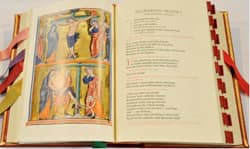 Editor's Note: This is the first of a four-part series that explores the new translation of the Roman Missal, which will first be used in parishes on the First Sunday of Advent. In this article, the author reviews some of the changes to the responses of the people.
It is the most significant development in the Mass—for English speakers—since the Second Vatican Council.
The new translation of the Roman Missal (3rd edition), is coming to our local Roman Catholic Churches on November 27, the First Sunday of Advent. Long in coming, this English translation follows the revisions made to the official Latin missal, Missale Romanum, announced by Blessed John Paul II in the Jubilee Year, 2000.
The way we pray defines us, not just as individuals, but also corporately as a Church. A well-known Latin axiom Lex orandi lex credendi reminds us that the law of prayer is the law of belief, and indeed, our way of prayer shapes and typifies our beliefs. This is why the celebration of Eucharist is so central to the worship of Roman Catholics; our entire Creed comes together in the Mass.
To that end, bishops and clergy, Scripture and Latin scholars, poets, musicians, liturgists, and others have spent years revising a dozen drafts leading up to the release of this new translation, and the finished product offers a wonderful opportunity for renewal within the entire English-speaking Church—a chance to delve into what we say when we pray, with rekindled concentration.
It's important to note that while some of the words we pray will change, the familiar Rite and Order of the Mass will not.
Within the audible or spoken parts of the Mass, we have the priest's prayers and the prayers of the people. Changes are coming to both. They reflect careful scholarship that renders more accurately the power, beauty, majesty, and doctrinal precision of the original Latin text promulgated under Pope John Paul II.
The majority of the changes, however, will be within the portions of the Mass that the priests pray—changes to collects, prefaces, and certain words within the Eucharistic prayers. Different prayers will enter the liturgical calendar during holy days, and new saints' memorials will be added to the liturgical cycle.
Priests will need time to study and pray with these new texts prior to Advent. That training is already underway in most Catholic dioceses. This calls our priests into a reflective and receptive posture. They will daily have to absorb the new Mass text's meanings, and internalize them. Let us pray that each priest may become one with the mysteries he celebrates.
For ourselves—as laity and religious who populate the pews—let us be open to the challenge to delve more deeply into the Mass. No longer, in the short term, will we be able to rely on the prayers, by rote. We must enter anew into our participation of the Mass. We should welcome these new prayers as opportunities to be more in tune with God, as well as with the worldwide Church.
As this is the first of a four-part series, let's begin by looking at just a few of the changes coming to the responses of the people.
"The Lord be with you."
"And with your spirit."
At three points in the Mass—the Greeting, the Sign of Peace, and the Concluding Rite—the priest greets or calls the people to prayer with these words: "The Lord be with you." The current response is: "And also with you."
The new response on the part of the people will be "And with your spirit."
This new reply is a more direct translation from the official Latin text.
Here is the Latin:
Priest: Dominus vobiscum.
People: Et cum spiritu tuo.
The 1970 translation:
Priest: The Lord be with you.
People: And also with you.
The new translation:
Priest: The Lord be with you.
People: And with your spirit.
It is interesting to note that the new English translation, in this case, is catching up to the French, Italian, Spanish, German, and other translations, which were always more precise. This new rendering will allow the English-speaking world to recapture this ancient exchange that dates back to the 3rd century.
Article Continued On Next Page
Page: 1 of 2
8/31/2011 4:00:00 AM
Catholic
A Word in Season
Missal
Translations
Christianity
Roman Catholicism
more at patheos
1

Love Streams: What Film is For
2
3

Revising the "Disability [Pride] Flag"
4
Christians Helped Invent Race. Some Now Call It Unbiblical

About Pat Gohn
Pat Gohn is a Catholic writer, speaker, and the host of the Among Women Podcast and blog. Her book Blessed, Beautiful and Bodacious: Celebrating the Gift of Catholic Womanhood is published by Ave Maria Press.
Patheos Explore the world's faith through different perspectives on religion and spirituality! Patheos has the views of the prevalent religions and spiritualities of the world.
Ad-Free & Subscriber Log-In Subscription Support
- About Us
- 2026 Calendar
- Videos
- Podcasts
- Library of World Religions
- Faith In Media Tracker
- Advertise With Us
- Write for Us
- Privacy Policy
- Terms of Service
- Do Not Sell My Data
- Contact Us
- Radiant Digital
- Manage Newsletter Subscriptions
- Unsubscribe From Notifications
- Sitemap
Copyright 2008-2026, Patheos. All rights reserved.
Subscription Support Ad-Free & Subscriber Log-In
Follow Patheos