
BuddhistCatholicContemplativeEvangelicalGeneral ChristianHinduJewishLatter-day SaintMuslimNew VisionsProgressive Christian
Beliefs
- Buddhist
- Catholic
- Contemplative
- Evangelical
- General Christian
- Hindu
- Jewish
- Latter-day Saint
- More Voices
- Muslim
- New Visions
- Pagan
- Progressive Christian
Topics
- Religion News
- Food and Religion
- Sports and Religion
- Religious Art
- Religious Music and Entertainment
- Religious Events
- History and Religion
- Style and Religion
- Politics and Religion
- Women in Religion
- Recreation Outdoors and Religion
- Business Finance and Religion
- Careers Workplace and Religion
- Education and Religion
- Family Parenting and Religion
- Health Fitness and Religion
- Home and Religion
- Relationships and Religion
- Technology and Religion
- Travel and Religion
Columnists
- Buddhist Columnists
- Business Finance and Religion Columnists
- Careers Workplace and Religion Columnists
- Catholic Columnists
- Contemplative Columnists
- Education and Religion Columnists
- Evangelists Columnists
- Family Parenting and Religion Columnists
- General Christian Columnists
- Health Fitness and Religion Columnists
- Hindu Columnists
- History and Religion Columnists
- Home and Religion Columnists
- Jewish Columnists
- More Voices Columnists
- Latter Day Columnists
- Muslim Columnists
- New Visions Columnists
- Nonreligious Columnists
- Pagan Columnists
- Politics and Religion Columnists
- Progressive Columnists
- Recreation Outdoors and Religion Columnists
- Relationships and Religion Columnists
- Religion News Columnists
- Religious Art Columnists
- Religious Events Columnists
- Religious Music and Entertainment Columnists
- Sports and Religion Columnists
- Style and Religion Columnists
- Technology and Religion Columnists
- Travel and Religion Columnists
- Women in Religion Columnists
Resource Library
- 2026 Calendar
- Library of World Religions
- The 100 Most Holy Places on Earth
- Patheos Answers
- Podcasts
- Videos
- Faith Leaders Database
- Anglican Episcopalian
- Bahai
- Baptist
- Buddhism
- Christianity
- Confucianism
- Eastern Orthodoxy
- Hinduism
- Holiness and Pentecostal
- ISKCON
- Islam
- Judaism
- Lutheran
- Methodist
- The Church of Jesus Christ of Latter-day Saints
- New Age
- Paganism
- Presbytarian and Reformed
- Protestantism
- Religion Behind the Scenes
- Roman Catholic
- Scientology
- Shia Islam
- Sikhism
- Sufism
- Sunni Islam
- Taoism
- Zen
- See all religions
Research Tools
 Ad-Free & Subscriber Log-In Subscription Support
Ad-Free & Subscriber Log-In Subscription Support
Follow Patheos 

- Trending:
- Forgiveness
- |
- Marriage
- |
- Consciousness
- |
- Death Penalty
- |
- Election
- |
- Halloween
Evangelical
Limited Government, Unlimited God
August 07, 2011 by J. E. Dyer
"Like" the Patheos Evangelical Page on Facebook to receive today's best commentary on Evangelical issues.
In the wake of the debt-ceiling deal, someone in an online forum to which I belong wrote a short appeal to the group:
Let's simplify our message and state it clearly, confidently, and OFTEN. I want:
FISCAL RESPONSIBILITY
CONSTITUTIONALLY LIMITED GOVERNMENT, and
FREE MARKETS
As a bumper sticker for limited government, this is hard to beat. But it started me thinking about how much of our population today may not be equipped to understand what we mean by these ideas. It's not clear when we last truly lived under them. Even those in mid-life today have to think hard to recall freer times. And many in the younger generations grew up learning that free markets, limited government, and fiscal responsibility unfairly benefit "the rich." They have been conditioned to regard these conditions with suspicion and hostility.
But resistance to these ideas may run even deeper in much of our population. Some very basic mindsets promoted by our culture for decades are inimical to limited, fiscally responsible government. If we hope to have a population capable of appreciating the benefits of such government, we will need to challenge these mindsets and encourage people to reconsider some of their most fundamental assumptions. I consider the following mindsets, presented in no particular order, among the most important:
1) The mindset that government is the keeper of our brother's income.
For more than half of America's lifespan, the government had no means of tracking people's income and wealth. Governments in the United States levied taxes on goods and property to raise revenue, not to extract "fair" amounts from the people based on their incomes. For most of that period, our governments—federal, state, and local—didn't even know what people's incomes were.
That's hard to imagine today, when government has gone well beyond merely taking a percentage of income. It now regularly considers how much of their earnings people "ought" to keep. The people collude in this, giving their opinions readily when asked whether others are paid "too much."
As long as we think this is any of our business, we will be unready for limited government and true liberty. What is done with public funds is the public's business, but the compensation of private individuals, contracted between willing parties, is not. Liberty means we cannot use the government to dictate these conditions for anyone; not wanting to do so is what makes us eligible to benefit from liberty. For most people, the best inoculation against that urge is the knowledge that God loves each of us, has a good plan for us, and wants us to prosper.
2) The mindset that sees our fellow men mainly in terms of abstract categories.
This is the detriment of government social-welfare schemes and other attempts at "social engineering." Abstraction has its uses: in a rule-of-law polity, equality before the law depends on government dealing with cases through abstract principles and categories, rather than considering the traits of the individuals involved. But that principle yields the inverse of a "one-size-fits-all" solution: it makes all fit one size. That is why people who are not on public welfare have widely differing conditions of employment, income, and lifestyle, but those who are on public welfare have the same income, live mostly in the same areas, and are remarkably prone to the same pathologies.
When God deals with people and problems, He doesn't leave them in this condition, because He approaches each one as an individual. Showing His face to our fellow men entails that kind of individual engagement. We deceive ourselves—often for our own convenience—when we imagine that it will work better to set up programs and systems that address people as categories of problems.
3) The mindset that government is like our parents: a source of satisfaction for our hungers and a refuge for our weaknesses.
When we are 4 years old, we imagine that Mom wields a justice wand to vindicate us against our annoying siblings, or that Dad offers a shield against the indignities inflicted by the outside world. The process of maturing and becoming adults, however, is not about finding another source of such services; it's about realizing that they are not really available from our fellow men on this earth. The government is just a group of flawed people whom we have authorized to levy requirements on us for certain purposes. None of the important things our parents do can be replicated for us as adults by government or any other human institution. That includes parents' most essential function: standing aside, after training and nurturing us, and letting us go.
Article Continued On Next Page
Page: 1 of 2
8/7/2011 4:00:00 AM
Evangelical
The Optimistic Christian
politics
Christianity
Evangelicalism
more at patheos
1
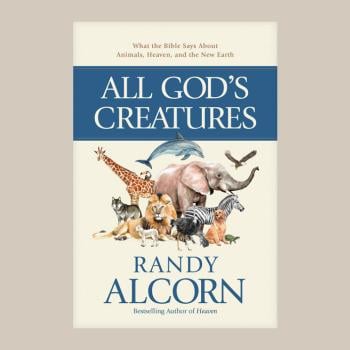
My New Book All God’s Creatures, Coming This Fall
2

Peter Thiel's Political & Theological Vision
3

Reading America at 250: A Nation Wrestles With God
4

Insights from Project Hail Mary

About J. E. Dyer
J.E. Dyer is a retired Naval intelligence officer and evangelical Christian. She retired in 2004 and blogs from the Inland Empire of southern California. She writes for Commentary's CONTENTIONS blog, Hot Air's Green Room, and her own blog, The Optimistic Conservative. Follow her on Facebook and Twitter.
Patheos Explore the world's faith through different perspectives on religion and spirituality! Patheos has the views of the prevalent religions and spiritualities of the world.
Ad-Free & Subscriber Log-In Subscription Support
- About Us
- 2026 Calendar
- Videos
- Podcasts
- Library of World Religions
- Faith In Media Tracker
- Advertise With Us
- Write for Us
- Privacy Policy
- Terms of Service
- Do Not Sell My Data
- Contact Us
- Radiant Digital
- Manage Newsletter Subscriptions
- Unsubscribe From Notifications
- Sitemap
Copyright 2008-2026, Patheos. All rights reserved.
Subscription Support Ad-Free & Subscriber Log-In
Follow Patheos