
BuddhistCatholicContemplativeEvangelicalGeneral ChristianHinduJewishLatter-day SaintMuslimNew VisionsProgressive Christian
Beliefs
- Buddhist
- Catholic
- Contemplative
- Evangelical
- General Christian
- Hindu
- Jewish
- Latter-day Saint
- More Voices
- Muslim
- New Visions
- Pagan
- Progressive Christian
Topics
- Religion News
- Food and Religion
- Sports and Religion
- Religious Art
- Religious Music and Entertainment
- Religious Events
- History and Religion
- Style and Religion
- Politics and Religion
- Women in Religion
- Recreation Outdoors and Religion
- Business Finance and Religion
- Careers Workplace and Religion
- Education and Religion
- Family Parenting and Religion
- Health Fitness and Religion
- Home and Religion
- Relationships and Religion
- Technology and Religion
- Travel and Religion
Columnists
- Buddhist Columnists
- Business Finance and Religion Columnists
- Careers Workplace and Religion Columnists
- Catholic Columnists
- Contemplative Columnists
- Education and Religion Columnists
- Evangelists Columnists
- Family Parenting and Religion Columnists
- General Christian Columnists
- Health Fitness and Religion Columnists
- Hindu Columnists
- History and Religion Columnists
- Home and Religion Columnists
- Jewish Columnists
- More Voices Columnists
- Latter Day Columnists
- Muslim Columnists
- New Visions Columnists
- Nonreligious Columnists
- Pagan Columnists
- Politics and Religion Columnists
- Progressive Columnists
- Recreation Outdoors and Religion Columnists
- Relationships and Religion Columnists
- Religion News Columnists
- Religious Art Columnists
- Religious Events Columnists
- Religious Music and Entertainment Columnists
- Sports and Religion Columnists
- Style and Religion Columnists
- Technology and Religion Columnists
- Travel and Religion Columnists
- Women in Religion Columnists
Resource Library
- 2026 Calendar
- Library of World Religions
- The 100 Most Holy Places on Earth
- Patheos Answers
- Podcasts
- Videos
- Faith Leaders Database
- Anglican Episcopalian
- Bahai
- Baptist
- Buddhism
- Christianity
- Confucianism
- Eastern Orthodoxy
- Hinduism
- Holiness and Pentecostal
- ISKCON
- Islam
- Judaism
- Lutheran
- Methodist
- The Church of Jesus Christ of Latter-day Saints
- New Age
- Paganism
- Presbytarian and Reformed
- Protestantism
- Religion Behind the Scenes
- Roman Catholic
- Scientology
- Shia Islam
- Sikhism
- Sufism
- Sunni Islam
- Taoism
- Zen
- See all religions
Research Tools
 Ad-Free & Subscriber Log-In Subscription Support
Ad-Free & Subscriber Log-In Subscription Support
Follow Patheos 

- Trending:
- Forgiveness
- |
- Marriage
- |
- Consciousness
- |
- Death Penalty
- |
- Election
- |
- Halloween
Pagan
Expanding Possibilities within the Trance of Life
August 12, 2011 by Gus diZerega
"Like" the Patheos Pagan Page on Facebook to receive today's best commentary on Pagan issues.
I have become fascinated with how much of what appears so obvious to us as not to be worth questioning actually results from growing up in a particular society at a particular time. For example, most adults continue to see their social and political world through a lens shaped by their experiences when traveling from adolescence into young maturity. But other examples are far less obvious and deeply relevant to us as Pagans.
We, all of us, have grown up within a society that for roughly 1600 years has enforced a monotheistic conception of the world into every cultural, moral, and experiential sphere. Alternative views were suppressed for so long that their possibilities became inconceivable for many. When more recently many Westerners rejected religion and turned to secular points of view, they carried many of these presuppositions with them as unexamined assumptions.
How important might this conditioning be in obscuring important aspects of the world around us? A fascinating experiment and an interesting encounter with a student of mine suggest it might be very important. The experiment has become fairly well known, but I'll describe it briefly.
In a series of experiments subjects were shown a video of a basketball game. They were asked to count ball passes by one of the teams while watching the video.
Consistently around half failed to spot a woman dressed in a gorilla suit who walked slowly across the court. The gorilla was visible for nine seconds and even stopped to face the camera and thump her chest. But when people were asked to simply watch the tape without counting ball passes they easily noticed the gorilla.
Follow up research finds no correlation between those who saw the gorilla and any other factor other than expertise. Basketball players were more likely to notice it, and more experienced players were more likely to notice it than less experienced. Education and intelligence do not matter and only experience in the area where the unexpected happens appears to count. Beyond this, some people are simply better at noticing the unexpected than are others.
But openness to the unexpected is not simply a matter of experience. Science is full of cases where patterns later found to be crucially important were either explained away or belittled by experienced experts. Expertise brings with it a far deeper understanding of what existing knowledge says should happen, and should exist, and so even if noticed, nonconforming information is often not pursued. Such people are more likely to understand more details in what they see but at the same time be more committed to the pattern those details are supposed to fit than would be a more naïve observer.
My personal anecdote is this. At a university where I have taught, one of our star students was a young woman from an Eastern European country. She ultimately graduated summa cum laude with two extremely demanding majors. She had been my student her junior year. We encountered one another in a coffee house her senior year and sat down to talk. Somehow our conversation got around to the topic of social conditioning and subtle phenomena. I mentioned "energy fields" around people and other things that in my experience most people could learn to see, but until taught they did not. She replied, "I've seen them all my life. I've just learned to keep my mouth shut." (I myself had had to learn.)
The Social Trance
Combining these two examples together and extrapolating, a social world-view maintains itself by teaching us what to expect, which suffices for about half of us. It teaches the certified experts what they should expect to see, which is enough for many. Having recognized experts enables the established view to overawe some non-experts who notice something and encourage the others to keep their mouths shut. Of those experts who do notice anything different, many will dismiss it. In short, a social model of reality creates a network of relationships reinforcing its view, a network from which it is difficult to extract ourselves. We are entranced, hypnotized by a system.
Speaking only of Euro Americans, for hundreds of years a great many sincere people believed that African Americans were in some ways inferior to White ones. It was always possible to break through this belief -- Benjamin Franklin ultimately did -- but most people did not. Yet they were in many ways good people, many of whom associated with African Americans regularly. They simply did not notice evidence they were wrong.
For a very long time Euro Americans believed American Indians were savages, unfit for modern life, and doomed to eventual extinction. Many did their best to help that extinction along. Again, many of those who did were leading members of society, religious leaders, and sincere in their views.
Article Continued On Next Page
Page: 1 of 3
8/12/2011 4:00:00 AM
Pagan
Pointedly Pagan
History
Modernity
Protestantism
Paganism
more at patheos
1

2

The REST of Your Life: A Creative Wrestles With Sabbath
3

4

Is Our Spirituality Communal or Individual?
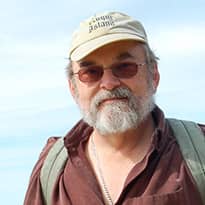
About Gus diZerega
Gus diZerega is a Gardnerian Elder with over 25 years practice, including six years close study with a Brazilian shaman. He has been active in interfaith work off and on for most of those 25 years as well. He has conducted workshops and given presentations on healing, shamanism, ecology and politics at Pagan gatherings in the United States and Canada. Follow Gus on Facebook. Gus blogs at Pointedly Pagan
Patheos Explore the world's faith through different perspectives on religion and spirituality! Patheos has the views of the prevalent religions and spiritualities of the world.
Ad-Free & Subscriber Log-In Subscription Support
- About Us
- 2026 Calendar
- Videos
- Podcasts
- Library of World Religions
- Faith In Media Tracker
- Advertise With Us
- Write for Us
- Privacy Policy
- Terms of Service
- Do Not Sell My Data
- Contact Us
- Radiant Digital
- Manage Newsletter Subscriptions
- Unsubscribe From Notifications
- Sitemap
Copyright 2008-2026, Patheos. All rights reserved.
Subscription Support Ad-Free & Subscriber Log-In
Follow Patheos