
BuddhistCatholicContemplativeEvangelicalGeneral ChristianHinduJewishLatter-day SaintMuslimNew VisionsProgressive Christian
Beliefs
- Buddhist
- Catholic
- Contemplative
- Evangelical
- General Christian
- Hindu
- Jewish
- Latter-day Saint
- More Voices
- Muslim
- New Visions
- Pagan
- Progressive Christian
Topics
- Religion News
- Food and Religion
- Sports and Religion
- Religious Art
- Religious Music and Entertainment
- Religious Events
- History and Religion
- Style and Religion
- Politics and Religion
- Women in Religion
- Recreation Outdoors and Religion
- Business Finance and Religion
- Careers Workplace and Religion
- Education and Religion
- Family Parenting and Religion
- Health Fitness and Religion
- Home and Religion
- Relationships and Religion
- Technology and Religion
- Travel and Religion
Columnists
- Buddhist Columnists
- Business Finance and Religion Columnists
- Careers Workplace and Religion Columnists
- Catholic Columnists
- Contemplative Columnists
- Education and Religion Columnists
- Evangelists Columnists
- Family Parenting and Religion Columnists
- General Christian Columnists
- Health Fitness and Religion Columnists
- Hindu Columnists
- History and Religion Columnists
- Home and Religion Columnists
- Jewish Columnists
- More Voices Columnists
- Latter Day Columnists
- Muslim Columnists
- New Visions Columnists
- Nonreligious Columnists
- Pagan Columnists
- Politics and Religion Columnists
- Progressive Columnists
- Recreation Outdoors and Religion Columnists
- Relationships and Religion Columnists
- Religion News Columnists
- Religious Art Columnists
- Religious Events Columnists
- Religious Music and Entertainment Columnists
- Sports and Religion Columnists
- Style and Religion Columnists
- Technology and Religion Columnists
- Travel and Religion Columnists
- Women in Religion Columnists
Resource Library
- 2026 Calendar
- Library of World Religions
- The 100 Most Holy Places on Earth
- Patheos Answers
- Podcasts
- Videos
- Faith Leaders Database
- Anglican Episcopalian
- Bahai
- Baptist
- Buddhism
- Christianity
- Confucianism
- Eastern Orthodoxy
- Hinduism
- Holiness and Pentecostal
- ISKCON
- Islam
- Judaism
- Lutheran
- Methodist
- The Church of Jesus Christ of Latter-day Saints
- New Age
- Paganism
- Presbytarian and Reformed
- Protestantism
- Religion Behind the Scenes
- Roman Catholic
- Scientology
- Shia Islam
- Sikhism
- Sufism
- Sunni Islam
- Taoism
- Zen
- See all religions
Research Tools
 Ad-Free & Subscriber Log-In Subscription Support
Ad-Free & Subscriber Log-In Subscription Support
Follow Patheos 

- Trending:
- Forgiveness
- |
- Marriage
- |
- Consciousness
- |
- Death Penalty
- |
- Election
- |
- Halloween
Evangelical
Moving from Exclusion to Embrace: Miroslav Volf on Christianity and Islam
August 28, 2011 by Patton Dodd
I am not sure whether or not these acts of exclusion emanate from our failure to repent. Maybe. Then we would reason something like this: Since we stand by our violence against Muslims in the past, we are justified to perpetrate violence against them today.
My sense, though, is that today's exclusions stems from fear and from the need to generate enemies so that we can justify our own need for violence. Clearly, concern about "creeping sharia" in the United States is absurd; chances that sharia will be implemented in the United States are only slightly better than that Martians will invade. And yet people are really exercised by the perceived threat of Muslims "taking over America." A few exceptions notwithstanding, there is no real enemy to speak of, but people create the enemy. Why? Because they harbor enmity and are plagued by fear and resentment. This is a deeply unchristian stance. We are supposed to love enemies and, if possible, make friends of them; we are not supposed to manufacture enemies so we can have targets for our fears and resentments.
As you indicate, some observers think the solution to Christian-Muslim conflicts is for both to secularize their faith and practice. You argue that the only road to peace is for both to recognize that they serve a common God. Which solution is more likely to occur?
On the global scene, we live in a time of vibrant and politically assertive religions. That holds true above all for Christianity and Islam. No serious commentator believes that this will change in the foreseeable future. The likelihood that Muslims and Christians will secularize their faith and politics is minimal.
As to the recognition that they have a common God, Muslims have always believed that Christians worship the same God as they do. The Quran says: "Our God and your God is one." Christians as well have traditionally believed that Muslims worship the same God as they do. Nicholas of Cusa did. Martin Luther did. The Second Vatican Council did. The debate was about the proper understanding of that one God; in some circles today it has devolved to reciprocal accusations of idolatry. We need to remind ourselves today of the rich tradition on both sides which affirmed the common God, and draw on the political consequences.
How do you understand the relationship between Christianity's triune God and Islam's one God? Can the Christian God be God without the Trinity?
I think that Nicholas of Cusa got it right when he said: Everything that Jews and Muslims deny about the Holy Trinity ought to be denied by every orthodox Christian. For instance, Muslims, like Jews, deny that there are three independent agents in God; Christians who know what they are talking about deny the same thing as well. Those who don't are heretics, to use the traditional language (without advocating traditional means of dealing with heresy!)
Can the Christian God be God without the Trinity? No, God cannot be God without being Triune, because there is and can be only one God, the Holy Trinity. But that is not the disputed issue. The issue, rather, is this: can you worship the true God, who is triune, without knowing that God is triune? The answer is very simple and irrefutable: The Jews have always done just that. Which God do Jews worship? They worship the God of Abraham and Sarah, Moses and David, Isaiah and Hosea. Which God do Christians worship? They worship that same God. And they believe that that God is the Holy Trinity. The Jews worship God without acknowledging God's Trinitarian nature; Christians worship God while acknowledging God's Trinitarian nature. Both cannot be right about God's Trinitarian nature, but both can worship the same God. The same holds true of Muslims.
What advice would you give to a Christian who was reading the Quran for the first time?
If you can, read the Quran with a Muslim and invite that Muslim to read the Bible with you. And then talk about what you are reading—trying first to understand rather than being quick to condemn.
Page: 2 of 2
8/28/2011 4:00:00 AM
Evangelical
9/11
Allah
Books
Miroslav Volf
Trinity
Christianity
Islam
Judaism
more at patheos
1

2

A case of twin near-death experiences?
3

4
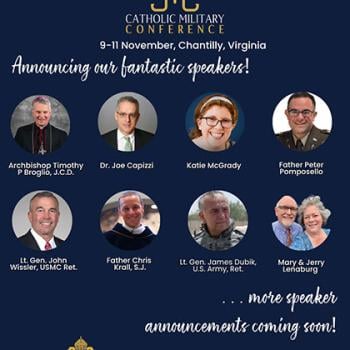
Roster of Speakers Lined Up for Catholic Military Conference

About Patton Dodd
Patton Dodd's writing on religion and culture has appeared in a wide range of publications, including Newsweek , Slate , the Financial Times , Christianity Today , Cineaste , Books & Culture , The Shambhala Sun , and The Revealer. Patton has also...
Patheos Explore the world's faith through different perspectives on religion and spirituality! Patheos has the views of the prevalent religions and spiritualities of the world.
Ad-Free & Subscriber Log-In Subscription Support
- About Us
- 2026 Calendar
- Videos
- Podcasts
- Library of World Religions
- Faith In Media Tracker
- Advertise With Us
- Write for Us
- Privacy Policy
- Terms of Service
- Do Not Sell My Data
- Contact Us
- Radiant Digital
- Manage Newsletter Subscriptions
- Unsubscribe From Notifications
- Sitemap
Copyright 2008-2026, Patheos. All rights reserved.
Subscription Support Ad-Free & Subscriber Log-In
Follow Patheos