
BuddhistCatholicContemplativeEvangelicalGeneral ChristianHinduJewishLatter-day SaintMuslimNew VisionsProgressive Christian
Beliefs
- Buddhist
- Catholic
- Contemplative
- Evangelical
- General Christian
- Hindu
- Jewish
- Latter-day Saint
- More Voices
- Muslim
- New Visions
- Pagan
- Progressive Christian
Topics
- Religion News
- Food and Religion
- Sports and Religion
- Religious Art
- Religious Music and Entertainment
- Religious Events
- History and Religion
- Style and Religion
- Politics and Religion
- Women in Religion
- Recreation Outdoors and Religion
- Business Finance and Religion
- Careers Workplace and Religion
- Education and Religion
- Family Parenting and Religion
- Health Fitness and Religion
- Home and Religion
- Relationships and Religion
- Technology and Religion
- Travel and Religion
Columnists
- Buddhist Columnists
- Business Finance and Religion Columnists
- Careers Workplace and Religion Columnists
- Catholic Columnists
- Contemplative Columnists
- Education and Religion Columnists
- Evangelists Columnists
- Family Parenting and Religion Columnists
- General Christian Columnists
- Health Fitness and Religion Columnists
- Hindu Columnists
- History and Religion Columnists
- Home and Religion Columnists
- Jewish Columnists
- More Voices Columnists
- Latter Day Columnists
- Muslim Columnists
- New Visions Columnists
- Nonreligious Columnists
- Pagan Columnists
- Politics and Religion Columnists
- Progressive Columnists
- Recreation Outdoors and Religion Columnists
- Relationships and Religion Columnists
- Religion News Columnists
- Religious Art Columnists
- Religious Events Columnists
- Religious Music and Entertainment Columnists
- Sports and Religion Columnists
- Style and Religion Columnists
- Technology and Religion Columnists
- Travel and Religion Columnists
- Women in Religion Columnists
Resource Library
- 2026 Calendar
- Library of World Religions
- The 100 Most Holy Places on Earth
- Patheos Answers
- Podcasts
- Videos
- Faith Leaders Database
- Anglican Episcopalian
- Bahai
- Baptist
- Buddhism
- Christianity
- Confucianism
- Eastern Orthodoxy
- Hinduism
- Holiness and Pentecostal
- ISKCON
- Islam
- Judaism
- Lutheran
- Methodist
- The Church of Jesus Christ of Latter-day Saints
- New Age
- Paganism
- Presbytarian and Reformed
- Protestantism
- Religion Behind the Scenes
- Roman Catholic
- Scientology
- Shia Islam
- Sikhism
- Sufism
- Sunni Islam
- Taoism
- Zen
- See all religions
Research Tools
 Ad-Free & Subscriber Log-In Subscription Support
Ad-Free & Subscriber Log-In Subscription Support
Follow Patheos 

- Trending:
- Forgiveness
- |
- Marriage
- |
- Consciousness
- |
- Death Penalty
- |
- Election
- |
- Halloween
Hindu
Caste-Aways: Hinduism and Social Discrimination
August 30, 2011 by Patton Dodd
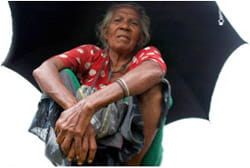 Swaminathan Venkataraman serves on the board of the Hindu American Foundation, which recently released a long-term study of caste-based discrimination in India. The report argues that so far from being a Hindu concept, caste discrimination is actually in direct conflict with Hindusim. Swami Venkataraman answered some questions about the scope of the report, the ongoing problem of caste-based discrimination, and resources within Hinduism for widespread social repair.
Many people are unfamiliar with caste and caste-based discrimination. What is caste, and how is it used in the Hindu world today?
Social stratification has been a reality in all societies throughout history. There have been a variety of factors which have determined one's placement within these often hierarchical divisions, including economic status, political power, and religious identity, but also birth-based hierarchies such as tribes/clans, race, ethnicity etc. Caste is the Indian system.
The word "caste" itself is of Portuguese origin and has no exact Indian equivalent. What exists is the dual concept of varna and jāti. The closest English term for varna is likely "class," but it is not a measure of material wealth, and was originally conceived as a metaphysical framework detailing four distinctive qualities which are manifest, to varying degrees, in all individuals—the scholar (brahmin), the king/administrator (kshatriya), the businessman (vaishya) and the professional/labourer (shudra). Jāti refers to the occupation-based, endogamous social units with which people are actually identified, and is closer in meaning to "caste."
The Vedas(Hinduism's central scriptures) occasionally mention varna in a ritual context, but almost never mention jātis. When popular media refers to caste, they use the four varna names. This isn't entirely incorrect in today's context, but varna was originally not birth-based and individuals and even entire jātis changed varnas in ancient India. Caste-based discrimination arose after society over the centuries ossified jātis and their affiliated varnas into a birth-based feature rather than one of aptitude. Still, this hierarchy was only sacerdotal, with political power and wealth notably not residing with the "highest" brahmin varna.
Over 2000 years after the composition of the Vedas, some jātis, now known as "untouchables," were condemned to a fifth category outside the four-fold varna structure. This was ostensibly because they performed tasks seen to be ritually impure, physically defiling, or involving violence, such as preparing and eating animal products. Many theories exist about who the untouchables are, and how they came to be regarded as such, but it is crucial to note that no Hindu text ever mentions this fifth category. In other words, "untouchability" is a purely social evil that has no sanction in the Hindu scriptural tradition.
Today, jāti and varna remain birth-based monikers, but any association these had with occupation has eroded with the advent of the modern education system. While discrimination still exists, it is complicated by economics and politics, and religion is not a prime driver. Democracy, access to education and government policies have produced a sea change in caste dynamics in India.
A lot of Westerners think of India as a place that is undergoing swift modernization and democratization. How can the caste system persist in such an environment?
The great irony of Indian politics is that its modern, secular, parliamentary democracy enhances, rather than diminishes, the importance of caste identity and affiliation. A central theme of modern Indian politics is the rise of the "lower" castes, including "untouchables," through a process of asserting their own interests and capturing political power by exploiting the numerical strength of their caste.
It is almost impossible to overstate the importance of caste identity politics while discussing caste in modern India, fueled as it is by the extensive system of state patronage implied by the Government of India's (GoI) policies of reserving a share of seats in educational institutions, legislatures, as well as government jobs, to erstwhile "backward" castes. This has lead to the bizarre situation where castes compete with one another in declaring themselves "more backward" than the other, and of politics conducted on the basis of the caste composition of the electorate.
Article Continued On Next Page
Page: 1 of 3
8/30/2011 4:00:00 AM
Hindu
Caste
Hindu American Foundation
Hinduism
more at patheos
1

Top of the Country: The Way I Am (Album)
2

What Does Tiqvâ Mean For Pete Hegseth & The SOH?
3
The Gospel of John: Entry to the Book of Glory
4
Native Americans, Musk Oxen, and More

About Patton Dodd
Patton Dodd's writing on religion and culture has appeared in a wide range of publications, including Newsweek , Slate , the Financial Times , Christianity Today , Cineaste , Books & Culture , The Shambhala Sun , and The Revealer. Patton has also...
Patheos Explore the world's faith through different perspectives on religion and spirituality! Patheos has the views of the prevalent religions and spiritualities of the world.
Ad-Free & Subscriber Log-In Subscription Support
- About Us
- 2026 Calendar
- Videos
- Podcasts
- Library of World Religions
- Faith In Media Tracker
- Advertise With Us
- Write for Us
- Privacy Policy
- Terms of Service
- Do Not Sell My Data
- Contact Us
- Radiant Digital
- Manage Newsletter Subscriptions
- Unsubscribe From Notifications
- Sitemap
Copyright 2008-2026, Patheos. All rights reserved.
Subscription Support Ad-Free & Subscriber Log-In
Follow Patheos