
BuddhistCatholicContemplativeEvangelicalGeneral ChristianHinduJewishLatter-day SaintMuslimNew VisionsProgressive Christian
Beliefs
- Buddhist
- Catholic
- Contemplative
- Evangelical
- General Christian
- Hindu
- Jewish
- Latter-day Saint
- More Voices
- Muslim
- New Visions
- Pagan
- Progressive Christian
Topics
- Religion News
- Food and Religion
- Sports and Religion
- Religious Art
- Religious Music and Entertainment
- Religious Events
- History and Religion
- Style and Religion
- Politics and Religion
- Women in Religion
- Recreation Outdoors and Religion
- Business Finance and Religion
- Careers Workplace and Religion
- Education and Religion
- Family Parenting and Religion
- Health Fitness and Religion
- Home and Religion
- Relationships and Religion
- Technology and Religion
- Travel and Religion
Columnists
- Buddhist Columnists
- Business Finance and Religion Columnists
- Careers Workplace and Religion Columnists
- Catholic Columnists
- Contemplative Columnists
- Education and Religion Columnists
- Evangelists Columnists
- Family Parenting and Religion Columnists
- General Christian Columnists
- Health Fitness and Religion Columnists
- Hindu Columnists
- History and Religion Columnists
- Home and Religion Columnists
- Jewish Columnists
- More Voices Columnists
- Latter Day Columnists
- Muslim Columnists
- New Visions Columnists
- Nonreligious Columnists
- Pagan Columnists
- Politics and Religion Columnists
- Progressive Columnists
- Recreation Outdoors and Religion Columnists
- Relationships and Religion Columnists
- Religion News Columnists
- Religious Art Columnists
- Religious Events Columnists
- Religious Music and Entertainment Columnists
- Sports and Religion Columnists
- Style and Religion Columnists
- Technology and Religion Columnists
- Travel and Religion Columnists
- Women in Religion Columnists
Resource Library
- 2026 Calendar
- Library of World Religions
- The 100 Most Holy Places on Earth
- Patheos Answers
- Podcasts
- Videos
- Faith Leaders Database
- Anglican Episcopalian
- Bahai
- Baptist
- Buddhism
- Christianity
- Confucianism
- Eastern Orthodoxy
- Hinduism
- Holiness and Pentecostal
- ISKCON
- Islam
- Judaism
- Lutheran
- Methodist
- The Church of Jesus Christ of Latter-day Saints
- New Age
- Paganism
- Presbytarian and Reformed
- Protestantism
- Religion Behind the Scenes
- Roman Catholic
- Scientology
- Shia Islam
- Sikhism
- Sufism
- Sunni Islam
- Taoism
- Zen
- See all religions
Research Tools
 Ad-Free & Subscriber Log-In Subscription Support
Ad-Free & Subscriber Log-In Subscription Support
Follow Patheos 

- Trending:
- Forgiveness
- |
- Marriage
- |
- Consciousness
- |
- Death Penalty
- |
- Election
- |
- Halloween
Pagan
Believe Everything
August 09, 2011 by Eric Scott
"Like" the Patheos Pagan Page on Facebook to receive today's best commentary on Pagan issues.
I am a book person.
I don't know how many books I own. As I mentioned in my last column, my home is covered with them. When I first moved into my own apartment, I owned no furniture except for a bed and a camp chair, but I had nine boxes full of books. Part of this can be blamed on my choice of being (alas) an English major; part of it can be blamed on my long-standing fear of public libraries, which has forced me to buy where others might have borrowed. But mostly, it's simply because I like books. I like to read them, to look at them, to touch them. I fear the day when I am finally forced to get an eReader.
I have done no surveys of other book people, but I suspect that, like me, most have their favorites, the books that sit at the core of their collections like the black hole at the center of the galaxy. Though we may read hundreds of other texts, somehow, we keep coming back to one, a book that informs all of the others. If one is a writer, that book provides both the highest hopes (I could do something as good as this!) and the darkest despair (I am never going to do anything nearly as good as this*.*) Perhaps it is not objectively the "best" book we have ever read, but if pressed, we would have to call it the most important.
For me, that book is Neil Gaiman's American Gods.
I was 16 when one of my uncles introduced the book to my family. I carried that book with me everywhere for a month, a trade paperback with a lightning bolt streaking across a green field on the cover. I read with anticipation as Shadow Moon, the story's protagonist ("hero" may be a bit much,) encountered the one-eyed man in the pale suit named Wednesday. I read as Shadow and Mr. Wednesday made their first trek across the highways of America, through St. Louis and Indiana and Chicago. I read as they were joined by the bitter old Russian called Czernobog and the feisty man with the West Indies patois named Mr. Nancy, and watched their descent into that phantasmagoria, that labyrinth, the House on the Rock. At the end of that chapter came the revelation, a sentence that burnt itself into my mind like a cattle brand:
Then the lights went out, and Shadow saw the gods.
I understood before then who these eccentric old men were before that line, of course: it would be hard for someone raised a pagan not to recognize Mr. Wednesday as Odin. But the book's universe shifts on that sentence. Shadow begins an unbeliever, and the first chapters reflect that state. There are plenty of things that might be magic, might be gods, but they could also just be coincidence. When the lights go out, there's no escaping the reality of myth. Mr. Wednesday is Odin—not someone who might be Odin, not someone who acts a lot like Odin, but is Odin.
Odin lives.
When I was 6 years old, I had a conversation with another boy about Jewish people. (We had been learning a Hannukah song for our choir's holiday carols.) I mentioned how they didn't celebrate Christmas because they weren't Christians. The boy frowned and shook his head. "That's not right," I remember him saying. "Everybody's Christian." He said it with the certainty of a child; this was not a generalization, but a fact. I've always been a little afraid that he's right. Maybe everybody's either Christian or a fool; maybe the old gods really were falsehoods.
Gaiman gave me a universe where the gods, my gods, were real, and not just in the remembered sense that many pagans still insist on today, where the only acceptable image of deity is in clothing and mannerism that fell out of fashion two thousand years ago. In American Gods, they still walked among us, a little threadbare, a little weary, but alive. Real.
American Gods has shaped the way I viewed my religion ever since. It's safe to say that the most of my great spiritual experiences would not have happened if I hadn't read this book.
I have read American Gods six times: that first whirlwind trek through it in my junior year of high school; two rereads during college; and three times in graduate school, where I taught the book to college sophomores as part of a class on American belief and identity. At this point, it's as close to me as a lover—the breathlessness of our first encounter has passed, replaced with a deeper appreciation brought on by our years together. The slightly expanded tenth anniversary edition has given me an excuse to read it again, and as I wind my way through the story for the seventh time, I still find the things that have always drawn me to it: the clever mythological references, the twists Gaiman puts on the gods, the frankness with which the novel addresses problems with the American psyche. It is not a perfect book—bored college students will reveal the flaws in your favorite novel like nothing else—but no other book has affected me like American Gods, and I doubt any ever will. Perhaps, as one of my best students said, "The prose is not up to the level of Faulkner," but it is the most important book in my life, as a reader, a writer, and absolutely as a pagan.
There is the piece of advice Shadow is given at the outset of his story, repeated many times throughout: Believe everything. Every time I read American Gods, I am reminded why I try my best.
8/9/2011 4:00:00 AM
Pagan
Family Traditions
American Gods
Paganism
more at patheos
1
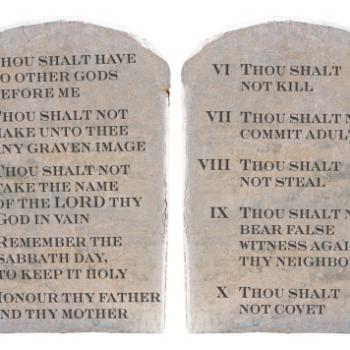
Family Estrangement Versus Honoring Father and Mother
2

Love Streams: What Film is For
3

Principles for Understanding the Apostolic Ministry Today
4
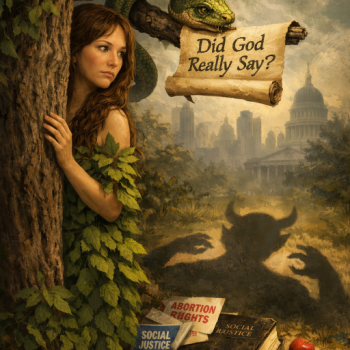
The Gospel According to Talarico: Moral Truth Reimagined

About Eric Scott
Eric Scott was raised in St. Louis by Coven Pleiades, a Wiccan group based in the Alexandrian tradition. His fiction and memoir explore the joys and doubts of being a second-generation Pagan in the modern world. He holds an MFA in Creative Writing from the University of Missouri. His work has appeared in or is forthcoming in Ashe! Journal, Kerouac's Dog Magazine, Caper Literary Journal, and Witches & Pagans. He is also a Contributing Editor at Killing the Buddha.
Patheos Explore the world's faith through different perspectives on religion and spirituality! Patheos has the views of the prevalent religions and spiritualities of the world.
Ad-Free & Subscriber Log-In Subscription Support
- About Us
- 2026 Calendar
- Videos
- Podcasts
- Library of World Religions
- Faith In Media Tracker
- Advertise With Us
- Write for Us
- Privacy Policy
- Terms of Service
- Do Not Sell My Data
- Contact Us
- Radiant Digital
- Manage Newsletter Subscriptions
- Unsubscribe From Notifications
- Sitemap
Copyright 2008-2026, Patheos. All rights reserved.
Subscription Support Ad-Free & Subscriber Log-In
Follow Patheos