
BuddhistCatholicContemplativeEvangelicalGeneral ChristianHinduJewishLatter-day SaintMuslimNew VisionsProgressive Christian
Beliefs
- Buddhist
- Catholic
- Contemplative
- Evangelical
- General Christian
- Hindu
- Jewish
- Latter-day Saint
- More Voices
- Muslim
- New Visions
- Pagan
- Progressive Christian
Topics
- Religion News
- Food and Religion
- Sports and Religion
- Religious Art
- Religious Music and Entertainment
- Religious Events
- History and Religion
- Style and Religion
- Politics and Religion
- Women in Religion
- Recreation Outdoors and Religion
- Business Finance and Religion
- Careers Workplace and Religion
- Education and Religion
- Family Parenting and Religion
- Health Fitness and Religion
- Home and Religion
- Relationships and Religion
- Technology and Religion
- Travel and Religion
Columnists
- Buddhist Columnists
- Business Finance and Religion Columnists
- Careers Workplace and Religion Columnists
- Catholic Columnists
- Contemplative Columnists
- Education and Religion Columnists
- Evangelists Columnists
- Family Parenting and Religion Columnists
- General Christian Columnists
- Health Fitness and Religion Columnists
- Hindu Columnists
- History and Religion Columnists
- Home and Religion Columnists
- Jewish Columnists
- More Voices Columnists
- Latter Day Columnists
- Muslim Columnists
- New Visions Columnists
- Nonreligious Columnists
- Pagan Columnists
- Politics and Religion Columnists
- Progressive Columnists
- Recreation Outdoors and Religion Columnists
- Relationships and Religion Columnists
- Religion News Columnists
- Religious Art Columnists
- Religious Events Columnists
- Religious Music and Entertainment Columnists
- Sports and Religion Columnists
- Style and Religion Columnists
- Technology and Religion Columnists
- Travel and Religion Columnists
- Women in Religion Columnists
Resource Library
- 2026 Calendar
- Library of World Religions
- The 100 Most Holy Places on Earth
- Patheos Answers
- Podcasts
- Videos
- Faith Leaders Database
- Anglican Episcopalian
- Bahai
- Baptist
- Buddhism
- Christianity
- Confucianism
- Eastern Orthodoxy
- Hinduism
- Holiness and Pentecostal
- ISKCON
- Islam
- Judaism
- Lutheran
- Methodist
- The Church of Jesus Christ of Latter-day Saints
- New Age
- Paganism
- Presbytarian and Reformed
- Protestantism
- Religion Behind the Scenes
- Roman Catholic
- Scientology
- Shia Islam
- Sikhism
- Sufism
- Sunni Islam
- Taoism
- Zen
- See all religions
Research Tools
 Ad-Free & Subscriber Log-In Subscription Support
Ad-Free & Subscriber Log-In Subscription Support
Follow Patheos 

- Trending:
- Forgiveness
- |
- Marriage
- |
- Consciousness
- |
- Death Penalty
- |
- Election
- |
- Halloween
Catholic
Searching for Meaning in Evil's Turbulent Wake
July 28, 2011 by Joseph Susanka
"Like" the Patheos Catholic Page on Facebook to receive today's best commentary on Catholic issues.
"Let us pray for the victims, for the wounded and for their loved ones. To all, I wish to repeat the urgent call to abandon the way of hate forever and to flee from the logic of evil."—Benedict XVI
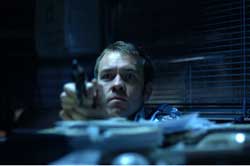 Many are struggling to find some measure of meaning in the shambles of last week's brutal attacks, described as the deadliest on Norwegian soil since World War II. Our desire to understand the motives behind such an incomprehensible deed is a natural human response; its presence in the aftermath of every mass killing and act of domestic terrorism points to the vital role it plays in a community's ability to cope with its collective grief. But can such acts ever be truly understood by those of us that remain behind? Is it possible to find meaning in the turbulent aftershocks of such inhumanity?
Noise, a decorated neo-noir veteran of Australia's 2007 art-house circuit, is a gritty, profanity-laden film about those very questions—a dark yet insightful story devoted to a tragedy's consequences. Eschewing the blood-drenched morbidity of so many of its "mass murderer" sister-films, Noise spends a surprisingly small amount of time on the catalyst crime at the heart of its story. With the exception of the film's opening minutes (and a few brief flashbacks) detailing the shooting deaths of seven passengers on a Melbourne commuter train, its attentions are focused almost entirely on Lavinia Smart --a young waitress inexplicably spared by the killer at the end of his murderous spree—and Constable Graham McGahan, tasked with manning the area's police information van.
Lavinia's relief at surviving the bloodbath is quickly replaced by fears that the killer will attempt to silence her. She struggles to come to terms with her baffling escape. Asked by a detective, "What aren't you telling us? Why do you think, after all this...seven people...why do you think he let you go?" the terrified girl responds with a mixture of antagonism and excruciating self-doubt: "Don't you think he should have?"
Meanwhile, Office McGahan, initially annoyed at being assigned to the van as a result of his tinnitus—a condition which provides the film with its name, as well as a number of intriguing allegorical opportunities—becomes the mystery's focal point through his interactions with the neighborhood's traumatized residents: Lucky Phil, the area's simpleton who may have seen far more than he lets on; Craig, a xenophobic hooligan and Dean, the guilt-ridden fiancé of a victim whose besotted grief leads the two men along an unexpectedly fruitful, prophetic examination of life and death.
The killer's disturbing attempts to locate Lavinia thrust McGahan out of his comfort zone, compelling him to make complicated and painful decisions in defense of his new-found friends. At last, he is forced to choose between his bland-but-safe life as a backwater cop and the perilous path to goodness and virtue that is gradually being laid out for him. And while the film's final ambiguous scenes refuse to abandon subtlety for the sake of a blunt (if gratifying) resolution, we see how indisputably McGahan and Lavinia have been touched and changed by their efforts to understand the violent tragedy of that night.
But have they actually understood it? Or is it simply the attempt at understanding that has proven so transformative?
St. Thomas Aquinas describes evil as a lack; a privation; an absence of the good. And at no time is the accuracy of his description more frustratingly obvious than when we are confronted with events such as those that took place in Utøya and Oslo last week. Yet the role that privation plays in our understanding (and in our ability to understand) seems to elude us even to this day.
While some of the particular narratives proposed within minutes of last week's terrible news were unhelpfully predictable—"Today's tragic events most likely tied to Islamic jihadism!" "News Flash! Anders Behring Breivik's murderous rampage latest example of the evils of Christian Crusaderism!" "Hindutva principles play key role in Norway shootings!"—the instinctive attempt to find a conclusive "Why?" for Breivik's monstrous actions is unsurprising. It is, I believe, a natural human response.
Article Continued On Next Page
Page: 1 of 2
7/28/2011 4:00:00 AM
Catholic
Through a Lens Darkly
Anders Breivik
Norway
Christianity
Roman Catholicism
more at patheos
1

2

The Kirtland Temple Passes Through You
3

The Apostle Paul Quoting His Opponents
4


About Joseph Susanka
Joseph Susanka has been doing development work for institutions of Catholic higher education since his graduation from Thomas Aquinas College in 1999. He blogs at Crisis Magazine, where he also contributes feature articles on a variety of topics.
Patheos Explore the world's faith through different perspectives on religion and spirituality! Patheos has the views of the prevalent religions and spiritualities of the world.
Ad-Free & Subscriber Log-In Subscription Support
- About Us
- 2026 Calendar
- Videos
- Podcasts
- Library of World Religions
- Faith In Media Tracker
- Advertise With Us
- Write for Us
- Privacy Policy
- Terms of Service
- Do Not Sell My Data
- Contact Us
- Radiant Digital
- Manage Newsletter Subscriptions
- Unsubscribe From Notifications
- Sitemap
Copyright 2008-2026, Patheos. All rights reserved.
Subscription Support Ad-Free & Subscriber Log-In
Follow Patheos