
BuddhistCatholicContemplativeEvangelicalGeneral ChristianHinduJewishLatter-day SaintMuslimNew VisionsProgressive Christian
Beliefs
- Buddhist
- Catholic
- Contemplative
- Evangelical
- General Christian
- Hindu
- Jewish
- Latter-day Saint
- More Voices
- Muslim
- New Visions
- Pagan
- Progressive Christian
Topics
- Religion News
- Food and Religion
- Sports and Religion
- Religious Art
- Religious Music and Entertainment
- Religious Events
- History and Religion
- Style and Religion
- Politics and Religion
- Women in Religion
- Recreation Outdoors and Religion
- Business Finance and Religion
- Careers Workplace and Religion
- Education and Religion
- Family Parenting and Religion
- Health Fitness and Religion
- Home and Religion
- Relationships and Religion
- Technology and Religion
- Travel and Religion
Columnists
- Buddhist Columnists
- Business Finance and Religion Columnists
- Careers Workplace and Religion Columnists
- Catholic Columnists
- Contemplative Columnists
- Education and Religion Columnists
- Evangelists Columnists
- Family Parenting and Religion Columnists
- General Christian Columnists
- Health Fitness and Religion Columnists
- Hindu Columnists
- History and Religion Columnists
- Home and Religion Columnists
- Jewish Columnists
- More Voices Columnists
- Latter Day Columnists
- Muslim Columnists
- New Visions Columnists
- Nonreligious Columnists
- Pagan Columnists
- Politics and Religion Columnists
- Progressive Columnists
- Recreation Outdoors and Religion Columnists
- Relationships and Religion Columnists
- Religion News Columnists
- Religious Art Columnists
- Religious Events Columnists
- Religious Music and Entertainment Columnists
- Sports and Religion Columnists
- Style and Religion Columnists
- Technology and Religion Columnists
- Travel and Religion Columnists
- Women in Religion Columnists
Resource Library
- 2026 Calendar
- Library of World Religions
- The 100 Most Holy Places on Earth
- Patheos Answers
- Podcasts
- Videos
- Faith Leaders Database
- Anglican Episcopalian
- Bahai
- Baptist
- Buddhism
- Christianity
- Confucianism
- Eastern Orthodoxy
- Hinduism
- Holiness and Pentecostal
- ISKCON
- Islam
- Judaism
- Lutheran
- Methodist
- The Church of Jesus Christ of Latter-day Saints
- New Age
- Paganism
- Presbytarian and Reformed
- Protestantism
- Religion Behind the Scenes
- Roman Catholic
- Scientology
- Shia Islam
- Sikhism
- Sufism
- Sunni Islam
- Taoism
- Zen
- See all religions
Research Tools
 Ad-Free & Subscriber Log-In Subscription Support
Follow Patheos 

- Trending:
- Advent
- |
- Forgiveness
- |
- Thanksgiving
- |
- Election
- |
- Seasonal Holidays
- |
- Marriage
Praying for Your Congregation
June 01, 2011 by Bruce Epperly
I thank my God every time I remember you, constantly praying with joy in every one of my prayers for all of you, because of your sharing in the gospel from the first day until now. I am confident of this, that the one who began a good work among you will bring it to completion by the day of Jesus Christ. ~ Paul to his congregation at Philippi (Phil. 1:3-6)
Preaching is a relational as well as intellectual and spiritual practice. The "word" must be made flesh in order to transform persons, congregations, and institutions. Like prayer, preaching is all about connection—translating the wisdom of God in ways that change people's lives. Good preaching creates a synergy joining God, the preacher, congregation, and individual congregants. Words make a difference and gain power when they are grounded in spiritual experience, that is, when the preacher walks the talk, and shares her or his encounters with God in ways that give meaning and inspiration to people's lives.
Prayer is also a relational practice. Recent scientific research, influenced by contemporary physics, suggests that our prayers exemplify "non-local causation" or "distant intentionality." Our prayers radiate across the universe, touching people we may never meet, shaping the lives of loved ones, and creating a positive field of force around those for whom we pray.
I believe that prayer creates a positive spiritual environment that enables God to be more active in the lives of those for whom we pray. Prayer doesn't force God's hand, nor does God violate the divinely-inspired laws of nature in answer to prayer. Prayer changes things—in the spirit of the concept of the "tipping point"—in such a way that new possibilities and energies for healing, wholeness, and justice emerge. Walter Wink once asserted that the future belongs to the intercessors. Our prayers help create, along with God's loving care, new healing possibilities for the world as a whole and individuals in particular. Without prayer, nothing great happens in a congregation's life or a pastor's ministry.
It seems obvious, then, that preachers should pray for their congregations and, most especially, the congregation at worship. Yet, not every pastor recognizes how important prayer can be in the transformation of the relationship of pastor and congregation, and in promoting congregational vitality. When we pray with expectation and hope, new possibilities emerge for both preacher and congregation.
Praying for your congregation also changes the preacher. Despite the imperfections of every congregation, prayer connects pastor and congregation in healing ways. While prayer is not a panacea, it helps break cycles of negativity and alienation. As one pastor asserted, "This has not been an easy congregation, but I've discovered that the more I pray for a congregation as a whole and for the ‘problem people' in my ministry, the more love I have for them, and the more resourceful I am in resolving problems." While not omnipotent in result, prayer changes the spiritual energy of a congregation and relationships within the congregation that often enables pastors and congregations to "let go" of grievances and be open to forgiveness, love, and healing.
Prayer opens us to new energies for faithful worship and action. Another pastor notes, "Our church was just going along, business as usual, without any vitality, and I was even bored with our worship, until I made a commitment to pray regularly for the congregation. I asked the church council and then the church as a whole to pray that God energize the church and give it a mission. Today, while we have not become a megachurch, we are growing spiritually and numerically, and in service to the community. Without prayer, this would have been a lackluster, shrinking congregation."
Prayer is an act of hopeful expectation. Hope is not denial, nor is prayer, but a faithful openness to deeper realities within challenging situations. Often liberal and moderate churches expect too little of God and too little of ourselves, and we get exactly what we expect. When we expect great things of God and ourselves in prayer and active partnerships, great things emerge through the deeper movements of cause and effect. The bumper stickers—"expect a miracle" and "accept a miracle"—remind us that we live in an energetic, lively, and surprising universe. As Christian healer Agnes Sanford affirmed, electricity is all around, we just need to plug into it for the light to shine, and so it is with prayer. This is not magic, nor supernaturalism, but an awakening to the energy of an adventurous God "in whom we live and move and have our being" (Acts 17:28).
In this spirit, I suggest the following practices for preachers and congregations:
- Make a pastoral commitment to pray for the well-being and vitality of your congregation.
- Make a pastoral commitment to pray for vital, spirit-centered worship. (By "spirit," I mean God's immanent, all-embracing, life-transforming, all-welcoming Holy Spirit.)
- Make a pastoral commitment to pray for "problem persons" as well as advocates: experience God's light surrounding them as you visualize them as God's beloved children.
- Change your professional self-talk from limitation and negativity to abundance and affirmation.
- Invite the congregation's leaders to commit themselves to five minutes of prayer for the congregation and its mission each day.
- Sponsor a series on prayer and spirituality, as complementary with social justice and concern. Help people find a theology of prayer that they can affirm and practices that fit their personality types, theology, and lifestyles.
- Consider starting a service of blessing and healing, grounded in hopeful expectation of God's presence within the "natural" processes of cause and effect.
- Invite the congregation to pray with expectation for God's movements in worship.
- Invite two or three people to focus prayerfully on the worship service—before and after—praying for the preacher, pastoral staff, and other participants, and for God's blessing of the day.
Article Continued On Next Page
Page: 1 of 2
6/1/2011 4:00:00 AM
Mainline Protestant
Preachers
Spiritual Practices for Preaching
Mainline Protestantism
Prayer
Preaching Resources
Christianity
more at patheos
1

2

Works of culture from age to age
3

The Suggestive Power of “Perhaps”
4

Hey, JD, Watch What You Say When You Talk About P Diddy
About Bruce Epperly
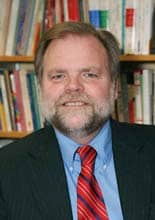
Bruce Epperly is a theologian, spiritual guide, pastor, and author of twenty one books, including Process Theology: A Guide for the Perplexed, Holy Adventure: 41 Days of Audacious Living, and The Center is Everywhere: Celtic Spirituality for the Postmodern Age. He may be reached at [email protected] for lectures, workshops, and retreats.
Patheos Explore the world's faith through different perspectives on religion and spirituality! Patheos has the views of the prevalent religions and spiritualities of the world.
Ad-Free & Subscriber Log-In Subscription Support
- About Us
- 2026 Calendar
- Videos
- Podcasts
- Library of World Religions
- Faith In Media Tracker
- Advertise With Us
- Write for Us
- Privacy Policy
- Terms of Service
- Do Not Sell My Data
- Contact Us
- Radiant Digital
- Manage Newsletter Subscriptions
- Unsubscribe From Notifications
- Sitemap
Copyright 2008-2026, Patheos, part of the Radiant Digital network of media brands. All rights reserved.
Subscription Support Ad-Free & Subscriber Log-In
Follow Patheos