
BuddhistCatholicContemplativeEvangelicalGeneral ChristianHinduJewishLatter-day SaintMuslimNew VisionsProgressive Christian
Beliefs
- Buddhist
- Catholic
- Contemplative
- Evangelical
- General Christian
- Hindu
- Jewish
- Latter-day Saint
- More Voices
- Muslim
- New Visions
- Pagan
- Progressive Christian
Topics
- Religion News
- Food and Religion
- Sports and Religion
- Religious Art
- Religious Music and Entertainment
- Religious Events
- History and Religion
- Style and Religion
- Politics and Religion
- Women in Religion
- Recreation Outdoors and Religion
- Business Finance and Religion
- Careers Workplace and Religion
- Education and Religion
- Family Parenting and Religion
- Health Fitness and Religion
- Home and Religion
- Relationships and Religion
- Technology and Religion
- Travel and Religion
Columnists
- Buddhist Columnists
- Business Finance and Religion Columnists
- Careers Workplace and Religion Columnists
- Catholic Columnists
- Contemplative Columnists
- Education and Religion Columnists
- Evangelists Columnists
- Family Parenting and Religion Columnists
- General Christian Columnists
- Health Fitness and Religion Columnists
- Hindu Columnists
- History and Religion Columnists
- Home and Religion Columnists
- Jewish Columnists
- More Voices Columnists
- Latter Day Columnists
- Muslim Columnists
- New Visions Columnists
- Nonreligious Columnists
- Pagan Columnists
- Politics and Religion Columnists
- Progressive Columnists
- Recreation Outdoors and Religion Columnists
- Relationships and Religion Columnists
- Religion News Columnists
- Religious Art Columnists
- Religious Events Columnists
- Religious Music and Entertainment Columnists
- Sports and Religion Columnists
- Style and Religion Columnists
- Technology and Religion Columnists
- Travel and Religion Columnists
- Women in Religion Columnists
Resource Library
- 2026 Calendar
- Library of World Religions
- The 100 Most Holy Places on Earth
- Patheos Answers
- Podcasts
- Videos
- Faith Leaders Database
- Anglican Episcopalian
- Bahai
- Baptist
- Buddhism
- Christianity
- Confucianism
- Eastern Orthodoxy
- Hinduism
- Holiness and Pentecostal
- ISKCON
- Islam
- Judaism
- Lutheran
- Methodist
- The Church of Jesus Christ of Latter-day Saints
- New Age
- Paganism
- Presbytarian and Reformed
- Protestantism
- Religion Behind the Scenes
- Roman Catholic
- Scientology
- Shia Islam
- Sikhism
- Sufism
- Sunni Islam
- Taoism
- Zen
- See all religions
Research Tools
 Ad-Free & Subscriber Log-In Subscription Support
Ad-Free & Subscriber Log-In Subscription Support
Follow Patheos 

- Trending:
- Forgiveness
- |
- Marriage
- |
- Consciousness
- |
- Death Penalty
- |
- Election
- |
- Halloween
Evangelical
Poet of the Descending Road: T. S. Eliot
June 19, 2011 by Daniel Harrell
"Like" the Patheos Evangelical Page on Facebook to receive today's best commentary on Evangelical issues.
Editor's Note: Below is a "Monday Sermon," from our series of sermons at the Patheos Preachers Portal that pastors can enjoy and learn from. It is our hope that this particular series from Daniel Harrell, which preaches through the Church Fathers, will encourage pastors, show them a way of approaching theological education from the pulpit, and refresh their theological memories. See Reverend Harrell's columnist page for more information.
There is much consternation amongst literati over the decline of literature appreciation. "Reading is at risk," wrote one news report, despite the proliferation of book clubs, bookstores, and Amazon.com. The knee jerk reaction is always to blame television and the internet. That reading is important goes without saying, I think—especially for Christians who are a people of the book and of the word. But why read fiction?
Actually, the distinction between fiction and non-fiction is misleading. It's not like the difference between truth and lies. Literature derives from as well as shapes essential human experience. Poetry can be particularly powerful. John F. Kennedy put it well: "When power leads man towards arrogance, poetry reminds him of his limitations. When power narrows the areas of man's concern, poetry reminds him of the richness and diversity of his existence. When power corrupts, poetry cleanses. For art establishes the basic human truth which must serve as the touchstone of our judgment." The chief power of poetry, argued novelist George Eliot, "lies in the force of imagination that pierces or exalts the solid fact . . ."
Of course the Bible is stocked full of poetic refrain; it is a genre of preference for expressing divine truth. But to be honest, poetry is hard to get our minds around. Who the heck knows what poets are talking about most of the time? Poetry demands an attentive engagement no other forms of writing require. Yet at the same time, ironically, good poetry invades your mind like no other writing can. Beyond the ticklish rhyme or song lyric you can't get out of your head, poetry has this way of sidestepping rationale and getting straight to the core of things. Poetry is language of the soul—impassioned, expressive, unconstrained, and yes, at times incomprehensible. Which is why poetry remains such a celebrated art form. "A poem," wrote Robert Frost, "begins as a lump in the throat, a sense of wrong, a homesickness, a lovesickness. . . . It finds the thought and the thought finds the words."
"Each [poetic] venture is a new beginning, a raid on the inarticulate with shabby equipment, always deteriorating in the general mess of imprecision of feeling, undisciplined squads of emotion." That was T.S. Eliot's take. While not a church father (by a long stretch), Eliot did make Christianity Today's list of 131 Christians Everyone Should Know. That should count for something.
Winner of the 1948 Nobel Prize for Literature as well as the British Order of Merit, Eliot is most famously known for his ruminations on cats, popularized in the eighteen-year-long Broadway hit musical Cats. Written for children, Eliot's Old Possum's Book of Practical Cats begins with this on the naming of cats:
The Naming of Cats is a difficult matter,
It isn't just one of your holiday games;
You may think at first I'm as mad as a hatter
When I tell you, a cat must have THREE DIFFERENT NAMES.
First of all, there's the name that the family use daily,
Such as Peter, Augustus, Alonzo or James,
Such as Victor or Jonathan, George or Bill Bailey—
All of them sensible everyday names.
There are fancier names if you think they sound sweeter,
Some for the gentlemen, some for the dames:
Such as Plato, Admetus, Electra, Demeter—
But all of them sensible everyday names.
But I tell you, a cat needs a name that's particular,
A name that's peculiar, and more dignified,
Else how can he keep up his tail perpendicular,
Or spread out his whiskers, or cherish his pride?
Of names of this kind, I can give you a quorum,
Such as Munkustrap, Quaxo, or Coricopat,
Such as Bombalurina, or else Jellylorum—
Names that never belong to more than one cat.
But above and beyond there's still one name left over,
And that is the name that you never will guess;
The name that no human research can discover—
But THE CAT HIMSELF KNOWS, and will never confess.
When you notice a cat in profound meditation,
The reason, I tell you, is always the same:
His mind is engaged in a rapt contemplation
Of the thought, of the thought, of the thought of his name:
His ineffable effable, Effanineffable
Deep and inscrutable singular Name.
Article Continued On Next Page
Page: 1 of 3
6/19/2011 4:00:00 AM
Evangelical
Preachers
The Church Fathers ABCs
History
literature
Preaching Resources
Poetry
Sacred Texts
T.S. Eliot
Christianity
Evangelicalism
more at patheos
1

The Gospel of John: The New Torah, Part III
2
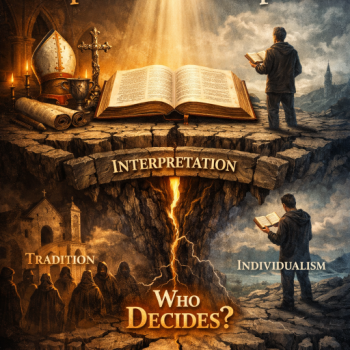
Sola or Nuda? Testing the Reformation’s Claim of Authority
3

Cultivating Communities of Intention
4

Owning Things Without Being Owned: The 100 Thing Challenge
About Daniel Harrell
Daniel M. Harrell is Senior Minister of The Colonial Church, Edina, MN and author of How To Be Perfect: One Church's Audacious Experiment in Living the Old Testament Book of Leviticus (FaithWords, 2011). Follow him via Twitter, Facebook, or at his blog and website.
Patheos Explore the world's faith through different perspectives on religion and spirituality! Patheos has the views of the prevalent religions and spiritualities of the world.
Ad-Free & Subscriber Log-In Subscription Support
- About Us
- 2026 Calendar
- Videos
- Podcasts
- Library of World Religions
- Faith In Media Tracker
- Advertise With Us
- Write for Us
- Privacy Policy
- Terms of Service
- Do Not Sell My Data
- Contact Us
- Radiant Digital
- Manage Newsletter Subscriptions
- Unsubscribe From Notifications
- Sitemap
Copyright 2008-2026, Patheos. All rights reserved.
Subscription Support Ad-Free & Subscriber Log-In
Follow Patheos