
BuddhistCatholicContemplativeEvangelicalGeneral ChristianHinduJewishLatter-day SaintMuslimNew VisionsProgressive Christian
Beliefs
- Buddhist
- Catholic
- Contemplative
- Evangelical
- General Christian
- Hindu
- Jewish
- Latter-day Saint
- More Voices
- Muslim
- New Visions
- Pagan
- Progressive Christian
Topics
- Religion News
- Food and Religion
- Sports and Religion
- Religious Art
- Religious Music and Entertainment
- Religious Events
- History and Religion
- Style and Religion
- Politics and Religion
- Women in Religion
- Recreation Outdoors and Religion
- Business Finance and Religion
- Careers Workplace and Religion
- Education and Religion
- Family Parenting and Religion
- Health Fitness and Religion
- Home and Religion
- Relationships and Religion
- Technology and Religion
- Travel and Religion
Columnists
- Buddhist Columnists
- Business Finance and Religion Columnists
- Careers Workplace and Religion Columnists
- Catholic Columnists
- Contemplative Columnists
- Education and Religion Columnists
- Evangelists Columnists
- Family Parenting and Religion Columnists
- General Christian Columnists
- Health Fitness and Religion Columnists
- Hindu Columnists
- History and Religion Columnists
- Home and Religion Columnists
- Jewish Columnists
- More Voices Columnists
- Latter Day Columnists
- Muslim Columnists
- New Visions Columnists
- Nonreligious Columnists
- Pagan Columnists
- Politics and Religion Columnists
- Progressive Columnists
- Recreation Outdoors and Religion Columnists
- Relationships and Religion Columnists
- Religion News Columnists
- Religious Art Columnists
- Religious Events Columnists
- Religious Music and Entertainment Columnists
- Sports and Religion Columnists
- Style and Religion Columnists
- Technology and Religion Columnists
- Travel and Religion Columnists
- Women in Religion Columnists
Resource Library
- 2026 Calendar
- Library of World Religions
- The 100 Most Holy Places on Earth
- Patheos Answers
- Podcasts
- Videos
- Faith Leaders Database
- Anglican Episcopalian
- Bahai
- Baptist
- Buddhism
- Christianity
- Confucianism
- Eastern Orthodoxy
- Hinduism
- Holiness and Pentecostal
- ISKCON
- Islam
- Judaism
- Lutheran
- Methodist
- The Church of Jesus Christ of Latter-day Saints
- New Age
- Paganism
- Presbytarian and Reformed
- Protestantism
- Religion Behind the Scenes
- Roman Catholic
- Scientology
- Shia Islam
- Sikhism
- Sufism
- Sunni Islam
- Taoism
- Zen
- See all religions
Research Tools
 Ad-Free & Subscriber Log-In Subscription Support
Follow Patheos 

- Trending:
- Advent
- |
- Forgiveness
- |
- Thanksgiving
- |
- Election
- |
- Seasonal Holidays
- |
- Marriage
Evangelical
No Power? No Problem: Reflections on Evangelicals and Influence
June 28, 2011 by Kyle Roberts
In the midst of this mainly gloomy picture of the Church lies a hopeful point: it is precisely because of its guilt, its transience, its negative instrumentality that the church plays a central role in God's economy of revelation, salvation, and reconciliation in the world. The way forward is to give obedient witness to the paradoxical reality of God's grace as manifest in the life, death, and resurrection of Christ.
It is not for us in the North to surmise what Christians in the Global South should make of the optimism of their leaders toward the future of their evangelical movements and their influence in society. But here in the United States, perhaps we should embrace the apparent impending decline in social influence as an opportunity to follow Jesus to the margins of society. Furthermore, perhaps we should embrace an increasing diversity within evangelicalism itself as a fruitful development toward serving a complex, variegated world.
North America sits at the center of a shift from modernism to postmodernism to whatever comes after that (if that hasn't already come). Ours is a world shot through with plurality and difference, fragmentation and fissure, indeterminacy and openness. How can we speak the gospel into a world bereft of unity, stability, meaning, and hope? Only through the posture of witness and "faithful presence," a presence that is self-consciously fragile enough to engage the world without breaking it further. We are pots of clay. We are witnesses to the Gospel of grace.
That's all.
The Church is vastly bigger than evangelicalism. And the kingdom of God is bigger than the Church. This means that any decline in evangelicalism's power and influence does not signal the end of God's work. But it may be that through recognition of our declining influence and by the practice of witness we can find God at work in us and through us in greater ways than we could have imagined.
Page: 2 of 2
6/28/2011 4:00:00 AM
Evangelical
Theological Provocations
Culture
politics
Christianity
Evangelicalism
more at patheos
1

Persevering In Obedience By Yielding To God's Plan
2

The Lindsay Clancy Trial Has Become Legion—And That's Not Ok
3

4
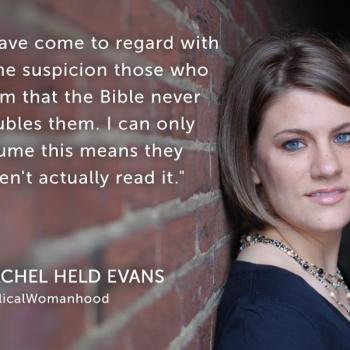
Why Rachel Held Evans Still Reads Like a Prophet

About Kyle Roberts
Kyle Roberts is Assistant Professor of Systematic Theology and Lead Faculty of Christian Thought, Bethel Seminary (St. Paul, MN). He researches and writes on issues related to the intersection of theology, philosophy, and culture. Follow Kyle Roberts' reflections on faith and culture at his blog or via Twitter.
Patheos Explore the world's faith through different perspectives on religion and spirituality! Patheos has the views of the prevalent religions and spiritualities of the world.
Ad-Free & Subscriber Log-In Subscription Support
- About Us
- 2026 Calendar
- Videos
- Podcasts
- Library of World Religions
- Faith In Media Tracker
- Advertise With Us
- Write for Us
- Privacy Policy
- Terms of Service
- Do Not Sell My Data
- Contact Us
- Radiant Digital
- Manage Newsletter Subscriptions
- Unsubscribe From Notifications
- Sitemap
Copyright 2008-2026, Patheos, part of the Radiant Digital network of media brands. All rights reserved.
Subscription Support Ad-Free & Subscriber Log-In
Follow Patheos