
BuddhistCatholicContemplativeEvangelicalGeneral ChristianHinduJewishLatter-day SaintMuslimNew VisionsProgressive Christian
Beliefs
- Buddhist
- Catholic
- Contemplative
- Evangelical
- General Christian
- Hindu
- Jewish
- Latter-day Saint
- More Voices
- Muslim
- New Visions
- Pagan
- Progressive Christian
Topics
- Religion News
- Food and Religion
- Sports and Religion
- Religious Art
- Religious Music and Entertainment
- Religious Events
- History and Religion
- Style and Religion
- Politics and Religion
- Women in Religion
- Recreation Outdoors and Religion
- Business Finance and Religion
- Careers Workplace and Religion
- Education and Religion
- Family Parenting and Religion
- Health Fitness and Religion
- Home and Religion
- Relationships and Religion
- Technology and Religion
- Travel and Religion
Columnists
- Buddhist Columnists
- Business Finance and Religion Columnists
- Careers Workplace and Religion Columnists
- Catholic Columnists
- Contemplative Columnists
- Education and Religion Columnists
- Evangelists Columnists
- Family Parenting and Religion Columnists
- General Christian Columnists
- Health Fitness and Religion Columnists
- Hindu Columnists
- History and Religion Columnists
- Home and Religion Columnists
- Jewish Columnists
- More Voices Columnists
- Latter Day Columnists
- Muslim Columnists
- New Visions Columnists
- Nonreligious Columnists
- Pagan Columnists
- Politics and Religion Columnists
- Progressive Columnists
- Recreation Outdoors and Religion Columnists
- Relationships and Religion Columnists
- Religion News Columnists
- Religious Art Columnists
- Religious Events Columnists
- Religious Music and Entertainment Columnists
- Sports and Religion Columnists
- Style and Religion Columnists
- Technology and Religion Columnists
- Travel and Religion Columnists
- Women in Religion Columnists
Resource Library
- 2026 Calendar
- Library of World Religions
- The 100 Most Holy Places on Earth
- Patheos Answers
- Podcasts
- Videos
- Faith Leaders Database
- Anglican Episcopalian
- Bahai
- Baptist
- Buddhism
- Christianity
- Confucianism
- Eastern Orthodoxy
- Hinduism
- Holiness and Pentecostal
- ISKCON
- Islam
- Judaism
- Lutheran
- Methodist
- The Church of Jesus Christ of Latter-day Saints
- New Age
- Paganism
- Presbytarian and Reformed
- Protestantism
- Religion Behind the Scenes
- Roman Catholic
- Scientology
- Shia Islam
- Sikhism
- Sufism
- Sunni Islam
- Taoism
- Zen
- See all religions
Research Tools
 Ad-Free & Subscriber Log-In Subscription Support
Follow Patheos 

- Trending:
- Advent
- |
- Forgiveness
- |
- Thanksgiving
- |
- Election
- |
- Seasonal Holidays
- |
- Marriage
Mystical and Missional: A Spirit-Inspired Pentecost
June 07, 2011 by Bruce Epperly
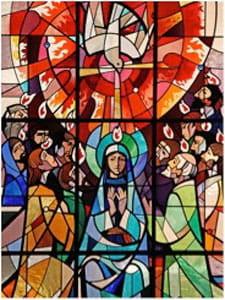 Like the Ascension celebrated last Sunday, Pentecost is an uncomfortable holy day for many moderate and progressive Christians. Even if we wear the traditional red on Pentecost, we don't really anticipate tongues of fire and rushing winds in our sanctuaries, nor do we expect emotional displays or ecstatic experiences in our worship. While our theology is often lively and liberating, our services are fairly predictable, confined by time, space, and custom. Indeed, despite our postmodern proclamations, we are still children of the Enlightenment, more comfortable with control than spontaneity in worship.
Moreover, we identify the ecstatic gifts of the spirit, and especially speaking in tongues, with Pentecostal Christians whose fervor seldom liberates them from fundamentalism, sexism, homophobia, and narrowly-defined understandings of salvation. While it is possible to be progressive and Pentecostal, and for that matter be a Pentecostal universalist, we seldom encounter such free and ecstatic spirits in our communities of faith and denominational gatherings.
And yet . . . a recent Pew Center Report notes that 50 percent of mainstream Protestants claim to have had mystical or self-transcendent experiences. While 75 percent of our evangelical brothers and sisters claim mystical experiences, perhaps due to their emphasis on a personal relationship with Jesus, this study points out that the person right next to you in church may be a mystic! You may be a mystic yourself! Yet moderate and progressive Christians tend to focus more on action than contemplation and social change than ecstatic transformation. I'd like to suggest that Pentecost reminds us—invites us—as progressive and moderate Christians to embrace a holistic spirit-centered faith that leads to life-transforming actions.
Pentecost is about the intersection of mysticism and mission. In the Acts 2 narrative, the disciples—I suspect both women and men—experienced heat, light, and wind, and were driven out into the street to share the good news of the Risen and Saving Christ. Their missional venture led to a mass mystical experience. The disciples spoke in "other tongues" and Passover visitors heard the good news of healing and salvation each in their own tongue. Mysticism was involved in both giving and receiving on that Pentecost day.
Ecstatic from their encounter with the Spirit, Peter and his followers proclaim a democracy of revelation that includes old and young, male and female, and slave and free. God's Spirit transcends human-made boundaries. Poured out on all flesh, God can be experienced in dreams, visions, prophetic words, and preaching. In fact, there is no absolute vehicle for divine communication. God comes to all and through all modalities. Further, a democracy of revelation eventually leads to an ethic of equality, stretching the early church beyond its Jewish roots. If you can experience God's Spirit, then you deserve to be treated as a child of God with full-fledged status as a sister or brother in the faith.
Spirit-centered faith led to a community that joined generosity, study, worship, and service. In the wake of Pentecost, a community of joyful sharing was born. Freed from possessiveness, the early Christian movement insured that everyone had enough food, clothing, and medical care.
This vision still inspires our quest for community and social transformation, as well as for institutions—including the government—that serve the vulnerable, aging, and youthful.
This year, what can we hope for at Pentecost? We can be open to surprise and wonder. We can let go of predictability and open the doors to new ways of encountering the Holy. We can experience the winds of the Spirit that transform persons and communities. We can set sail with the winds of the Spirit at our back, ready to embark on adventures of spiritual growth and social healing.
6/7/2011 4:00:00 AM
Mainline Protestant
Progressive Christian
Holiday
Mysticism
Pentecost
Sacred Texts
Christianity
more at patheos
1
Trump's Gaza Reconstruction Plan Is on Track
2

Spirit Advocate and Social Injustice
3

Breakthrough Those Painful Family Dynamics By Forgiving
4
God’s Love, Covenant, and Mission in Scripture

About Bruce Epperly
Bruce Epperly is a theologian, spiritual guide, pastor, and author of twenty one books, including Process Theology: A Guide for the Perplexed, Holy Adventure: 41 Days of Audacious Living, and The Center is Everywhere: Celtic Spirituality for the Postmodern Age. He may be reached at [email protected] for lectures, workshops, and retreats.
Patheos Explore the world's faith through different perspectives on religion and spirituality! Patheos has the views of the prevalent religions and spiritualities of the world.
Ad-Free & Subscriber Log-In Subscription Support
- About Us
- 2026 Calendar
- Videos
- Podcasts
- Library of World Religions
- Faith In Media Tracker
- Advertise With Us
- Write for Us
- Privacy Policy
- Terms of Service
- Do Not Sell My Data
- Contact Us
- Radiant Digital
- Manage Newsletter Subscriptions
- Unsubscribe From Notifications
- Sitemap
Copyright 2008-2026, Patheos, part of the Radiant Digital network of media brands. All rights reserved.
Subscription Support Ad-Free & Subscriber Log-In
Follow Patheos