
BuddhistCatholicContemplativeEvangelicalGeneral ChristianHinduJewishLatter-day SaintMuslimNew VisionsProgressive Christian
Beliefs
- Buddhist
- Catholic
- Contemplative
- Evangelical
- General Christian
- Hindu
- Jewish
- Latter-day Saint
- More Voices
- Muslim
- New Visions
- Pagan
- Progressive Christian
Topics
- Religion News
- Food and Religion
- Sports and Religion
- Religious Art
- Religious Music and Entertainment
- Religious Events
- History and Religion
- Style and Religion
- Politics and Religion
- Women in Religion
- Recreation Outdoors and Religion
- Business Finance and Religion
- Careers Workplace and Religion
- Education and Religion
- Family Parenting and Religion
- Health Fitness and Religion
- Home and Religion
- Relationships and Religion
- Technology and Religion
- Travel and Religion
Columnists
- Buddhist Columnists
- Business Finance and Religion Columnists
- Careers Workplace and Religion Columnists
- Catholic Columnists
- Contemplative Columnists
- Education and Religion Columnists
- Evangelists Columnists
- Family Parenting and Religion Columnists
- General Christian Columnists
- Health Fitness and Religion Columnists
- Hindu Columnists
- History and Religion Columnists
- Home and Religion Columnists
- Jewish Columnists
- More Voices Columnists
- Latter Day Columnists
- Muslim Columnists
- New Visions Columnists
- Nonreligious Columnists
- Pagan Columnists
- Politics and Religion Columnists
- Progressive Columnists
- Recreation Outdoors and Religion Columnists
- Relationships and Religion Columnists
- Religion News Columnists
- Religious Art Columnists
- Religious Events Columnists
- Religious Music and Entertainment Columnists
- Sports and Religion Columnists
- Style and Religion Columnists
- Technology and Religion Columnists
- Travel and Religion Columnists
- Women in Religion Columnists
Resource Library
- 2026 Calendar
- Library of World Religions
- The 100 Most Holy Places on Earth
- Patheos Answers
- Podcasts
- Videos
- Faith Leaders Database
- Anglican Episcopalian
- Bahai
- Baptist
- Buddhism
- Christianity
- Confucianism
- Eastern Orthodoxy
- Hinduism
- Holiness and Pentecostal
- ISKCON
- Islam
- Judaism
- Lutheran
- Methodist
- The Church of Jesus Christ of Latter-day Saints
- New Age
- Paganism
- Presbytarian and Reformed
- Protestantism
- Religion Behind the Scenes
- Roman Catholic
- Scientology
- Shia Islam
- Sikhism
- Sufism
- Sunni Islam
- Taoism
- Zen
- See all religions
Research Tools
 Ad-Free & Subscriber Log-In Subscription Support
Ad-Free & Subscriber Log-In Subscription Support
Follow Patheos 

- Trending:
- Forgiveness
- |
- Marriage
- |
- Consciousness
- |
- Death Penalty
- |
- Election
- |
- Halloween
Jewish
Miriam, the Red Heifer
June 28, 2011 by Anna Batler
Three very different deaths anchor the Chukatt portion: the deaths of Miriam and Aaron (Moses' sister and brother) and the ritual burning of the red heifer.
Chukatt opens with the ritual of sprinkling the red heifer's ashes. The ashes must come from a flawless, red, female cow. Her ashes are sprinkled on a person made impure by contact with a dead body, whom would otherwise be prohibited from bringing sacrifices at the holy Tent of Meeting. Through the death of the red heifer, the impure is rendered pure; however, the priest who handles the ashes is rendered impure. It is as if purity is transferred through this perfect cow, killed and burned for us (Num. 19:1-10).
The burning of the red heifer is a chuk, a law with no apparent or discernable purpose. Even King Solomon, known for his wisdom, could not discern the purpose of sprinkling her ashes. The Midrash quotes King Solomon saying: "I have labored to understand the word of God and have understood it all, except the ritual of the red-brown cow" (Numbers Rabbah 19:3). The strangeness of this ritual gives voice to the strangeness with which we experience the death of a human and of a cow.
Death has been a constant presence in the desert—plague after plague, punishment after punishment; death after the golden calf, death after the sin of the spies, death after Korach's rebellion, and the death of the Wood Gatherer. Finally, here we stop to reflect on death; on the occasions of Aaron's and Miriam's deaths we mourn those who perished in the desert. Aaron dies after Miriam. His death is expressly mourned in the text. His is an orderly death.
Moses did as God commanded, and they ascended Mount Hor before the eyes of the entire assembly. Moses stripped Aaron's garments from him and dressed Elazar his son in them; then Aaron died there on the top of the mountain, and Moses and Elazar descended from the Mountain. When the entire assembled saw that Aaron had perished; they wept for Aaron for thirty days, the entire house of Israel (Num. 20:27-29).
There is no mention of an afterlife here or anywhere else in the Torah's text; Aaron's eternal life resides in the everlasting priesthood. That which defined him, his priestly garments, are removed from his body and put on his eldest son. There is an orderly transmission from one generation to the next. Aaron dies seeing his son standing in his place. There is surely great peace in that.
However, Miriam's death receives only a single sentence in the text. After the people arrive in the Zin Desert, we are told that "Miriam died there and she was buried there" (Num. 20:1). The text is silent as to who will carry her memory forward; does she have children who will wear her garments in her stead?
In the two stories that expressly speak of Miriam, she is seeking power for herself. At the splitting of the sea, she acts in a manner parallel to Moses. Miriam sings with the women as Moses sings with the men (Ex. 15:21). Later, Miriam is exiled with leprosy because she compares herself to Moses once again, claiming for herself the title of a prophet like Moses (Num. 12:3). Did Miriam, the woman who believed herself to be the equal of a man, die alone?
The Midrash responds to the problem of Miriam's lonely death by writing for her a family. She is a mother, married to Caleb, the good spy who did not speak negatively of Israel, with a sister-wife, Batyah, Pharaoh's daughter who saved baby Moses from the Nile (Steinmetz, "A Portrait of Miriam in Rabbinic Midrash"). In providing Miriam with an extraordinary family, the Midrash gives Miriam a peaceful resting place in our tradition, as a mother and a wife in Israel.
However, in the Torah, there is no peaceful rest for Miriam. She is forgotten by the text and the people, but mourned by God. After her death, the Israelites' water well dries up. When her life stops, so does the source of life. From the juxtaposition of Miriam's death and the drying of the well, the Talmud learns that this well existed because of Miriam's merits; it was her well (Tractite Sukkah 3:11). To restart it, God commands Moses and Aaron to speak to Miriam's well, but instead they hit the well and are punished with an early death in the desert.
Does the violence forced upon her well echo the violence forced upon her identity? Was Miriam required to toe the line of womanhood, even as she prophesied for a God who has no gender? Are Aaron and Moses punished for causing violence to Miriam's well and to her identity? Is God saying to Aaron and Moses, "She died in the desert and you dare to think that you will not perish here too? You are no greater then she was."
Her end was not peaceful, but neither was it quiet. Today, I return to Miriam's proverbial ashes to exhume a feminist voice in our tradition even when, like the purpose of the red heifer, it is not discernable or apparent.
6/28/2011 4:00:00 AM
Jewish
The Girl and the Drash
Feminism
gender
History
Midrash
Sacred Texts
Women
Judaism
more at patheos
1

When Christians Won't Let You Outlive Your Past
2

To be Catholic is to be Yourself
3
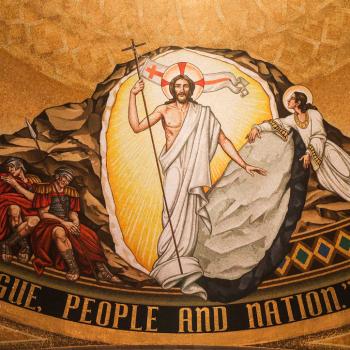
Reflections For Paschaltide 2026: Introduction
4

Bo French Doesn’t Understand Texas

About Anna Batler
Anna Batler is a writer and an attorney based out of Washington, D.C. She writes about faith, feminism, spirituality, and religious identity at Sotah.net. She also writes a weekly feminist Bible commentary at GatherTheJews.com.
Patheos Explore the world's faith through different perspectives on religion and spirituality! Patheos has the views of the prevalent religions and spiritualities of the world.
Ad-Free & Subscriber Log-In Subscription Support
- About Us
- 2026 Calendar
- Videos
- Podcasts
- Library of World Religions
- Faith In Media Tracker
- Advertise With Us
- Write for Us
- Privacy Policy
- Terms of Service
- Do Not Sell My Data
- Contact Us
- Radiant Digital
- Manage Newsletter Subscriptions
- Unsubscribe From Notifications
- Sitemap
Copyright 2008-2026, Patheos. All rights reserved.
Subscription Support Ad-Free & Subscriber Log-In
Follow Patheos