
BuddhistCatholicContemplativeEvangelicalGeneral ChristianHinduJewishLatter-day SaintMuslimNew VisionsProgressive Christian
Beliefs
- Buddhist
- Catholic
- Contemplative
- Evangelical
- General Christian
- Hindu
- Jewish
- Latter-day Saint
- More Voices
- Muslim
- New Visions
- Pagan
- Progressive Christian
Topics
- Religion News
- Food and Religion
- Sports and Religion
- Religious Art
- Religious Music and Entertainment
- Religious Events
- History and Religion
- Style and Religion
- Politics and Religion
- Women in Religion
- Recreation Outdoors and Religion
- Business Finance and Religion
- Careers Workplace and Religion
- Education and Religion
- Family Parenting and Religion
- Health Fitness and Religion
- Home and Religion
- Relationships and Religion
- Technology and Religion
- Travel and Religion
Columnists
- Buddhist Columnists
- Business Finance and Religion Columnists
- Careers Workplace and Religion Columnists
- Catholic Columnists
- Contemplative Columnists
- Education and Religion Columnists
- Evangelists Columnists
- Family Parenting and Religion Columnists
- General Christian Columnists
- Health Fitness and Religion Columnists
- Hindu Columnists
- History and Religion Columnists
- Home and Religion Columnists
- Jewish Columnists
- More Voices Columnists
- Latter Day Columnists
- Muslim Columnists
- New Visions Columnists
- Nonreligious Columnists
- Pagan Columnists
- Politics and Religion Columnists
- Progressive Columnists
- Recreation Outdoors and Religion Columnists
- Relationships and Religion Columnists
- Religion News Columnists
- Religious Art Columnists
- Religious Events Columnists
- Religious Music and Entertainment Columnists
- Sports and Religion Columnists
- Style and Religion Columnists
- Technology and Religion Columnists
- Travel and Religion Columnists
- Women in Religion Columnists
Resource Library
- 2026 Calendar
- Library of World Religions
- The 100 Most Holy Places on Earth
- Patheos Answers
- Podcasts
- Videos
- Faith Leaders Database
- Anglican Episcopalian
- Bahai
- Baptist
- Buddhism
- Christianity
- Confucianism
- Eastern Orthodoxy
- Hinduism
- Holiness and Pentecostal
- ISKCON
- Islam
- Judaism
- Lutheran
- Methodist
- The Church of Jesus Christ of Latter-day Saints
- New Age
- Paganism
- Presbytarian and Reformed
- Protestantism
- Religion Behind the Scenes
- Roman Catholic
- Scientology
- Shia Islam
- Sikhism
- Sufism
- Sunni Islam
- Taoism
- Zen
- See all religions
Research Tools
 Ad-Free & Subscriber Log-In Subscription Support
Ad-Free & Subscriber Log-In Subscription Support
Follow Patheos 

- Trending:
- Forgiveness
- |
- Marriage
- |
- Consciousness
- |
- Death Penalty
- |
- Election
- |
- Halloween
Catholic
The Writing on the Wall
May 31, 2011 by Greg Kandra
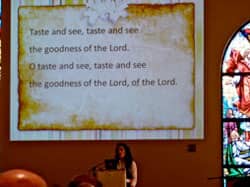 I have seen the writing on the wall. And I'm not impressed.
A couple of Sundays ago, I found myself at a sparkling, sprawling parish in central Florida, in a church nave surrounded by stained glass and leafy palms and cheerful greetings between families. About three dozen children were receiving their First Communion. The place was buzzing with energy and activity. It was packed with, I'd guess, close to a thousand people (including a couple dozen in the adjoining crying rooms).
But what struck me most of all was something I'd never seen in a Catholic church before. Once mass began, a big blank wall was transformed into a flat, giant hymnal, where someone projected the verses to the hymns. No need to go searching through the missal for the page numbers, or the song numbers. Just look up, and to one side, and follow along with the words on the wall.
I posted something about this on my Facebook page the day it happened, and was surprised to learn that this practice is increasingly common in Catholic parishes. A lot of places are doing it. And people seem generally to like it. The defenders say that it gets people to lift their heads out of the hymnals and sing. It focuses attention. It raises eyes, and voices. It pulls the congregation together.
Okay. But I have to say this: the experience, no matter what its intent, left me cold.
Call me old-fashioned. I like opening a book to read the words. I like the feel of it, the smell of it, the weight of it. I like the cracked, worn sensation of a missal that's been held in hundreds of hands, shared by people I may or may not know—people praying for intentions I cannot imagine, smudging the pages with their thumbs or turning over a corner to mark a place they feel an urge to revisit. I imagine a husband and wife sharing a book, or a parent and child, or even strangers. In my experience, more than a few times, I've offered to share a book with the stranger next to me, and that tiny act has bridged a divide. The simple gesture of sharing a hymnal can be a form of communion, and community.
There's the posture of prayer, too. I like holding the missal my hand, and offering a sung prayer with my eyes lowered and head bowed. I like focusing on something that's physically close to my heart, where I can zero in on the verses, follow the words closely and see how they all come together. There is an intimacy there. A connectedness. It's just naturally comfortable.
This is the way people have sung and prayed together for centuries. It's how I learned to do it. And I just feel more at ease with it. I can sing if I want to, or refrain if I don't want to, and can just close my eyes and listen if I'm not exactly in the mood.
But the projections change all that. They take away the familiarity of an open book and my lone pair of eyes reading it and ask—no, insist—that I look up and out and focus everything on a wall a hundred feet away. It's liturgy as PowerPoint. Not just that, there's something gimmicky about it: it's Mitch Miller, without Mitch, and without the bouncing ball. The sacred space becomes an auditorium for a sing-along.
Ultimately, I think, there's something inherently, well, Protestant, about it. The holy sacrifice of the mass has been transformed into just another communal gathering. The large words and changing images on the wall don't encourage contemplation or meditation; the projections, instead, demand participation. And even that, frankly, doesn't really work. At the mass I attended, the singing was not all that unified, and participation somewhat spotty. (That may have been because there were a greater-than-usual number of non-Catholics there, because of the First Communion.) And I'm not sure the gimmick works for people with poor eyesight or folks who have to crane their necks to follow along.
I don't know if this trend toward visual projection in church will limp onward, or if the ongoing reform of the liturgy will trip it up. Maybe it will gain in popularity, as more people seem to need visual stimuli to stay engaged.
But a favorite question I like to ask, when I have any liturgical misgivings, is "WWRD?" What would Rome do?
I can't imagine them doing multi-media presentations in St. Peter's.
But you never know.
Maybe that's wishful thinking.
And maybe I'm the one suffering from projection.
5/31/2011 4:00:00 AM
Catholic
All Things New
Music
Worship
Christianity
Roman Catholicism
more at patheos
1

Dialogue on Eternal Security / Absolute Assurance
2
Yesterday and all the Days to Come
3
Catholic Doctrine and Society: 5 Core Ideas
4
The First Proof-Texter in the Bible Was Satan
About Greg Kandra
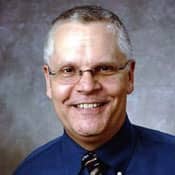
Deacon Greg Kandra is a Roman Catholic Deacon serving the Diocese of Brooklyn, NY, and an award-winning journalist.
Patheos Explore the world's faith through different perspectives on religion and spirituality! Patheos has the views of the prevalent religions and spiritualities of the world.
Ad-Free & Subscriber Log-In Subscription Support
- About Us
- 2026 Calendar
- Videos
- Podcasts
- Library of World Religions
- Faith In Media Tracker
- Advertise With Us
- Write for Us
- Privacy Policy
- Terms of Service
- Do Not Sell My Data
- Contact Us
- Radiant Digital
- Manage Newsletter Subscriptions
- Unsubscribe From Notifications
- Sitemap
Copyright 2008-2026, Patheos. All rights reserved.
Subscription Support Ad-Free & Subscriber Log-In
Follow Patheos