
BuddhistCatholicContemplativeEvangelicalGeneral ChristianHinduJewishLatter-day SaintMuslimNew VisionsProgressive Christian
Beliefs
- Buddhist
- Catholic
- Contemplative
- Evangelical
- General Christian
- Hindu
- Jewish
- Latter-day Saint
- More Voices
- Muslim
- New Visions
- Pagan
- Progressive Christian
Topics
- Religion News
- Food and Religion
- Sports and Religion
- Religious Art
- Religious Music and Entertainment
- Religious Events
- History and Religion
- Style and Religion
- Politics and Religion
- Women in Religion
- Recreation Outdoors and Religion
- Business Finance and Religion
- Careers Workplace and Religion
- Education and Religion
- Family Parenting and Religion
- Health Fitness and Religion
- Home and Religion
- Relationships and Religion
- Technology and Religion
- Travel and Religion
Columnists
- Buddhist Columnists
- Business Finance and Religion Columnists
- Careers Workplace and Religion Columnists
- Catholic Columnists
- Contemplative Columnists
- Education and Religion Columnists
- Evangelists Columnists
- Family Parenting and Religion Columnists
- General Christian Columnists
- Health Fitness and Religion Columnists
- Hindu Columnists
- History and Religion Columnists
- Home and Religion Columnists
- Jewish Columnists
- More Voices Columnists
- Latter Day Columnists
- Muslim Columnists
- New Visions Columnists
- Nonreligious Columnists
- Pagan Columnists
- Politics and Religion Columnists
- Progressive Columnists
- Recreation Outdoors and Religion Columnists
- Relationships and Religion Columnists
- Religion News Columnists
- Religious Art Columnists
- Religious Events Columnists
- Religious Music and Entertainment Columnists
- Sports and Religion Columnists
- Style and Religion Columnists
- Technology and Religion Columnists
- Travel and Religion Columnists
- Women in Religion Columnists
Resource Library
- 2026 Calendar
- Library of World Religions
- The 100 Most Holy Places on Earth
- Patheos Answers
- Podcasts
- Videos
- Faith Leaders Database
- Anglican Episcopalian
- Bahai
- Baptist
- Buddhism
- Christianity
- Confucianism
- Eastern Orthodoxy
- Hinduism
- Holiness and Pentecostal
- ISKCON
- Islam
- Judaism
- Lutheran
- Methodist
- The Church of Jesus Christ of Latter-day Saints
- New Age
- Paganism
- Presbytarian and Reformed
- Protestantism
- Religion Behind the Scenes
- Roman Catholic
- Scientology
- Shia Islam
- Sikhism
- Sufism
- Sunni Islam
- Taoism
- Zen
- See all religions
Research Tools
 Ad-Free & Subscriber Log-In Subscription Support
Ad-Free & Subscriber Log-In Subscription Support
Follow Patheos 

- Trending:
- Forgiveness
- |
- Marriage
- |
- Consciousness
- |
- Death Penalty
- |
- Election
- |
- Halloween
Jewish
A Temple for the Nations: Light within a World of Darkness
May 04, 2011 by Eliyahu Yaakov
In the previous article, we discussed that when acting on inspiration, one experiences a higher side of one's self. We explored how an inspirational experience connects who you are to who you could be; it brings down the theoretical potential hidden within to the practical actual that is being brought out, resulting in the merging of the "Potential You" with the "Actual You."
Make Me, Don't Break Me
However, there are times when a strong revelation of the Potential You is so beyond where you are at presently that there is no way the Actual You can handle such a transcendental experience.
For example, if you were a weightlifter capable of lifting fifty pounds and you were shown a version of your higher potential self that can lift 200 pounds, this could serve as an inspiration, but were you to see a version of yourself so transcendent that you can lift 500 pounds, that would be too much for you to bear since it is so distant from where you are presently. That would break you mentally, psychologically, and emotionally.
Similarly, when the Jewish People received the Torah, their souls left their bodies—the experience was too much for them to handle. Moshe, however, was the epitome of the inspirational experience. He succeeded in opening his Actual Self to experiencing the ultimate in Potential Self. He was able to include the maximum in beyond experiences within his limited self.
Just as the Jewish People had not reached the headspace within their Actual Selves to include their Potential Selves, resulting in their souls leaving their bodies, so too the world's Actual Self lost the headspace to include its Potential Self, resulting in the Temple leaving the world.
Searching for Myself
Ultimately, with the loss of the Temple, the place of clarity within a world of non-clarity has faded. The beacon of light in a world of darkness has been dimmed. The world's source of inspiration and ongoing mini-Sinai experience of self-awareness has become a memory, but there is still the spark of hope.
With the loss of the Temple, we lost our access to our true sense of self and sense of soul. Without the light at the end of the tunnel provided by the Temple experience, we find ourselves in greater darkness and confusion than ever before. Instead of moving in a direction, we are searching for a direction. Instead of moving ahead, we are trying to figure out which way that is. In short, it would seem that we are in a personal state of pitch black, a personal midnight.
Jewish Midnight
Judaism's use of the term "midnight" is a bit different than our surrounding culture's use of the term. In the culture around us, "midnight" implies 12:00 a.m.—it occurs at the same time on the clock every night irrespective of what time it got dark and what time it will get light, and what time is actually the midpoint of the night.
In Judaism, however, the term "midnight" means exactly that—the midpoint of the night, the midpoint of darkness. That is to say, Jewish midnight is the darkest point of the night. It is the point that the darkness of night is most separated from the light of day.
Therefore, looking into one's own darkness in order to find one's personal points of light, thereby bringing out and building the Temple within, is of particular focus in Judaism at midnight. Our objective in searching for one's good points at midnight is to find a point of light specifically at that darkest of times. If one can find a point of light, clarity, and Godliness within one's self at that darkest of times, certainly he will come to reveal and bring forth the light within and build himself into the mini-Temple that he is at his core.
True Enlightenment
In Judaism, the concepts of darkness and light parallel their appearance to us: Light is a state in which we see what is truly there; it is the concept of clarity and understanding. Darkness is a state in which we can not see what is truly there; it is the concept of lack of clarity and confusion.
This means that when we talk about the Jewish People being a "Light Unto the Nations," we are saying that the Jewish mission statement is to bring clarity and understanding—about life, meaning, and God—to the world.
This is what the Temple is all about—it is the meeting point of the physical and the spiritual. It is the focal point of clarity in a usually unclear world. It is the point of light within a world of darkness.
From this place of light, clarity shined out to the world. So much so, that the structure of the Temple itself was built reflecting this: Instead of building the Temple with windows angled inward thereby allowing light from outside to expand inward, as was the common practice, the Temple's windows were angled outward, as if to say that the source of light is within the Temple and is expanding outward to light up the world.
May we be blessed to see the rebuilding of the collective worldly Temple as well as our individual personal "Temples" in the very near future!
5/4/2011 4:00:00 AM
Jewish
Kabbalah Korner
Torah
Temple
Judaism
more at patheos
1

Jesus Founded the [Catholic] Church. If Not Him, Who?
2
Psalms of Lament – Psalms 88 and 130
3
God Is the Subconscious Mind: A New Theory of Reality
4

Why Does Synodality Only Go One-Way?
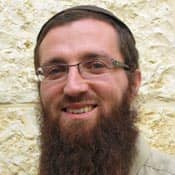
About Eliyahu Yaakov
Rabbi Eliyahu Yaakov is a sought after international speaker on Kabbalah, relationships, parenting, and life. His newly released book, Jewish By Choice: A Kabbalistic Take on Life & Judaism, recently hit #1 on Amazon's Best Seller list.
Patheos Explore the world's faith through different perspectives on religion and spirituality! Patheos has the views of the prevalent religions and spiritualities of the world.
Ad-Free & Subscriber Log-In Subscription Support
- About Us
- 2026 Calendar
- Videos
- Podcasts
- Library of World Religions
- Faith In Media Tracker
- Advertise With Us
- Write for Us
- Privacy Policy
- Terms of Service
- Do Not Sell My Data
- Contact Us
- Radiant Digital
- Manage Newsletter Subscriptions
- Unsubscribe From Notifications
- Sitemap
Copyright 2008-2026, Patheos. All rights reserved.
Subscription Support Ad-Free & Subscriber Log-In
Follow Patheos